
Categories: AI Agent, AI API, AI Developer Tools, AI Web Scraping, Large Language Models (LLMs)
AgentQL Review: Is This the Future of Web Scraping?

If you’ve been in the SEO or data game for more than a few months, you’ve felt the pain. You spend hours, maybe even days, crafting the perfect web scraper. It works beautifully. You’re pulling competitor pricing, tracking SERP features, gathering market data… you’re a data wizard. Then, one Tuesday morning, it all breaks. Why? Because a developer on the other side of the world decided to change a `
I’ve been there more times than I care to admit. It’s a constant, frustrating cycle of build, break, fix, repeat. It’s why my ears perk up whenever I hear about a new approach to data extraction. So when I stumbled upon AgentQL, with its promise of connecting AI to the web using natural language, I was skeptical but intrigued. Is this just another tool with fancy marketing, or is it genuinely a different way of doing things? I decided to find out.
What Even Is AgentQL? (And Why Should You Care?)
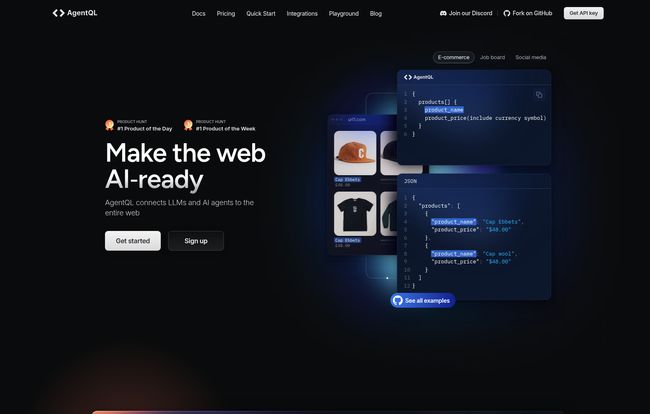
Okay, so what is this thing? AgentQL isn’t just another scraper library like BeautifulSoup or a framework like Scrapy. Think of it more as a translation layer. It sits between your AI application—your Large Language Model (LLM)—and the wild, messy world of the internet. Its main job is to let you ask for data in a way that feels more human.
Instead of wrestling with complex XPath or CSS selectors (the traditional, brittle way), you use AgentQL’s query language to describe what you want. Things like, “get the title of the article,” or “find the price and rating for each product on the page.” The AI then figures out the underlying code structure to get that information for you. It’s like instead of giving a robot a hyper-specific blueprint for a house, you just show it a picture and say, “build that.” The robot understands the intent and adapts accordingly.
Visit AgentQL
The Old Way vs. The AgentQL Way: A Quick Story
A few years back, I was running a project to track price changes on a handful of ecommerce sites. I built my scrapers, and they were my pride and joy. For about three weeks. Then a major holiday sale kicked off, and nearly every site updated its layout to add promotional banners. My scrapers all fell over at once. My weekend was shot, spent digging through source code, updating selectors, and re-running everything. It was a nightmare.
This is the exact problem AgentQL aims to solve with one of its most powerful features: self-healing queries. Because the query is based on the semantic meaning of what you’re looking for (e.g., “the main product image”) rather than its exact position in the code, it can often survive minor—and sometimes even major—website redesigns. If that `product-image` class changes, AgentQL’s AI has a much better chance of figuring out, “Oh, this image here, next to the price and title, is probably the one they want.” It’s not foolproof, nothing is, but it’s a massive leap forward in scraper resilience. It’s less like a rigid instruction manual and more like a skilled navigator who can read a map and adapt to a closed road.
Let’s Talk Features: The Nuts and Bolts
Alright, so the core idea is cool. But what do you actually get? I was pleasantly surprised by how well-thought-out the toolset is for developers.
Natural Language Queries are a Game-Changer
This is the headline act. The ability to write queries that look more like instructions than code is fantastic. It lowers the barrier to entry a bit and, more importantly, makes your code incredibly readable. Coming back to a script six months later, it’s much easier to understand `get the comments from the post` than it is to decipher `//div[contains(@class, ‘comment-thread’)]/ul/li//p`.
Self-Healing and Robustness
I mentioned this before, but it deserves its own section. This is the money-maker right here. The time and frustration you save on maintenance is, for many businesses, worth the price of admission alone. By focusing on context and relationships between elements, your data pipelines become far less fragile. This is especially true for long-term tracking projects.
SDKs and Integrations (Plays Well with Others)
AgentQL isn’t trying to lock you into some proprietary ecosystem. It offers SDKs for both Python and JavaScript, and it integrates directly with Playwright. This means you can slot it right into your existing automation workflows without having to rebuild everything from scratch. This shows a real understanding of how developers actually work.
Beyond the Browser: Browserless API and PDF Parsing
Sometimes you don’t need to spin up a full browser instance, which can be slow and resource-intensive. AgentQL offers a REST API for browserless data retrieval from public sites. And the PDF parsing is a nice touch. We’ve all had to pull data from annoying PDF tables, and having a tool that can handle that alongside web pages is a definite plus.
So, What’s the Catch? A Realistic Look
No tool is perfect, and it wouldn’t be an honest review if I didn’t point out the downsides. First, while it uses “natural language,” you still have to learn AgentQL’s specific query language. It’s straightforward, but it’s a new syntax to learn. It’s not magic; there’s a learning curve.
Second, the pricing is based on API calls. For small projects, this is fine. But if you’re scraping millions of pages a month, the costs can add up. You have to do the math to see if the time saved on maintenance justifies the cost. For many, it will. For some, it might not.
Finally, the most powerful enterprise-grade features come in a custom package. This is pretty standard for B2B tools, but it means if you want a fully managed solution or on-premise deployment, you’ll need to get on a sales call. No one loves a sales call.
AgentQL Pricing: How Much Will It Set You Back?
The pricing structure seems pretty fair and is designed to scale with your usage. They have a free tier that is genuinely useful for testing things out, which I always appreciate. Here’s a quick breakdown as of late 2023:
| Plan | Price | Key Features |
|---|---|---|
| Starter | $0 / month | 50 free API calls/month, then $0.02 per call. Great for hobby projects and getting your feet wet. |
| Professional | $99 / month | Includes 10,000 API calls/month, then $0.015 per call. Designed for developers and small businesses with real data needs. You also get priority support. |
| Enterprise | Custom | Fully managed solutions, on-premise options, ready-to-use datasets, and 24/7 premium support. This is for the big leagues. |
(Note: Always check the official AgentQL pricing page for the most current information, as these things can change.)
Who is AgentQL Actually For?
In my opinion, this tool hits a sweet spot for a few groups:
- Developers Building AI Agents: This is the prime audience. If you’re creating agents that need to interact with the web, AgentQL is a natural fit.
- Data Science Teams: For teams tired of constantly maintaining scrapers for their data models, the robustness is a huge selling point.
- SEO & Marketing Agencies: Think of the possibilities for competitor analysis, rank tracking, and market research without your tools breaking every other week. It’s a huge time-saver.
- Startups and Solo Devs: For anyone who needs to pull data but doesn’t have a dedicated team to maintain scrapers, this could be a lifesaver.
Frequently Asked Questions (The Stuff You’re Probably Wondering)
Do I need to be a programmer to use AgentQL?
Yes, absolutely. While it uses natural language concepts, AgentQL is a developer tool. You’ll need to be comfortable with Python or JavaScript and the basics of how web automation works to get the most out of it.
How is AgentQL different from Scrapy or BeautifulSoup?
The key difference is the AI layer. Tools like BeautifulSoup are parsers—they help you navigate a page’s code structure. AgentQL interprets your intent using AI, making it more resilient to code changes. It’s about describing what you want, not where it is in the code.
Can AgentQL handle websites that require me to log in?
Yep. Since it integrates with automation libraries like Playwright, you can script the login process first and then run your AgentQL queries on the authenticated pages. It can handle public and private sites.
Is the free Starter plan actually useful?
For sure. 50 API calls a month isn’t enough to run a business on, but it’s more than enough to learn the query language, test its capabilities on a few target sites, and decide if it’s the right fit for your project before you commit any money.
How hard is the AgentQL query language to learn?
If you’re familiar with JSON or have written any kind of structured query before, you’ll pick it up pretty quick. The documentation is good, and there’s a playground to test things in real-time. It’s a new syntax, but it’s logical and well-designed.
My Final Take on AgentQL
So, is AgentQL the future of web scraping? I think it’s a massive step in the right direction. The move away from brittle selectors towards semantic, AI-driven understanding is the logical next step for web automation. It’s not magic, and it won’t solve every single data extraction problem, but it tackles the single biggest frustration point: maintenance.
For me, the value is clear. It’s a tool that respects my time. It lets me focus on what to do with the data, rather than constantly fighting to just get the data. If you’ve ever lost a weekend to a broken scraper, you owe it to yourself to give AgentQL a look. It just might save your next one.


