
Categories: AI Agent, Blockchain, Large Language Models (LLMs), No-Code&Low-Code
Assisterr AI Review: No-Code SLMs for Web3?

The AI space right now feels a bit like the California Gold Rush. Everyone’s scrambling, convinced there’s gold in them thar’ hills of data, but most of us are showing up with a plastic shovel and a bucket. The tools to really strike it rich—to build, train, and deploy your own AI models—have been locked away in the hands of data scientists and big tech behemoths. Until now, maybe.
I’ve been hearing whispers about a new trend, a move away from the giant, all-knowing Large Language Models (LLMs) we’re all familiar with. The new kids on the block are Small Language Models, or SLMs. And a platform called Assisterr AI is making some pretty big claims about putting these SLMs into the hands of, well, everyone. Especially in the wild, wonderful world of Web3.
So, I did what I do best. I rolled up my sleeves, grabbed a coffee, and spent some quality time digging into what Assisterr AI is all about. Is it just another crypto pipe dream, or is this the start of something genuinely cool?
So What Exactly is Assisterr AI?
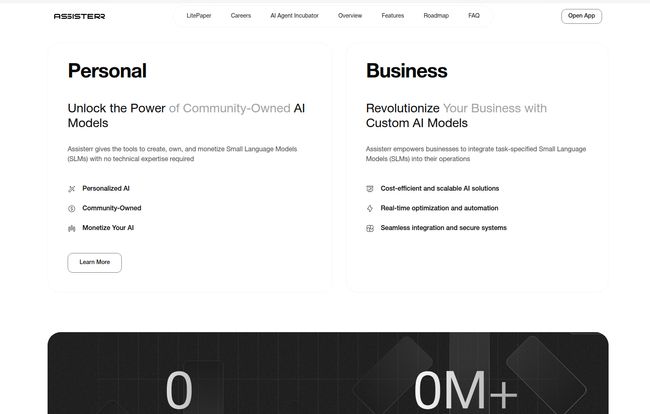
Okay, let’s cut through the jargon. At its heart, Assisterr AI is a platform designed to let you create, own, and even sell your own specialized AI models without writing a single line of code. Think of it like Canva or Wix, but instead of designing a website, you’re building a small, focused AI brain.
The whole thing is built on a Web3 framework, which means it’s all about decentralization, transparency, and community ownership. You’re not just a user on their platform; you’re a potential owner and a contributor. This isn’t just about using AI; it’s about building an ecosystem around it. A pretty bold vision, if you ask me.
The Big Idea: Specialized Brains Over Giant Ones
For the last couple of years, the race has been to build the biggest LLM possible. An AI that can write a sonnet, explain quantum physics, and plan your vacation. It’s impressive, for sure. But it’s also like using a sledgehammer to hang a picture frame. Often, it’s total overkill.
This is where SLMs come in. These are nimbler, more focused models trained for specific tasks. An SLM might not be able to write poetry, but it could be an absolute genius at analyzing Web3 wallet transactions, moderating a Discord community, or providing customer support for a dApp. They are cheaper to run, faster to train, and more precise for their given job. It’s the difference between a Swiss Army knife and a surgeon’s scalpel.
Assisterr is betting that the future isn’t one giant AI, but millions of these small, interconnected AIs working together. And they want to give you the factory to build them.
Key Features That Actually Matter
A platform is only as good as its features, right? Here’s what stood out to me from their roadmap and whitepaper.
No-Code AI Creation for the Rest of Us
This is the big one. The promise that you—a marketer, a community manager, a business owner—can build a custom AI solution. The platform provides the tools and the interface to train an SLM on your own data. Want an AI that understands your company’s specific product line? You can build it. Need a bot that gets the unique slang of your crypto community? Doable. This lowers the barrier to entry from “I need a PhD in machine learning” to “I have a specific problem to solve.”
The Decentralized Dream
By building on the blockchain, Assisterr AI gives creators true ownership of their models. It’s not stored on some centralized server where the company can change the terms or shut you down. It’s yours. This also brings transparency. You can see how models are built and how they perform. For an industry like Web3, which is built on the ethos of trust and transparency, this is a perfect match.
Visit Assisterr AI
A Marketplace for Brains (and Data)
This part is fascinating. Assisterr isn’t just a workshop; it’s also a marketplace. If you build a particularly good SLM for, say, detecting scam tokens, you can list it for others to use and earn from it. But it goes deeper. The platform also has a Data Market. This means you can contribute valuable, clean data to help train other people’s models and get rewarded for it. This creates a powerful incentive loop that encourages collaboration and quality. It’s a pretty smart way to bootstrap a high-quality ecosystem.
The Good, The Bad, and The Blockchainy
No review is complete without a little critique. I’m an optimist, but I’m also a realist. Assisterr AI has a ton going for it. The idea of democratizing AI is powerful, and the focus on SLMs is incredibly timely. The fact that they have backers like Sony, Google, Polygon, and Chainlink lends some serious weight to their efforts. That’s not a list of small-time players.
However, let’s talk about the hurdles. The platform’s sucess will live or die by the quality of the SLMs created. If the marketplace is full of half-baked, unreliable models, it won’t gain traction. It’s a classic chicken-and-egg problem.
And then there’s the Web3 learning curve. While the AI creation is ‘no-code’, the platform itself is native to Web3. Users will still need to be comfortable with crypto wallets, tokens, and the general concepts of decentralization. This could be a barrier for mainstream businesses who just want a simple AI solution without the blockchain baggage. It’s a niche within a niche, and that can be a tough spot to be in.
What’s the Price Tag on Building My Own AI?
This is the million-dollar question, isn’t it? As of writing this, Assisterr AI hasn’t released a public pricing page. This is pretty common for projects in this stage. My guess is we’ll see a model that involves their native token, maybe for paying for model usage, listing on the marketplace, or participating in governance. They’ve also mentioned a GET Mint and Airdrop, which is a classic Web3 strategy to get tokens into the hands of early adopters and build a community from day one. I’d recommend keeping an eye on their announcements for anyone interested in getting in early.
My Two Cents on Assisterr’s Potential
So, what’s my final take? I’m genuinely intrigued. I’ve seen a dozen platforms that promise to ‘democratize’ something, but Assisterr AI feels different. It’s tackling a real problem—the accessibility of useful AI—and applying it to a sector that desperately needs custom solutions (Web3).
The combination of no-code tools, a decentralized framework, and a collaborative marketplace is a potent mix. It feels less like a product and more like an infrastructure for a new kind of AI economy. Will it be easy? Nope. There will be technical hurdles and user adoption challenges. But if they pull it off, they won’t just be a successful company; they’ll have created a whole new category. It’s a high-risk, high-reward play, and as someone who watches trends, this is exactly the kind of thing that gets my attention.
Conclusion: Is Assisterr AI the Future or Just a Fad?
Assisterr AI is an ambitious project at the intersection of two of the hottest tech trends: AI and Web3. It’s trying to do for AI what Shopify did for ecommerce—give individuals and small businesses the power to build something incredible. The focus on specialized, community-owned SLMs is a smart move away from the brute-force approach of giant tech companies.
It’s still early days, and the road ahead is long. But the vision is clear, the backers are strong, and the timing feels right. I’m not ready to call it the definitive future just yet, but I’m absolutely putting it on my “one to watch” list. I’ve got a feeling we’ll be hearing a lot more about small, mighty AI in the years to come.
Frequently Asked Questions
What is Assisterr AI in simple terms?
Think of it as a DIY toolkit for creating small, specialized AI assistants for the Web3 industry. You can build, own, and even sell these AIs, all without needing to be a programmer.
Do I need to know how to code to use it?
No. The platform is designed to be a “no-code” solution, meaning you use a visual interface to train and build your AI model rather than writing programming code.
What is an SLM and how is it different from an LLM?
An SLM, or Small Language Model, is a more focused and efficient AI model trained for a specific task. An LLM (Large Language Model) like GPT-4 is a massive, general-purpose model. SLMs are like specialists, while LLMs are generalists.
How can I make money with Assisterr AI?
There are two primary ways. You can build a useful SLM and sell it or license it to others on the marketplace. You can also contribute high-quality data to help train other models and earn rewards for your contributions.
Is Assisterr AI free to use?
Specific pricing details haven’t been released yet. It will likely involve their native token for transactions and platform interactions. They are also planning an airdrop for early community members.
Who are the backers behind the project?
Assisterr AI has support from several major players in both the tech and Web3 spaces, including Google, Sony, Polygon, and Chainlink, which adds significant credibility to their project.
Reference and Sources
- Assisterr AI Official Website: https://assisterr.ai/
- Polygon: https://polygon.technology/
- Chainlink: https://chain.link/


