
Categories: AI Agent, AI For Data Analytics, AI Lead Generation, AI Marketing, AI Productivity Tools, AI Sales, AI Sales Assistant
Common Room Review: Is It The GTM Tool You Need?

You’re staring at a spreadsheet of a thousand “leads” from a recent event or a list buy, and a little part of your soul just withers. You know, and I know, that most of them are about as interested in your product as a cat is in a bath. The subsequent dance of cold calls and generic email blasts feels… well, a bit desperate, doesn’t it? It’s a numbers game, they say. But what if we could change the game entirely?
For years, Go-To-Market (GTM) teams have been operating with a hand tied behind their backs, buried in data but starved for actual intelligence. I’ve seen it time and time again. We’re getting better at collecting names, but we’re still terrible at understanding intent. That’s the frustrating gap a new breed of platforms is trying to fill, and one that’s been on my radar for a while is Common Room. It calls itself a customer intelligence platform, which sounds fancy, but what does it actually do? I decided to take a proper look, cut through the marketing jargon, and figure out if it’s the real deal.
What Exactly Is Common Room? (And Why Should You Care?)
Okay, so let’s break it down. At its heart, Common Room is designed to solve one of the biggest headaches in sales and marketing: buying signal blindness. It’s the feeling of flying completely blind, not knowing which of your prospects are just kicking tires and which are actively looking for a solution like yours right now.
Think of it less like another CRM and more like a private detective for your entire sales funnel. Instead of just tracking who opened your email or visited your homepage, Common Room plugs into over 50 different sources—we’re talking social media platforms like X and LinkedIn, community forums like Reddit and Discord, product usage data, and even GitHub activity. It’s listening to the public and semi-public chatter of the internet to find people who are showing genuine intent. It’s a pretty big shift from the old way of doing things.
The Core Features That Actually Matter
A platform is only as good as its tools. Common Room seems to build its whole system on three main pillars. It’s not just a dashboard of messy data; it’s a structured process.
RoomieAI™ Capture: Hearing the Whispers in the Noise
This is where it all begins. The ability to pull signals from so many places is, frankly, the secret sauce. Most tools can track website activity. Big deal. Common Room is designed to find a developer on GitHub who’s starring repositories related to your tech stack, or a marketing manager on X (Twitter) asking for recommendations for a tool just like yours. These are the golden nuggets of intent that most GTM strategies completely miss.
It’s like having a team of researchers with their ears to the ground in every relevant corner of the digital world, constantly flagging interesting conversations. This is proactive intelligence, not reactive data entry.
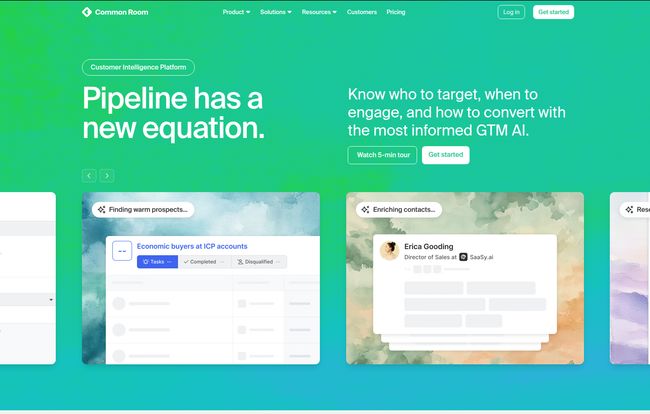
Visit Common Room
Person360™: Putting a Face to the Data
So you’ve found a signal. An anonymous user on Reddit asked a great question. Now what? This is where a lot of these systems fall apart. Common Room’s Person360™ feature is its answer. It takes that signal and does its best to connect the dots, enriching the profile to tell you who that person is, what company they work for, and what their role is. It uses an AI-powered “waterfall enrichment” process, which is a fancy way of saying it checks multiple data sources in a sequence to build the most complete profile possible.
An anonymous signal is just noise. A signal tied to a real person at a target account? That’s an opportunity. It turns a random mention into a warm lead.
RoomieAI™ Activate: Where the Rubber Meets the Road
Here’s what really caught my eye. This isn’t just a platform for looking at pretty graphs. The ‘Activate’ part is about taking action, automatically. You can build what they call “outbound plays.” For instance, you could create a rule that says: “If a person from one of our target accounts joins our Discord community AND has a job title of ‘Product Manager’ or higher, automatically add them to a specific welcome sequence in HubSpot and notify their assigned account executive on Slack.”
That level of automation is what separates a useful tool from a transformative one. It frees up your sales team to do what they do best: sell. Not dig through forums or manually update CRM records. It connects insight directly to action.
So, How Does This Look in the Real World? A Practical View
Let’s get out of the feature list and into the benefits. What does all this tech actually get you? In my experience, the results of this kind of intelligence-first approach are pretty clear. You get much better visibility into your pipeline, meaning fewer ‘surprise’ losses and more predictable forecasting. Your sales team can prioritize prospects with incredible speed and accuracy, focusing their precious time on people who have already raised their hand, even if they didn’t do it on your website. And the logical outcome of all this? Better outbound conversion rates. It’s just common sense—contacting people who are already thinking about their problem is always going to work better than shouting into the void.
Let’s Talk Turkey: Common Room Pricing
Alright, this is the part everyone always scrolls to first. Let’s be upfront: Common Room isn’t a bargain-bin tool you pick up for a few bucks a month. It’s a serious platform for serious GTM teams, and the pricing reflects that. You won’t find the cost on the homepage, you have to go to their dedicated pricing page.
| Plan | Price | Key Details |
|---|---|---|
| Starter | Starts at $1,000 / month | Up to 35k contacts, 2 seats. Good for getting your feet wet. |
| Team | Starts at $2,500 / month | Up to 100k contacts, 5 seats. More features like automated workflows. |
| Enterprise | Custom Pricing | 200k+ contacts, premier support, SSO, and advanced security. |
My take? The price might cause a bit of a sharp intake of breath, but you have to think about teh ROI. If a tool like this helps your team close just one or two extra enterprise deals per year, it has paid for itself many times over. Or think about the time saved. How much does it cost to have your best salespeople spend 20% of their week chasing ghosts? This is an investment in efficiency.
The Not-So-Rosy Side: Potential Hiccups
No tool is perfect, and it’s important to be realistic. Some might argue that hiding the pricing behind a separate page is a bit of a classic SaaS move, creating a little friction up front. A bigger consideration is that this platform doesn’t exist in a vacuum. It requires integration with your existing tech stack. You’ll need to connect it to your CRM and other outreach tools to get the full benefit, which means some initial setup and technical wrangling.
Finally, there’s likely a learning curve. A powerful tool with lots of capabilities isn’t something you master in an afternoon over a cup of cofee. To really make the most of it, your team will need to invest time in learning how to build effective plays and interpret the data correctly.
Who Is Common Room Actually For?
So, who should be booking a demo? Based on my analysis, Common Room is a fantastic fit for B2B tech and SaaS companies with established Go-To-Market teams. If your company is constantly frustrated by the quality of inbound leads and wants to get way, way smarter about its outbound and community-led growth efforts, this is for you. You need to have the budget to invest in your stack and the willingness to adopt a new, more intelligent workflow.
It’s probably not the right fit for a brand new solo-founder startup or a small B2C business. It’s an enterprise-grade tool designed to solve complex pipeline problems at scale. For those companies, it could be a massive competitive advantage.
Frequently Asked Questions about Common Room
- 1. What makes Common Room different from a regular CRM like Salesforce?
- A CRM primarily stores and manages customer information you already have. Common Room is a customer intelligence platform that proactively finds new signals and opportunities across the web, enriches that data to identify new prospects, and helps automate outreach before they even hit your CRM.
- 2. Is Common Room difficult to set up?
- It’s not a simple one-click install. Because it needs to integrate with your existing tools (like HubSpot, Salesforce, Slack, etc.) there will be an initial setup and configuration process. However, this integration is what makes it so powerful.
- 3. Can I use Common Room for community management too?
- Absolutely. The name isn’t an accident. Its ability to track signals in places like Discord, Slack communities, and forums makes it an incredibly powerful tool for community-led growth, helping you identify and engage with key members.
- 4. Is Common Room’s pricing per month or annual?
- The pricing on their site is listed per month, but many SaaS companies of this nature offer discounts for annual billing. You’d have to confirm with their sales team when booking a demo.
- 5. What kind of “buying signals” can it actually track?
- It can track a huge variety of things: product usage spikes, mentions of your company or competitors on social media, questions on Reddit or Stack Overflow, new job postings at target companies, people engaging with your content, and much more.
- 6. Is Common Room secure and GDPR compliant?
- Yes, their website highlights their commitment to security, mentioning compliance with standards like AICPA SOC 2 and GDPR, which is critical for any company handling customer data.
My Final Verdict on Common Room
After digging into Common Room, I’m genuinely impressed. It’s a well-thought-out platform that directly attacks one of the most persistent and frustrating problems in modern GTM strategy. It’s part of a critical shift away from just screaming your message at everyone and toward listening intelligently for the right moment to start a conversation.
It isn’t a magic wand that will instantly fix a broken sales process, and it requires a real investment of both money and time. But for the right company—one that’s ready to move beyond the old playbook of guesswork and brute force—it could be the sharpest tool in the shed. It offers a chance to finally stop flying blind and start navigating the market with a true, data-backed compass. And in today’s noisy world, that’s an incredible advantage.


