
Categories: AI Agent, AI API, AI Sales
Crustdata Review: Real-Time B2B Data for the AI Era?

You spend days crafting the perfect outreach sequence, you’ve got your prospect list dialed in, and you hit send. Then, the bounce-backs start rolling in. Or worse, you get that polite-but-crushing reply: “Sorry, I left that role six months ago.” Ugh. It’s a gut punch. In the fast-moving world of sales, recruiting, and M&A, stale data isn’t just an annoyance; it’s a liability. It’s the digital equivalent of bread mold on what should be a fresh sandwich.
For years, we’ve relied on massive, static databases that are updated quarterly, if we’re lucky. But the business world doesn’t move in quarters. It moves in minutes. A Head of Sales becomes a VP, a startup closes a Series A, a competitor posts a new job for a role you thought they’d cut. These are the signals that matter. And recently, I stumbled across a platform that claims to capture them in real-time. It’s called Crustdata, and it’s not just another data bucket—it’s trying to be a live ticker for the entire B2B economy.
Visit Crustdata
So What Exactly Is Crustdata, Anyway?
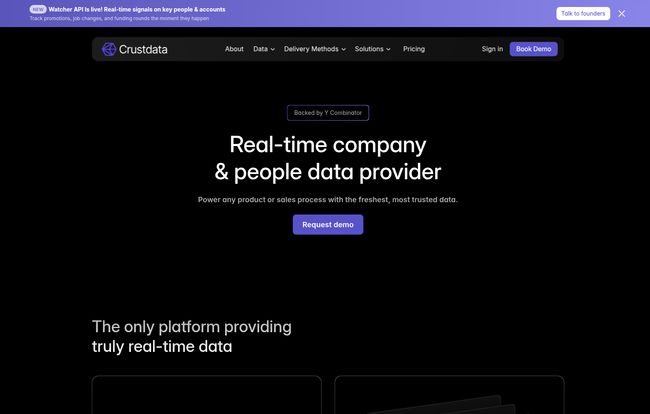
Think of it less as a database and more as a data stream. Crustdata positions itself as a real-time B2B data broker. This means they’re not just selling you a list of contacts they scraped last fall. They provide access to continuously updated information on companies and people through an API or a direct data feed. When someone gets a promotion, changes jobs, or even just posts about a new skill on their profile, Crustdata aims to know about it instantly and, more importantly, let you know about it.
This isn’t just for sales teams trying to beat the competition to a new lead. It’s for recruiting platforms that need to know the second a top engineer is open to work. It’s for investment firms looking for signals of a company’s growth trajectory. And—and this is the part that really got my attention—it’s built for the new wave of AI agents that need live, accurate information to actually be useful.
The Core Features That Actually Matter
When you peel back the marketing language, what are you actually getting? It boils down to a few key things that cater to different needs, from the hardcore developer to the data science team.
Real-Time API vs. The Big Ol’ Flat File
Crustdata offers two main ways to get your hands on their goods. First, there’s the Real-time API. This is the sexy option. It’s for building dynamic applications. Imagine a CRM that automatically updates a contact’s job title or flags a target account the moment they receive new funding. The API is designed for that kind of live integration, with credit-based usage tiers that can scale. It’s the heartbeat of the platform.
Then you have the Flat file company & people data. This is more traditional but no less powerful. It’s a massive, unified dataset delivered as a CSV or JSON file, refreshed monthly. Who’s this for? Think data scientists training machine learning models, or analytics teams doing a deep-dive market analysis. You don’t need second-by-second updates, but you need a comprehensive, clean snapshot of the world. Crustdata unifies data from over 11 sources for this, saving you the headache of doing it yourself.
The “Watcher API”: Your Automated Lookout
This feature deserves its own callout. They have something called the Watcher API, which is essentially your own personal lookout. You can tell it to “watch” a specific person or a list of companies, and it will send you an alert—a webhook—the moment a significant event happens. For sales and business development, this is gold. You can be the first to congratulate a prospect on a promotion or ask about their company’s new funding round, all because your system caught the signal in real-time. It’s proactive intelligence, not reactive list-checking.
Fueling the Bots: Data for AI Agents
This is where things get really interesting and, frankly, forward-thinking. The tech world is buzzing with AI agents—autonomous bots designed to perform tasks like finding leads, scheduling meetings, or conducting market research. But an agent is only as smart as its data. If it’s working off an old directory, it’s useless. Crustdata is explicitly marketing its real-time company and people data as fuel for these agents. An AI powered by this could, in theory, monitor an entire industry for you and deliver hyper-relevant opportunities without you lifting a finger. It’s a bold claim, but it’s where the industry is heading.
A Peek Under the Hood: The Data Sources
Okay, so real-time data is great. But if the data is garbage, it’s just garbage delivered faster. Any good SEO or data professional knows to ask: where are you getting this from?
Crustdata says it indexes and unifies information from multiple sources. The homepage hints at what these are: company reviews, assessment data, news articles, layoff announcements, funding data from places like Crunchbase or PitchBook (presumably), job listings, and even a company’s tech stack. By triangulating all these signals, the goal is to create a more accurate and holistic profile of a company or person. For instance, seeing a company has recently received funding, is hiring aggressively for senior roles, and has positive employee reviews paints a much richer picture than a simple firmographic entry.
“Accuracy in the data world is always a moving target. The best you can do is have the freshest possible information from the most reliable sources, and that seems to be the philosophy here.”
So, What’s the Catch? Pricing and Potential Hurdles
This all sounds pretty great, right? So, how much does it cost? Well, here’s the thing… they dont just tell you. Like many enterprise-grade, API-first companies, Crustdata doesn’t have a public pricing page. You’ll have to “Try it for free,” “Request sample,” or “Contact sales.” I know, I know, it’s a bit of a pain.
Based on the FAQs and industry standards, we can make some educated guesses. The API is likely on a credit-based system, where you pay for the number of calls you make or the data you pull. There will almost certainly be different tiers with monthly and annual plans. The flat file will be a separate, likely substantial, purchase. It’s not a tool for casual users; it’s an investment in your data infrastructure.
The other hurdle is implementation. This isn’t a Chrome extension you install in five minutes. To really harness the power of Crustdata, you need developer resources to integrate the API into your systems. It’s not a con, per se, just the reality of working with a powerful data tool. Its not for everyone, and thats okay.
Who is Crustdata Actually For?
After looking it over, I see a few clear profiles that would get the most out of this:
- The Platform Builder: If you’re building the next big SalesLoft, HubSpot, or recruiting platform, you need a powerful data engine. Building it from scratch is a nightmare. Plugging into something like Crustdata could be a massive shortcut.
- The Savvy Sales Ops Team: Teams that are tired of stale CRM data and want to build automated workflows based on real-world triggers.
- The AI Innovator: Anyone building autonomous agents that need to understand and interact with the corporate world. This is the bleeding edge, but it’s a huge potential market.
- Venture Capital & Private Equity: Firms that need to track portfolio companies, identify emerging competitors, and spot investment signals before anyone else.
Frequently Asked Questions
How often is the data updated?
The core promise of Crustdata is real-time updates via their API. This means events like job changes or funding are captured as they happen. The flat file option, for larger-scale analysis, is refreshed monthly.
Can I try Crustdata before I buy?
Yes. They offer a free trial for the API and a sample request for the flat file data. You’ll need to contact them to get set up, which is pretty standard for B2B data providers.
What is the pricing model like?
While not publicly listed, the model appears to be usage-based. The API access uses a credit system with monthly and annual plans available. For large data files or custom solutions, you’d need to get a direct quote.
How is this different from ZoomInfo or other data providers?
The main differentiator seems to be the emphasis on real-time signals and API-first integration, especially for developers and AI agents. While others provide rich databases, Crustdata’s focus is on the live stream of changes in the business world.
Is this difficult to set up?
It depends on your goal. Using the API requires a developer who can work with APIs and webhooks to integrate the data into your existing platforms (like a CRM, sales tool, or proprietary software). It’s more involved than simply logging into a website.
My Final Thoughts on Crustdata
Look, the B2B data space is crowded. But Crustdata is making a compelling argument by focusing on the one thing that matters most in 2024 and beyond: speed. Static data is a sinking ship. The future of sales, marketing, and recruiting intelligence is about catching signals as they happen. The explicit focus on powering AI agents also shows they’re not just thinking about today’s problems, but tomorrow’s too.
If you’re a small team just looking for a simple list of emails, this is probably overkill. But if you’re building a data-driven platform, or if your organization’s success depends on acting on business changes faster than your competitors, then Crustdata is definitely a name you should be looking into. It’s a tool for builders, and in this economy, that’s a very interesting thing to be.
References and Sources
- Crustdata Official Website
- Crunchbase (for general comparison on funding data)


