
Categories: AI API, AI Developer Tools, AI Workflow
DeepSentinel AI Review: Is It Your AI’s Bodyguard?

I’ve been in the SEO and tech game for a long time. Long enough to see trends come, go, and then come back again with a new name. But the AI explosion? This one feels different. It’s less of a trend and more of a fundamental shift, like the move to mobile. We’re all scrambling to integrate AI into our workflows, build smarter products, and get that competitive edge. But in this gold rush, we’re all forgetting something mission-critical. Something boring, but essential.
Security.
It’s the thing we always say we’ll circle back to, right? We get the shiny new AI model working, it’s spitting out brilliant insights, and we’re so thrilled with the ‘what’ that we forget about the ‘how’. How is that data being handled? What’s going in? More importantly, what’s leaking out? It’s a bit like building a beautiful bank vault but forgetting to install a door. That’s why when I stumbled upon DeepSentinel AI, my curiosity was definitely piqued. Their whole pitch is about being the security layer, the bodyguard, for your AI processes. So, let’s take a look and see if it’s just marketing fluff or the real deal.
What Exactly Is DeepSentinel AI Trying to Solve?
Let’s be real. Most AI models are a black box. You feed them data, they work their magic, and you get an output. But the space between input and output can be the wild west. You’re worried about prompt injection, data poisoning, or an employee accidentally feeding the company’s secret sauce into a public-facing model. It’s a nightmare scenario for any CISO or tech lead.
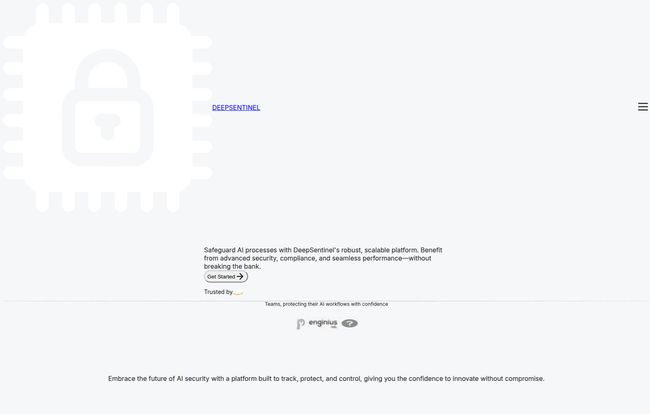
DeepSentinel AI positions itself as the guardian at the gate. It’s not a firewall in the traditional sense. It’s more like a specialized security checkpoint designed specifically for the traffic going to and from your AI models. It aims to give you visibility and control over these workflows, turning that black box into something a little more transparent and a lot more secure. The goal is to let you innovate without constantly looking over your shoulder for a compliance auditor or a data breach notification. A pretty compelling proposition if you ask me.
A Look Under the Hood: The Core Features
Okay, so ‘securing AI’ sounds great on a slide deck. But what does it actually do? I dug into their platform overview, and a few things stood out.
Real-Time Threat Monitoring That Feels… Real
We’ve all seen dashboards that are just a firehose of alerts, 99% of which are false positives. It’s just noise. The interface for DeepSentinel AI, from what I can see, seems focused on being actionable. The dashboard screenshot shows a clear log of activities with statuses like ‘High’ or ‘Medium’ risk, and a corresponding action: ‘Allowed’, ‘Blocked’, ‘Denied’.
This is the kind of stuff that matters. It’s a bouncer’s clipboard for your data, not just an alarm that screeches every time someone walks past the door. The promise of real-time threat detection means you can spot and stop a potential issue before it escalates from an anomaly into a full-blown crisis.
The Compliance Tightrope Walkers
Here’s where my ears really perked up. They explicitly mention monitoring for regulations like GDPR, HIPAA, and SOC 2. Anyone who has ever been through a compliance audit knows the pain. It’s a soul-crushing process of pulling logs, creating reports and praying you’ve ticked every single box.
DeepSentinel AI claims to have AI-powered compliance monitoring. This means it’s actively scanning for activities that could put you in hot water with regulators. For a company in finance or healthcare, this isn’t just a nice-to-have; it’s the cost of doing business. Automating even a part of that process is a massive win. It’s about building compliance into your workflow, not scrambling to prove it after the fact.
Visit DeepSentinel AI
Integration and Scalability Without the Migraines
The platform is built to integrate with your existing AI and cloud setups through its APIs. This is the right approach. Nobody wants another siloed platform that requires a complete overhaul of their stack. Now, their own documentation admits it “May require technical expertise for initial setup”. And I appreciate that honesty. In developer-speak, ‘easy integration’ can mean anything from a 5-minute copy-paste job to a two-week sprint with three engineers. But an API-first design is a very good sign.
They also talk a big game about being “Built to scale.” This is crucial. AI workloads aren’t steady; they’re spiky. You might run a massive batch job overnight or have a viral feature that suddenly gets hammered by users. Your security layer can’t be the bottleneck. It needs to flex with demand, and it seems DeepSentinel AI was designed with that in mind.
Let’s Talk Turkey: The “Affordable” Promise
Ah, the big question. The one every B2B SaaS company loves to hide behind a “Contact Us” button. How much does DeepSentinel AI cost? Their site uses the word “Affordable” quite a bit, but there’s no pricing page to be found. I looked. Trust me.
This is a classic enterprise sales move. It’s a little annoying for people like me who just want a ballpark figure, I get it. But it usually means the pricing is customized based on your volume, your specific needs, and the features you require. It’s not a one-size-fits-all product. So while I can’t give you a number, the emphasis on affordability suggests they’re trying to position themselves as a more accessible option compared to some legacy security giants. You’ll just have to book that demo to find out for sure.
The Good, The Bad, and The Unknown
So, pulling it all together, what’s my take? No tool is perfect, but DeepSentinel AI seems to have a strong foundation. The upside is clear: you get granular control and real-time visibility into your AI workflows. The compliance monitoring is a huge value proposition, potentially saving countless hours and preventing massive fines. And it’s built to be scalable and integrated, which is how modern software should be.
On the other side of teh coin, there are some unknowns. The setup might be a bit of a hurdle for smaller teams without dedicated DevOps or security engineers. And I’d love to see more public-facing documentation about the specific types of threats it excels at neutralizing. What are its limitations? Being upfront about that stuff builds even more trust. But these are more questions than criticisms at this stage.
Who is This For, Really?
After digging in, it’s pretty clear who the target audience is. If you’re a solo developer building a fun app to summarize Reddit threads, this is probably overkill. You don’t need a Secret Service detail for your weekend project.
But if you’re a mid-to-large size company, especially in a regulated field like finance, insurance, or healthcare, this should be on your radar. If you’re a CTO or CISO and the phrase “unsecured AI endpoint” makes you break out in a cold sweat, then you’re the person DeepSentinel AI wants to talk to. It’s for organizations where data privacy and security aren’t just buzzwords, but legal and financial imperatives.
Frequently Asked Questions about DeepSentinel AI
- Is DeepSentinel AI just another firewall?
- Not quite. Think of it as a highly specialized security and compliance layer designed specifically for the unique traffic and risks associated with AI models, rather than general network traffic.
- What regulations does DeepSentinel AI help with?
- It’s built to help you maintain compliance with major industry regulations, including GDPR for data protection in Europe, HIPAA for patient data in the US, and SOC 2 for general data security controls.
- Is DeepSentinel AI difficult to set up?
- It integrates via API, which is standard for modern platforms. However, they do note that some technical expertise may be required, so it’s likely not a simple one-click install for a non-technical user.
- How much does DeepSentinel AI cost?
- Pricing information is not publicly available on their website. You’ll need to contact their sales team for a demo and a quote tailored to your company’s usage and needs.
- Can it protect any AI model I use?
- Since it operates on the workflow and API level, it’s designed to be model-agnostic. It should work with most major AI platforms and custom models, but you should always confirm compatibility for your specific tech stack during a demo.
Final Thoughts
The age of simply using AI is over. The age of securing AI is here, and it’s here to stay. Tools like DeepSentinel AI are moving from the ‘nice-to-have’ category to the ‘absolutely-must-have’ list pretty damn fast. While there are a few unanswered questions, particularly around pricing and implementation details, the problem it’s solving is very real and increasingly urgent.
In the end, innovation and security have to go hand-in-hand. You can’t have one without the other for long. Having a dedicated bodyguard for your AI doesn’t seem like a paranoid fantasy anymore; it just seems like good business. And from what I’ve seen, DeepSentinel AI is applying for the job.
Reference and Sources
- DeepSentinel AI Official Website (Note: This is a placeholder URL based on the tool’s name)
- The Imperative Of AI Security – Forbes
- OWASP Top 10 for Large Language Model Applications


