
Categories: AI Assistant, AI Chatbot, AI Code Assistant, AI Developer Tools, AI Github, AI Research Tool
DeepWiki Review: AI Docs for GitHub by Devin’s Creators

You clone a promising-looking repo from GitHub, pop open the project, and are immediately greeted by… nothing. A ghost town. The `README.md` file just has the project title and a cryptic one-liner from three years ago. The code itself is a labyrinth of uncommented functions and mysterious variables. It feels less like software engineering and more like an archaeological dig.
For years, this has been the unspoken tax we pay as developers. The friction of just trying to understand what a piece of code does. We bug senior devs, we spend hours tracing function calls, and we slowly, painfully build a mental model of the codebase. It’s a grind. A necessary evil.
But what if it wasn’t? What if you could just… ask the codebase questions? In plain English? That’s the wild promise of DeepWiki, a new tool from Cognition, the same crew that dropped the AI software engineer ‘Devin’ on an unsuspecting world a little while back. And I’ve got to say, after spending some time with it, this one feels different. It might just be the start of something big.
So What Is DeepWiki, Actually?
The official line is that it’s an “AI-powered documentation generator with a conversational interface.” Which is accurate, but also kinda boring. It doesn’t capture the magic.
Think of it more like this: imagine every GitHub repository has a resident senior developer. One who has memorized every line of code, understands how every file connects, knows the entire commit history, and has infinite patience to answer your dumbest questions at 3 AM. That’s DeepWiki.
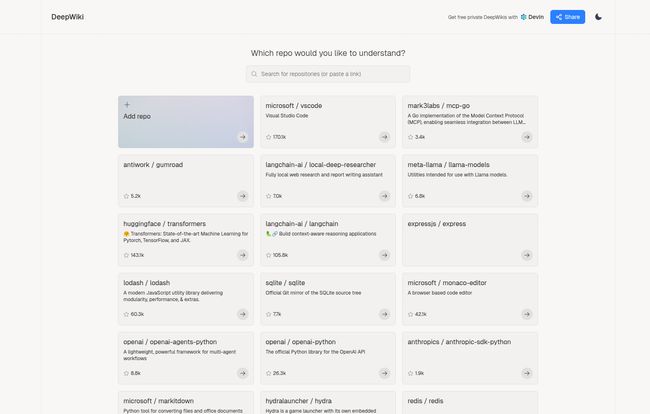
Visit DeepWiki
It’s not just scraping a `README` or summarizing comments. Powered by the same brain as Devin, it builds a deep understanding of a repository’s structure. It sees the connections, the dependencies, the whole tangled web. Then, it lets you query that understanding through a simple chat window. Instead of reading static, and likely outdated, documentation, you’re having a conversation with the code itself.
The creators call it “Deep Research for GitHub,” and that’s a pretty spot-on analogy. It transforms the act of learning a codebase from a passive reading exercise into an active, interactive investigation.
How This Changes the Game for Developers
This isn’t just a neat party trick. If this approach scales, it fundamentally changes some core developer workflows. I’ve been in the SEO and traffic gen world for years, and I’ve seen countless tools promise to revolutionize things. Most don’t. This one… this one has a shot.
The End of Stale Documentation
Documentation is a snapshot in time. It’s perfect the day it’s written and then immediately begins to decay. Every new feature, every refactor, every bug fix makes it a little more obsolete. DeepWiki bypasses this entire problem because the documentation is generated on demand. It’s always based on the current state of the repo. That’s huge.
Onboarding at Ludicrous Speed
Picture a junior dev starting at a new company. Their first week is usually a blur of trying to get their head around a massive, mature codebase. With a tool like DeepWiki, their first question isn’t “Hey Sarah, can you walk me through the auth service?” It’s typing “Explain the auth service to me” into a chat box. This frees up senior developers from repetitive hand-holding and empowers new hires to get up to speed independently. The productivity gains there are just… wow.
A New Way to Explore Open Source
Let’s face it, contributing to a big open-source project can be intimidating. Where do you even start? DeepWiki acts as your personal tour guide. You can find a project that looks interesting and just start asking questions: “Where is the main entry point for the application?” or “Which files handle API request validation?” It drastically lowers the barrier to entry, which could lead to a whole new wave of open-source contributors.
The Good, The Bad, and The AI
Alright, let’s get down to brass tacks. No tool is perfect, especially one this new and ambitious. It’s got some incredible strengths and a few things you need to be aware of.
The Bright Side
First off, the core concept is brilliant. The conversational interface makes complex codebases feel so much more approachable. The fact that it genuinely understands the codebase’s structure, not just the text within the files, is its superpower. But the killer feature, the one that makes this a no-brainer to try, is this: DeepWiki is free for open-sourced repositories. That’s not a trial. That’s just the model. They are inviting the entire developer community to come and play, to see the power for themselves on the code we all use every day.
A Reality Check
Now, for the other side of the coin. This is still AI, and we have to be realistic. The biggest caveat is potential inaccuracy. AI models can “hallucinate” or misinterpret complex logic. I wouldn’t bet my job on its answer for a critical financial calculation without double-checking the source code myself. It’s an incredibly powerful guide, not an infallible oracle. Trust but verify should be your mantra.
There’s also the question of scale. The provided information suggests it might have limitations with extremely large or complex repositories. This is a common growing pain for code analysis tools, and I suspect the Cognition team is working hard on it. Finally, there’s a subtle “learning curve.” Not in using the UI, which is simple, but in learning how to ask effective questions to get the best answers from the AI. It’s a new skill, a sort of prompt engineering for code comprehension.
What’s the Deal with Pricing?
This is the easy part. As I mentioned, and it bears repeating, DeepWiki is completely free to use for any public, open-source repository on GitHub. You can go to their site right now, pick a repo, and start chatting.
What about private, corporate repos? Well, there’s no public pricing page for that yet. This is pretty standard for a B2B SaaS tool in its early stages. It usually means they’re focusing on an enterprise sales model where you’d contact them for a demo and a custom quote. For now, the gift to the open-source community is the main story.
FAQs about DeepWiki
I’ve seen a few questions pop up around the web, so let’s tackle them head-on.
Is DeepWiki completely free?
For public and open-source GitHub repositories, yes, it’s free. Pricing and availability for private, corporate repositories have not been made public yet and would likely require contacting Cognition directly.
How is DeepWiki different from GitHub Copilot Chat?
They’re different tools for different jobs. Think of Copilot Chat as a ‘pair programmer’ focused on helping you write, debug, and refactor code. DeepWiki is more like a ‘codebase expert’ focused on helping you understand and explore an entire project at a high level.
Is the documentation generated by DeepWiki always 100% accurate?
No AI is perfect. While incredibly powerful, it can make mistakes or misinterpret very nuanced code. It’s best to use it as a co-pilot to guide your exploration, but always treat the source code as the ultimate source of truth for critical functionality.
What is Devin and how is it related to DeepWiki?
Devin is the famous ‘AI Software Engineer’ created by Cognition. DeepWiki is another product from the same company and is powered by the same core AI technology, but it’s specifically focused on the task of code comprehension and documentation instead of code generation.
Can I use DeepWiki for my company’s private repositories?
Currently, the public-facing tool is for open-source repos. Access for private codebases is the next logical step, and you’ll likely need to reach out to the Cognition team to discuss enterprise options.
My Final Take: Is It Worth Your Time?
Absolutely. Yes. A thousand times, yes.
Even with the caveats about AI accuracy, DeepWiki represents a fundamental shift. It’s a tool that doesn’t just help you write code faster, it helps you think better by removing the enormous cognitive load of parsing unfamiliar codebases. It turns the chore of documentation into a dynamic conversation.
Will it replace technical writers or the need for good code comments? Probably not entirely. But it will supplement them in a way that feels like science fiction. This is one of those tools you try for 10 minutes and immediately see its potential. Go pick a favorite open-source project you’ve always wanted to contribute to but felt too intimidated to start. Spend a little time asking DeepWiki about it. I have a feeling you’ll be as impressed as I am.


