
Categories: AI Clothing Generator, AI Clothing Removal, AI Image Generator, AI Outfit Generator, AI Photo Editor, AI Shopping Assistant
DigiMirror Review: An AI Virtual Try-On Game Changer?

You’re scrolling late at night, a little too much caffeine or maybe a glass of wine in your system, and you see it. The perfect jacket. The model looks incredible, the lighting is flawless, and the description promises it will change your life. You add to cart, your heart thumping with anticipation. A week later, the package arrives. You tear it open, pull it on and… ugh. It’s a disaster. The fit is all wrong, the color washes you out, and it looks nothing like it did online.
Now comes the worst part: the return. Printing the label, finding a box, trekking to the post office. It’s a whole ordeal. I’ve personally got a pile of ‘I’ll return it later’ clothes that has its own postcode by now. It’s the single biggest headache of online shopping.
So when I stumbled across a tool called DigiMirror, which claims to offer a free AI virtual try-on, my seasoned SEO-blogger cynicism immediately kicked in. But so did my curiosity. Could this really be the solution to the endless cycle of buy-try-return? I had to find out.
So, What Exactly is DigiMirror?
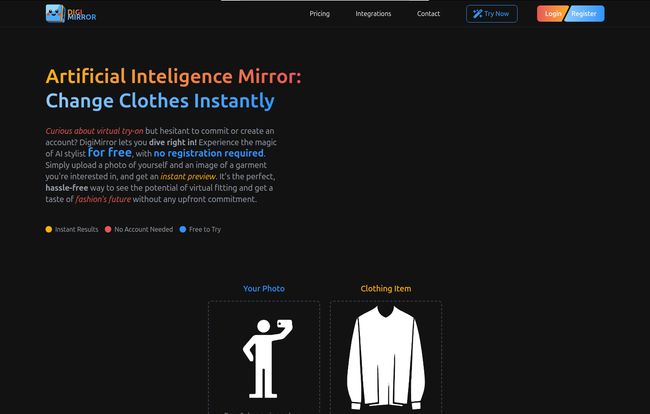
In simple terms, DigiMirror is like a magic mirror for your online shopping addiction. It’s a platform that uses artificial intelligence to show you what an item of clothing will actually look like on your own body. No more guessing based on a 6-foot-tall model with completely different proportions. You give it a photo of you and a photo of a piece of clothing, and its AI brain mashes them together to create a surprisingly realistic preview. The whole point is to give you a better idea of fit and style before you even think about clicking ‘buy’.
Visit DigiMirror
How The AI Magic Happens
The process is refreshingly simple, which I appreciated. There’s no clunky software to download or a complicated registration to fill out just to try it. You just… go.
Here’s the breakdown:
- You upload your photo. A clear, full-body shot works best. Think of what you’d send a friend when asking, “Does this look okay?”
- You upload the clothing item. This is typically the clean, product-on-a-white-background shot you find on any retail website.
- You wait a moment. The AI does its thing, analyzing your body shape, the clothing’s drape, the lighting. It’s like a tiny digital tailor working at hyper-speed.
- Voilà! You get a new image of you, wearing the item.
Honestly, the fact that you can try it for free without even handing over your email is a massive plus in my book. It shows a certain confidence in their product.
Who is This Really For? A Tale of Two Users
As I played around with it, I realized DigiMirror isn’t just for one type of person. It serves two very different, but connected, groups.
For the Everyday Online Shopper
This is the obvious one. For us regular folks, this is all about confidence. It’s about answering that nagging question: “But will it look good on me?” It takes a huge amount of guesswork out of the equation. You can see if a silhouette flatters your figure or if a bold pattern is ‘brave’ or just plain ‘bad’ before it’s even in your shopping cart. You can even generate a few different looks and send them to your most honest friend for that crucial second opinion. It’s not just a tool; it’s a shopping companion.
For Fashion Brands & e-Commerce Retailers
Okay, let’s put on my professional SEO hat for a moment. This is where things get really interesting. For any online clothing store, returns are a silent killer of profits. According to a report from the National Retail Federation, consumers returned over $743 billion in merchandise in 2023. That’s an insane number. Each return costs money in shipping, restocking, and potentially lost or damaged goods.
A tool like DigiMirror, integrated into a product page via their business API, could be a game-changer. By letting customers ‘try on’ clothes virtually, a brand can:
- Dramatically lower return rates: Customers make more informed choices, so fewer items come back.
- Boost conversion rates: Increased confidence leads to more completed purchases.
- Enhance customer engagement: It’s a cool, interactive feature that makes shopping more fun and memorable.
It transforms the shopping experience from a passive one to an active one. And in the crowded world of e-commerce, that’s gold.
Breaking Down The Key Features
The homepage lists a few key features, but let’s translate them from marketing-speak into what they actually mean for you.
- Wide Clothing Compatibility: I threw a few different things at it – dresses, t-shirts, jackets. It seemed to handle most standard clothing items pretty well.
- Privacy Focused: This was a big one for me. The idea of uploading my picture to some random website can be a bit unnerving. DigiMirror states that images are processed securely and not stored long-term, which provides some peace of mind. Always good to be cautious, though.
- Fast & Responsive: It works right in your browser, on desktop or mobile, and the results are pretty quick. No waiting around for ages.
- AI Clothes Removal: This is an interesting little bonus feature. You can upload a photo of someone and it will attempt to digitally remove the clothes. The site is clear about its content policy, flagging and disallowing overly sexualized images, so it’s positioned more as a creative or editing tool.
Let’s Talk Money: DigiMirror Pricing
While you can try it for free, heavy use or professional features will require buying credits. The pricing structure is pretty straightforward and, frankly, quite affordable.
| Plan | Price | Credits | Best For |
|---|---|---|---|
| Starter Pack | $0.99 | 10 Credits | Just trying it out or for a one-off shopping spree. |
| Value Pack | $4.99 | 80 Credits | Regular online shoppers. This pack adds no watermark and saves your previous generations. |
| Ultimate Pack | $29.99 | 500 Credits | Power users, influencers, or small businesses. Comes with faster generation and dedicated support. |
A quick note: The pricing page’s graphic for the Value Pack says 80 credits, but the text below it mentions 100. I’m going with the 80 shown in the main graphic, but it’s a little inconsistency they might want to fix.
The Not-So-Perfect Side: Where It Stumbles
No tool is perfect, especially not a new piece of AI tech. It’s important to set realistic expectations. From my testing and their own FAQs, here’s where DigiMirror can be a bit iffy:
- Complex Fabrics: It can struggle with things like very sheer fabrics, complex lace, or super fuzzy textures. The AI is good, but it’s not quite at the level of understanding intricate material physics. Yet.
- Precision Sizing: While it gives you a great visual idea of the style and overall fit, it’s not a replacement for a tape measure and a size chart. It won’t tell you if the sleeves are an inch too short.
- Clothing Only: It’s optimized for clothing. Don’t expect it to magically place hats, glasses, or shoes on you. It’s a specialized tool.
So, is it a perfect replica of trying something on in a real-world dressing room? No. But is it a massive leap forward from just staring at a product photo? Absolutely.
Frequently Asked Questions (FAQs)
How accurate is the virtual try-on, really?
It’s surprisingly good for getting a feel for the overall look, drape, and style. It’s more about visual accuracy than precise measurement. Don’t throw away your size charts, but use this to see if the vibe of the clothing works for you.
Do I need to create an account to use it?
Nope! You can hop on their site and start generating images right away for free, which is fantastic for a quick test.
Can it try on any outfit?
It works with a wide range of clothes, but it has its limits. As mentioned, very complex textures can be a challenge. Also, the platform has a content policy against overly sexualized or revealing outfits, so it’s designed for mainstream fashion.
Is it better than just looking at the customer photos in reviews?
I think so. Customer photos are helpful, but you still have to find someone with a body type similar to your own. DigiMirror puts the clothes directly on you, which is a much more personal and direct preview.
What happens to my photos after I upload them?
According to their privacy policy, they take data handling seriously. The images are processed for the generation and are not meant to be stored long-term or used for other purposes. It’s a concern they seem to be aware of and are addressing directly.
Final Thoughts: Is DigiMirror the Future?
After spending a good amount of time with DigiMirror, I’m genuinely impressed. It’s not a gimmick. It’s a practical tool that solves a real, persistent problem for millions of online shoppers. The interface is clean, the entry barrier is non-existent, and the results are more than good enough to be genuinely helpful.
For the average shopper, it’s a fun and useful way to make smarter choices and maybe, just maybe, shrink that dreaded ‘return pile’. For businesses, it represents a tangible opportunity to improve the customer experience and protect their bottom line.
The technology will only get better from here. One day, we might have AI that can perfectly render every fabric and give us exact fit measurements. But for now, DigiMirror is a massive step in the right direction. It’s a glimpse into a smarter, less frustrating future for fashion e-commerce, and I’m definitely here for it.


