
Categories: AI SEO Tools, AI Website Builder, AI Website Designer
DIY Websites Review: An Irish AI-Powered Site Builder?

I’ve been in the SEO and web traffic game for years, and if there’s one constant, it’s the panicked 2 AM email from a client whose WordPress site just imploded after a random plugin update. It’s a tale as old as time.
So, whenever a new platform pops up promising to simplify things, my ears perk up. This week, my attention was caught by a company called DIY Websites. The name is pretty straightforward, but what really hooked me was their angle: an Irish-based company offering a mix of done-for-you design and a super-simple, AI-powered builder. Could this be the answer for the small business owner who just wants to get online without getting a degree in computer science? Let’s find out.
So, What’s the Story with DIY Websites?
At its core, DIY Websites is a hybrid. It’s not just another drag-and-drop builder like a Wix or a Squarespace, and it’s not a full-service agency that hands you a site you can’t touch. It’s both. Based right in the heart of Ireland, they seem to understand the local market, which is a nice change from the massive, faceless corporations we usually deal with.
A ‘Done-For-You’ or ‘Do-It-Yourself’ Choice
Their main pitch is two-fold. First, they offer a bespoke web design service. You consult with them, they get to know your business, and they build you a slick, professional website. This is perfect for the business owner who has the budget but zero time or interest in the technical side. Second, and this is the interesting part, is their DIY platform. Even if they build the site for you, you get access to a user-friendly editor to make your own tweaks later. You can add pages, swap out images, and change text without needing to send a support ticket for every little thing. Freedom!
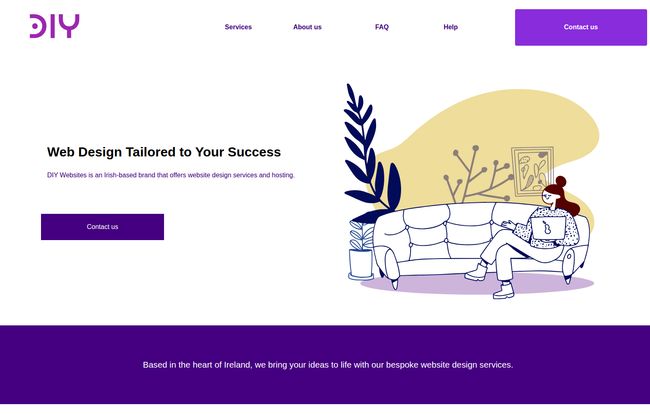
Visit DIY Websites
First Impressions: How Does It Feel to Use?
Okay, so while I didn’t build a site from scratch myself, I’ve spent enough time looking at their process and FAQs to get the vibe. The whole system is designed to be the polar opposite of the classic WordPress dashboard, which can feel like sitting in the cockpit of a 747 with no instructions. DIY Websites seems to be aiming for the ‘family car’ experience—easy, intuitive, and gets you where you need to go without any fuss.
They put a lot of emphasis on their mobile-friendly editor. This is bigger than it sounds. Being able to fix a typo or update your business hours from your phone while you’re waiting for a coffee is a small-business superpower. No more waiting until you’re back at your desk. It’s these little quality-of-life features that often make the biggest difference.
The Standout Features
Every platform has its bells and whistles. Here’s what stood out to me from an SEO and traffic perspective.
Your Own Little AI SEO Assistant
This is the one that got my attention. DIY Websites claims to have an AI-driven SEO optimization feature. Now, let’s be real, AI isn’t magic. It’s not going to get you to the top of Google overnight just by existing. But what it can do is handle the tedious, foundational stuff that most business owners forget or don’t know how to do. Think automated suggestions for page titles, meta descriptions, and image alt-text based on your content. For someone who doesn’t live and breathe SEO, having a little robot helper to guide you is a massive advantage. It helps you avoid the most common SEO mistakes right from the start.
Website Hosting and Security are Handled
Another huge plus is that hosting is included. And not just any hosting—it comes with an SSL certificate. That little padlock next to your URL? That’s the SSL, and since 2018, Google has flagged sites without it as ‘Not Secure’. It’s a massive trust signal for users and a confirmed, albeit small, ranking factor. Not having to shop for a hosting provider, figure out nameservers, and then install an SSL certificate is a huge weight off anyone’s shoulders. It just works.
The Trade-Offs: What Are the Catches?
No platform is perfect, and it’s the limitations that often determine if a tool is right for you. Here’s where DIY Websites might not be the best fit for everyone.
“The platform operates in what I call a ‘walled garden’. It’s incredibly safe and simple inside, but you can’t easily leave or bring in outside tools.
The ‘Walled Garden’ Conundrum
You can’t use your own hosting provider. This is a classic trade-off with all-in-one builders. The benefit is that they manage all the technical stuff, security, and updates. The downside is a lack of control. If you’re a developer who loves to tinker with server settings or want to migrate your site to a different host later on, you’re out of luck. Likewise, there’s no integration with WordPress. You are fully inside their ecosystem. For most of their target audience, this is probably a feature, not a bug. Simplicity over complexity.
Not Built for E-commerce
This is a big one. According to their own FAQ, you can’t create an e-commerce store with their platform. They can help you link out to a third-party platform like Shopify, but you can’t build an integrated online shop. This immediately tells you who their ideal customer is: service-based businesses, consultants, tradespeople, artists with portfolios, local restaurants, etc. If your primary goal is to sell products directly from your site, you’ll need to look elsewhere.
Here’s a quick breakdown of how I see it:
| The Good Stuff | The Potential Issues |
|---|---|
| Super user-friendly editor | No native e-commerce functionality |
| AI-assisted SEO is great for beginners | You can’t use your own hosting (locked in) |
| Hosting and SSL included (less hassle) | Doesn’t integrate with other builders like WordPress |
| Local, Irish-based team | No direct company email (needs Google Workspace) |
So, What’s the Price Tag?
This is where things get a bit mysterious. There’s no public pricing page on their site. Instead, they prompt you to “Contact us for a free consultation.” This can be a double-edged sword. On one hand, it suggests that they create custom quotes based on your specific needs, which is great. A simple one-page site shouldn’t cost the same as a more complex one. On the other hand, a lack of transparent pricing can be frustrating for people just trying to budget and compare options. My guess is that their bespoke service is a one-time project fee, while the DIY platform access is a recurring monthly or annual subscription, which is pretty standard.
Who Is This Really For?
After looking at everything, a very clear picture of the ideal DIY Websites customer emerges. This platform is for the Irish small business owner, the consultant, the freelancer, or the local service provider who is tired of technical hurdles. It’s for someone who values local expertise and wants a direct line to the people helping them. It’s for the person who says, “I just need a professional-looking website that I can update easily without breaking anything.”
Who isn’t it for? It’s not for the aspiring e-commerce mogul. It’s not for the blogger who wants an endless library of plugins and complete customization. And it’s not for the developer who wants to control every line of code. And that’s okay, no tool can be everything to everyone.
Final Thoughts: A Solid Choice for Simplicity Seekers
So, is DIY Websites the magic bullet? Of course not. But it is a very compelling option for a specific, and I think large, group of people. The combination of a bespoke design option with an easy-to-use editor, all backed by a local Irish team, is a strong proposition. The focus on removing technical barriers—handling hosting, SSL, and basic SEO—is exactly what most small businesses need.
If you’re a non-technical business owner in Ireland looking for a simple, effective web presence without the classic WordPress nightmare, I think giving them a call for that free consultation is a very smart move. It’s a focused solution that seems to do what it promises, and in this industry, that’s more then you can ask for sometimes.
Frequently Asked Questions
Can I actually edit my own website?
Yes, absolutely. Their platform is built for it. Once your site is live, you can log in to their editor to change text, add new pages, and upload different photos whenever you want. It’s designed to be simple.
Do I need to sort out my own website hosting?
Nope! Hosting is included in their service. They also include an SSL certificate, so your site is secure from day one without you having to do a thing. It’s all part of the package.
Is this platform any good for SEO?
It seems to be. While the heavy lifting of content creation is still on you, the platform’s AI-driven tools help with the technical SEO foundations. This gives you a much better starting point than you’d have with a builder that ignores SEO entirely.
Can I use my own custom domain name?
Yes. If you already own a domain name (like yourbusiness.ie), they can help you connect it to your new website. If you don’t have one, they can help you get one.
Can I build an online store to sell products?
No, not directly on the platform. DIY Websites is not designed for e-commerce. It’s meant for service-based businesses and online brochures. You could link to an external store, but it wouldn’t be integrated.
What if I want to cancel my subscription?
According to their site, you can cancel your subscription at any time. It’s a nice bit of flexibility that shows they’re confident in their service.


