
Categories: AI Advertising, AI Audio Editing, AI Marketing, AI Translate, AI Voice Over
DUBBAH Review: AI Dubbing That Doesn’t Suck?

We’ve all been burned by bad dubbing. You click on a killer-looking ad or a foreign film trailer, and the audio sounds like it was recorded in a tin can by a text-to-speech robot from 2005. The lips are doing one thing, the voice is doing another, and the emotional impact just… fizzles. It’s cringey. It pulls you right out of the experience and can make a million-dollar brand look cheap.
For years, as someone who lives and breathes traffic generation and global marketing campaigns, this has been a massive thorn in my side. The choice was either to shell out a fortune for a professional, multi-country voice-over team (and the project management headache that comes with it) or risk it with a subpar, robotic-sounding AI that completely misses the mark. So when I stumbled upon DUBBAH, my curiosity was piqued, but my skepticism was, let’s say, fully engaged.
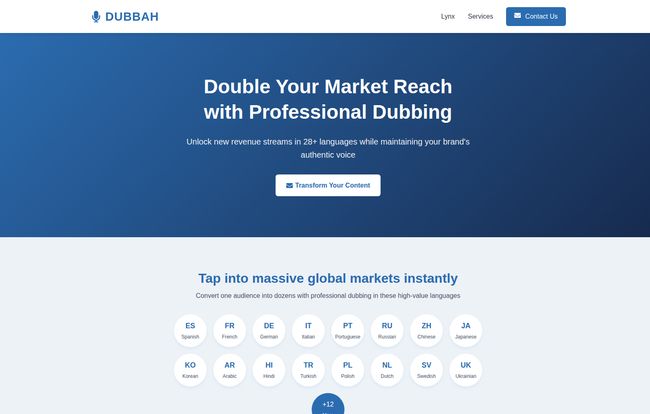
Their homepage hits you with a bold claim: “Double Your Market Reach with Professional Dubbing.” Okay, DUBBAH, you have my attention. But can you back it up?
So What on Earth is DUBBAH, Anyway?
At first glance, DUBBAH looks like another AI video translation tool. But digging a bit deeper, it’s clear they’re aiming for something more. They position themselves not just as a translation service, but as a full-on localization platform. It’s powered by AI, yes, but the focus is on creating “culturally-tuned” audio that maintains the “brand’s authentic voice.” That’s the holy grail, isn’t it?
It’s not just about swapping Spanish words for English words. It’s about understanding context, nuance, and intent. The platform boasts support for over 28 languages, from the usual suspects like Spanish and German to Japanese, Arabic, and Hindi. This isn’t just about crossing a border; it’s about genuinely entering a new market.
The Real Magic Isn’t Translation, It’s Localization
Here’s where things get interesting. One of DUBBAH’s core features is Ad Localization. This is what separates the pros from the amateurs. Think of it like this: telling a joke that lands perfectly in New York will probably get you blank stares in Tokyo. The same goes for marketing triggers. A call-to-action that feels urgent and compelling in the US might come across as aggressive or rude in Germany.
Visit DUBBAH
DUBBAH claims its AI understands these nuances. It aims to adapt your messaging so it speaks to each market’s unique buying triggers. This is the difference between a tourist awkwardly reading from a phrasebook and a local who knows the slang, the shortcuts, and how to actually connect with people. In my experience, this is where campaigns either fly or die. Getting the cultural tone right can dramatically boost conversion rates, and getting it wrong is just a waste of ad spend.
Slashing Production Costs Like a Pro
Okay, let’s talk money. The second thing that jumped out at me was the claim to “Save 60% On Production Costs.” As a marketer, my budget is always under a microscope. The idea of reshooting an entire ad campaign just to change a hook or update a promotion for a different region is the stuff of nightmares. It’s expensive, time-consuming, and an logistical mess.
DUBBAH offers something they call “Dynamic Content Optimization.” The pitch is that you can refresh existing video ads with new messaging without having to go back to the studio. You can just dub in new hooks or offers. If this works as advertised, it’s a game-changer. Imagine A-B testing different audio hooks on the same video creative across five different countries. The potential for optimization and ROI is frankly, massive. You could run hyper-targeted campaigns that would have been financially impossible before. A real budget-saver, for sure.
An Awesome Feature I Almost Missed: Thinking About Accessibility
I have to admit, I was so focused on the marketing and ROI side of things that I almost missed a truly brilliant feature mentioned in their service list: AI-powered described video for the visually impaired.
This is huge. And it’s not something you see every day. In our rush to create stunning visual content, it’s easy to forget about making it accessible for everyone. By using AI to understand what’s happening on-screen and provide audio descriptions, DUBBAH isn’t just helping brands make more money; they’re helping them be more inclusive. From a brand-building perspective, that’s golden. From a human perspective, it’s just the right thing to do. It also aligns with increasing global standards like the Web Content Accessibility Guidelines (WCAG), which is something more and more companies are (and should be) paying attention to.
Let’s Get Real: The Good, The Bad, and The Hazy
No tool is perfect. As much as I’m intrigued by DUBBAH, a balanced review means looking at the whole picture. So let’s break it down.
The Good Stuff
The upsides are pretty clear. You’re looking at a serious expansion of your market reach without the traditional costs. The promise of higher conversion rates through true cultural localization is incredibly appealing. And making your content accessible to the visually impaired is a massive win-win for both ethics and brand image. The whole package feels designed to solve a very real, very expensive problem for global marketers.
The Not-So-Good Stuff
On the flip side, there are a few things that give me pause. The website seems to require JavaScript to run, which could be an accessibility hiccup for a small subset of users—ironic, given their excellent described video feature. I also couldn’t find much information on the specific AI models they’re using. Is it a proprietary model? Are they building on something like OpenAI or Google’s tech? As a tech nerd, I want to know what’s under the hood.
And then there’s the pricing… or lack thereof.
The Million-Dollar Question: How Much Does DUBBAH Cost?
This is probably the biggest question on your mind, and unfortunately, I don’t have a simple answer. DUBBAH’s website doesn’t have a public pricing page. To get a quote, you need to contact them. Honestly, this always bugs me a little. I love transparent, tiered pricing.
However, in the B2B SaaS world, this is pretty common. It usually means they’re targeting enterprise-level clients or agencies with complex needs, and they create custom packages based on volume, number of languages, and specific features required. It suggests they’re not a cheap, one-size-fits-all solution, but a more premium, consultative service. So while it’s annoying, it also kind of makes sense given their focus on high-value localization.
My Take: Who Is DUBBAH Really For?
After going through everything, I don’t think this is a tool for your average YouTuber just starting out. The emphasis on ROI, ad localization, and custom quoting points squarely at a more professional audience. I see this being a perfect fit for:
- Marketing Agencies: Managing global campaigns for multiple clients would be so much more efficient with a tool like this.
- E-commerce Brands: Any brand looking to expand internationally and run video ads in new markets could see a huge return.
- SaaS Companies: Creating product demos and tutorials for a global user base.
- Corporate Training Departments: Localizing internal training videos for a multinational workforce.
If you’re a serious business with a budget for global expansion and a need for high-quality, culturally relevant video content, then DUBBAH should definately be on your radar.
Frequently Asked Questions About DUBBAH
What is DUBBAH in a nutshell?
DUBBAH is an AI-powered platform that provides professional audio dubbing, translation, and localization for video content. It helps businesses reach global audiences in over 28 languages, with a special focus on culturally-tuned ad localization and cost savings.
How many languages does DUBBAH support?
The platform supports professional dubbing in more than 28 languages, including major global languages like Spanish, French, German, Japanese, Chinese, and Arabic.
Is this just for advertising?
While DUBBAH heavily promotes its ad localization features, the technology is suitable for any type of video content. This includes corporate training videos, product demos, e-learning courses, and even entertainment content.
What makes DUBBAH different from other AI voice tools?
The main differentiator seems to be its focus on ‘cultural tuning’ and localization rather than just direct translation. They also offer dynamic content optimization to refresh ads without reshooting and provide described video services for the visually impaired, which is a significant accessibility feature.
Can I see the price before I sign up?
No, DUBBAH does not have public pricing listed on its website. You need to contact their sales team for a custom quote based on your specific project needs.
How does the process work?
They outline a simple three-step process: You share your video and target markets (your vision), they use their tech to create the perfect voice match with localized nuances, and then you launch the content and track the results.
Final Thoughts: Is DUBBAH Worth a Shot?
So, back to my original question: is this the AI dubbing we’ve been waiting for? I’m cautiously optimistic. DUBBAH seems to understand the core problem with global video marketing—it’s not about the words, it’s about the connection. By focusing on cultural tuning, dynamic optimization, and accessibility, they’re offering more than just a tool; they’re offering a strategy.
The lack of transparent pricing and deep technical details is a slight drawback, but the potential benefits for the right kind of business are too significant to ignore. If you’re tired of cringey dubs and looking to genuinely and effectively break into new global markets, I think starting a conversation with the folks at DUBBAH would be a very smart move.


