
Categories: AI Agent, AI Copywriting, AI Photo Editor, AI Product Description Generator
Hypotenuse AI Review: The AI Content Tool for Ecommerce?

Alright, let’s have a real chat. If you’ve been in the SEO or e-commerce space for more than five minutes, your inbox is probably a graveyard of pitches for the “next big AI writer.” They all promise the moon. They all claim to be the one tool that will finally, finally free you from the content treadmill.
Most of them, if we’re being honest, are just fancy wrappers for the same underlying tech, churning out slightly robotic, soulless copy. So when I first heard about Hypotenuse AI, my internal skeptic—a grizzled old veteran who’s seen it all—just sighed and put the kettle on. Another one.
But then I started poking around. And I’ll admit, my skepticism started to… well, not vanish, but it definitely got quieter. This wasn’t just another blog post spinner. It felt different. It’s built from the ground up with a very specific person in mind: the frazzled, overworked ecommerce manager staring down a spreadsheet of 10,000 SKUs that all need unique, compelling, and SEO-friendly descriptions. Yesterday.
What Exactly is Hypotenuse AI, Anyway?
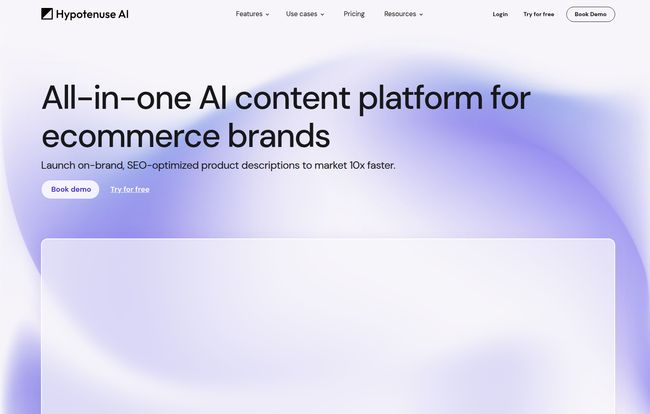
Instead of trying to be a jack-of-all-trades, Hypotenuse AI has planted its flag firmly in the world of e-commerce. Think of it less as a simple AI writer and more like an AI-powered content operations platform. It’s designed to create and enrich product content, from the descriptions themselves to the underlying data and even the images. It’s an ambitious pitch, for sure. They call themselves an “AI agent platform,” which sounds a bit futuristic, but it basically means it’s trying to automate a whole chain of tasks, not just one.
Visit Hypotenuse AI
The Standout Features That Caught My Eye
A tool is only as good as its features, right? Here’s what made me lean in a little closer.
Not Just Content, But Your Content: The Brand Voice Feature
This is the big one for me. The single greatest failure of most AI content tools is their inability to capture a unique brand voice. Everything comes out sounding like a friendly but slightly generic LinkedIn post. Hypotenuse AI tackles this head-on with its “Bespoke Brand Voice” feature. You can feed it existing materials, style guides, and examples, and it learns to mimic your tone. Is it perfect? No AI is. You still need a human to do a final polish. But its a massive leap forward from picking from a dropdown of “Witty,” “Professional,” or “Casual.” It’s the difference between a rental tux and a tailored suit.
The Bulk Workflow: A True Timesaver or Just a Gimmick?
I’ve seen “bulk creation” before, and often it just means pasting the same terrible, templated sentence structure over a list of product names. A recipe for duplicate content penalties and bored customers. Hypotenuse’s approach seems more robust. You can import product data via CSV or connect directly to platforms like Shopify. From there, you can generate thousands of unique descriptions at once. For a business launching a new season’s collection or migrating their whole catalog, this isn’t just a feature; it’s a lifeline. It’s what separates a tool for hobbyists from a tool for actual business operations.
Beyond Words: Product Data Enrichment and AI Image Editing
Here’s where it gets interesting. Hypotenuse AI claims it can look at a product image and automatically extract attributes—like color, material, style, etc. This data can then be used to generate even more detailed descriptions or to automate product tagging. This is huge. It turns a manual, mind-numbing task into an automated process. They’ve also bolted on an AI image editor for creating marketing assets. I see this as them trying to become a central hub for all things product content, not just the text. It’s a smart play.
“I love creating hundreds of descriptions at once, easily customizing tone, and having AI-suggested USPs and keywords. It’s one of the few tools that can handle both the creative and practical side of writing for e-commerce.
– A testimonial that actually rings true to the product’s core promise.
Keeping Google Happy: Built-in SEO Tools
As an SEO guy, I’m always wary of built-in SEO tools. They can be… basic. Hypotenuse includes keyword research and SEO monitoring for your product pages. The real value, in my opinion, isn’t in replacing a dedicated tool like Ahrefs or Semrush, but in closing the gap between content creation and SEO. It ensures that the descriptions being generated aren’t just pretty words; they’re built on a foundation of what people are actually searching for. It’s about making SEO a part of the workflow from the start, not an afterthought. That I can get behind.
Let’s Talk Turkey: Hypotenuse AI Pricing
Okay, the million-dollar question. Or, in this case, the $19-a-month-and-up question. The pricing structure is a bit complex because it’s split between plans for Blog/Marketing Content and dedicated Ecommerce Plans. Here’s my attempt to simplify it.
For general content and blogs, it starts with an Entry plan at $29/month ($19/mo if billed annually) for hobbyists, giving you 50,000 words. The plans scale up to an Essential plan at $87/month ($56/mo annually) for freelancers and a Blog Pro plan from $230/month ($150/mo annually) for teams who need more advanced SEO features.
Now, for the main event—the Ecommerce plans. The Basic plan starts at $150/month (annually) for sites with under 100 products. This feels a little steep for a “basic” plan, but it’s clearly aimed at serious businesses. For the bigger players, there are the Ecommerce Pro and Ecommerce Enterprise tiers, which are both “Custom” pricing. That means you have to get on a call with sales. I know, I know, its a pain, but for that price, you’re getting things like bulk workflows, dedicated support, and bespoke AI models. This is enterprise-grade software with an enterprise-grade process.
You can check their full, up-to-date pricing on their website, as these things tend to change.
The Good, The Bad, and The AI-Generated
No tool is perfect. Let’s break it down. On the plus side, the deep focus on e-commerce is brilliant. The customizable brand voice and bulk workflows are genuine game-changers for anyone managing a large product catalog. The integration with platforms like Shopify is a massive practical win.
On the other hand, that reliance on AI means you can’t just set it and forget it. You must have a human in the loop for quality control, fact-checking, and adding that final creative spark. Some of the most powerful features are locked behind the higher-tier and custom plans, which might put them out of reach for smaller businesses. And the custom pricing model for Pro plans, while standard for enterprise software, can be a barrier for teams who just want to know the cost upfront.
Who is Hypotenuse AI Really For?
After spending time with it, I have a pretty clear picture.
- Mid-to-Large Ecommerce Brands: This is the bullseye. If you have hundreds or thousands of products and a dedicated marketing team, Hypotenuse AI could slot right into your workflow and save you an astonishing amount of time.
- Ecommerce Agencies: If you manage multiple online stores for clients, the ability to create distinct brand voices and churn out high-quality product descriptions at scale is a superpower.
- Fast-Growing Startups: For a rapidly scaling D2C brand, this tool can help your content operations keep pace with your growth without having to hire a huge team of copywriters immediately.
Who is it not for? Probably the solo blogger or the dropshipper with only a handful of products. The price and feature set are likely overkill. There are simpler, cheaper AI writers for those needs.
Frequently Asked Questions
Can you really trust the AI to write good copy?
You can trust it to do about 85-90% of the heavy lifting. It produces a fantastic first draft that’s on-brand and SEO-aware. But you should always, always have a human editor review and refine the output. Think of it as an incredibly efficient junior copywriter, not a replacement for your creative director.
Is Hypotenuse AI better for blog posts or product descriptions?
While it has solid blog writing capabilities, its heart and soul are in e-commerce. The features for bulk generation, data enrichment, and Shopify integration are all tailored for product pages. It’s one of the best I’ve seen for product descriptions, period.
What’s the biggest advantage of the custom Enterprise plan?
Beyond more seats and priority support, the biggest advantages are the bespoke AI models and workflows. They will literally build and train a model specifically for your brand’s unique needs and content formats. It’s the difference between off-the-rack and true couture.
Does the SEO monitoring replace a tool like Semrush?
No, and it’s not trying to. It’s a complementary feature. Use your dedicated SEO tool for deep competitor analysis and technical audits. Use the Hypotenuse SEO features to ensure the content you’re creating in the moment is aligned with your keyword strategy.
Final Verdict: Is Hypotenuse AI Worth the Hype?
So, back to my grizzled old skeptic. Is he a convert? Let’s just say he’s intrigued. Hypotenuse AI isn’t just another AI writer. It’s a thoughtful, well-designed platform that understands the specific pain points of running an online store. It’s not magic, and it won’t solve all your problems. You still need strategy, you still need human oversight, and you still need a good product to sell.
But for the right company, this tool could be the engine that takes content production from a bottleneck to a business accelerator. It’s a serious tool for serious businesses, and in a sea of me-too AI products, that’s refreshingly honest. It’s definitely one to watch, and for any e-commerce brand feeling the content crunch, it’s absolutely worth a demo.


