
Categories: AI Jobs, AI News, AI Podcast
ICAI Review: The Dutch Hub for AI Talent & Innovation

As someone who lives and breathes SEO and digital trends, my inbox is a graveyard of pitches for the “next big thing in AI.” Most of them are just shiny wrappers on a familiar API, promising to revolutionize my workflow but usually just adding another subscription to my credit card statement. It takes a lot to make me sit up and take notice.
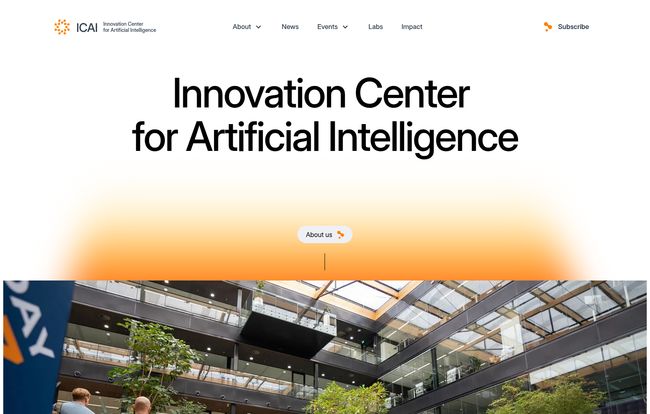
But every once in a while, you stumble upon something that isn’t a product at all. It’s a system. An ecosystem. And that’s the feeling I got when I started poking around the Innovation Center for Artificial Intelligence, or ICAI, as it’s known. This isn’t something you download or sign up for with a freemium plan. It’s something bigger.
Based in the Netherlands, ICAI is less of a tool and more of a national strategy brought to life. And I have to say, it’s a fascinating model.
So, What Exactly is This ICAI Thing?
Imagine you’re trying to build a world-class sports team. You don’t just hire a few star players, right? You need a talent pipeline from the youth leagues, top-tier coaching staff, state-of-the-art training facilities, and a front office that works with city officials to build a new stadium. You need the whole system.
That’s my best analogy for ICAI. Founded by two academic heavyweights, the University of Amsterdam and Vrije Universiteit Amsterdam, it acts as a super-connector. It weaves together the threads of academia (the brilliant researchers), industry (the companies with real-world problems and data), and government (the ones who set the national agenda and, let’s be real, often hold the purse strings). The goal? To turn the Netherlands into a hotbed for AI talent and technology. A noble goal, and one many countries are trying to figure out.
Visit ICAI
The Core Mission: A Three-Pronged Approach
From what I’ve gathered, ICAI’s work isn’t scattered. It’s focused on a few key areas that feed into each other, creating a cycle of innovation. It really boils down to three main pillars.
Cultivating the Next Generation of AI Talent
This is huge. ICAI isn’t just talking about a skills gap; it’s actively trying to fill it by facilitating PhD positions. These aren’t just any academic posts. They are deeply integrated with industry partners. A PhD student might be working on a fundamental AI problem that has direct application to a challenge at a company like Philips or Ahold Delhaize. It’s a win-win: the student gets incredible resources and real-world experience, and the company gets cutting-edge research directed at its own needs. Their tagline, “Moving talent forward,
isn’t just marketing fluff; its baked into their DNA.
Fostering Radical Collaboration in AI Labs
The “Labs” are the heart of ICAI. These are long-term partnerships focused on a specific area of research. Think of labs for AI in healthcare, media, or sustainable energy. It’s here that professors, PhDs, and industry experts all get in the same (virtual or physical) room to tackle big problems. This model breaks down the silos that so often slow things down. Academia can be slow, and industry can be shortsighted. By forcing them to work together, you get the rigor of academic research applied at the speed of business. It’s a classic public-private partnership model, but with a sharp focus on AI.
Sharing Knowledge with Everyone
Innovation that happens behind closed doors doesn’t help anyone. ICAI seems to get this. They run public events and congresses—like the one I saw on their site about AI in Healthcare—to share findings and spark debate. They even have a science podcast called Snoek op Zolder, which literally translates to “Pike in the Attic.” It’s a quirky, very Dutch name that hints at finding surprising or unexpected insights in hidden places. I love that. It shows personality, something that is often missing from these kinds of initiatives. It reminds you there are real, curious people behind the corporate-looking logo.
Why This Collaborative Model is So Important Right Now
We’re in the middle of a global AI arms race, and for a long time, the narrative has been dominated by massive US tech giants and state-backed programs in China. What I find so compelling about ICAI is that it represents a different path—a uniquely European one, perhaps? It’s built on collaboration, not just competition. It’s a recognition that no single entity, not even the biggest corporation, has all the answers.
This approach builds a resilient, domestic talent base and keeps intellectual property within the local ecosystem. Instead of a few companies hoarding all the top AI minds, you’re creating a shared pool of expertise that can lift the entire national economy. It’s a long-term play, and in the world of quarterly-earning reports, that kind of foresight is refreshing.
Of course, the platform has its quirks. The website, while clean, can feel a little geared toward people already in the know. Finding a simple “Here’s how to join” page isn’t immediately obvious. But then you hit their 404 error page, and it says, “Class Dismissed!” It’s a small thing, but it made me smile. It shows a self-awareness and a bit of academic humor.
Also Read: GovAI: Navigating the Future of Advanced AI
The Dutch Focus: A Bug or a Feature?
One of the first things you’ll notice is that ICAI is, without a doubt, focused on the Netherlands. If you’re a company in Canada or a researcher in Japan, you can’t just “join” ICAI. And that’s okay. I don’t see this as a weakness; I see it as a strategic focus. By concentrating its resources on one country, it can achieve a depth of integration that a global, more diffuse network couldn’t manage.
That said, the lessons from ICAI are universal. Any government or academic body looking to boost its own AI capabilities should be taking notes. This is a blueprint for how to build a sovereign, collaborative AI ecosystem from the ground up.
Let’s Talk About the Price Tag
There isn’t one. You won’t find a pricing page on the ICAI website, and that’s because it’s not a service you buy. The “cost” of entry is commitment. For companies, it’s a significant investment in funding multi-year research labs. For academics, it’s dedicating their work to these collaborative projects. For students, its the rigor of a PhD program. The currency here isn’t euros or dollars; it’s intellectual capital and a shared vision for the future of artificial intelligence.
Frequently Asked Questions about ICAI
- What is ICAI in simple terms?
- ICAI is a Dutch organization that connects universities, companies, and the government to work together on artificial intelligence. Think of it as a matchmaker for AI research and development, focused on creating new technology and training experts.
- Who can get involved with ICAI?
- Primarily, ICAI is for academic institutions, companies (from startups to large corporations), and governmental bodies in the Netherlands. Individuals can get involved through PhD positions offered within the ICAI Labs.
- Is ICAI only for people and companies in the Netherlands?
- Yes, its core activities and partnerships are centered within the Netherlands. However, the model and the research that comes out of it have global relevance, and they collaborate with international entities within their projects.
- How is ICAI funded if it’s not a paid service?
- It operates on a partnership model. Funding comes from the industry and governmental partners who invest in the research labs and PhD positions. It’s a collaborative investment rather than a customer transaction.
- What are the ICAI Labs?
- The Labs are multi-year collaborations between academic and industry partners focused on a specific area of AI research, such as healthcare, energy, or media. They are the primary engine for ICAI’s research and talent development.
- What does the podcast name “Snoek op Zolder” mean?
- Literally, it’s “Pike in the Attic.” It’s a Dutch expression that refers to something being completely out of place or unexpected. It’s a creative way of saying their podcast uncovers surprising and unconventional ideas in the world of science and AI.
My Final Thoughts
In a field cluttered with hype, ICAI stands out. It’s a serious, strategic, and long-term effort to build something sustainable. It’s not a quick fix or a flashy tool. It’s the hard, necessary work of building an foundation for future innovation. While its direct impact is on the Netherlands, its model is a case study the rest of us should be watching closely.
ICAI isn’t building the next viral AI app. It’s building the factory where the creators of those future apps will be trained. And in the long run, thats a much, much smarter game to play.


