
Categories: AI Chatbot, AI Customer Service, AI Lead Generation, AI Sales Assistant, AI Voice Assistants, No-Code&Low-Code
Inya.ai Review: No-Code GenAI Agents for Business?

If you’re running a business, a startup, or even a busy freelance operation, you’re probably drowning. Drowning in emails, in customer queries, in missed sales opportunities that came in at 2 AM. We’ve all been there. The dream is to have a team working around the clock, but the reality is… well, budgets.
For years, the tech world has been whispering about a solution: AI. First, it was clunky chatbots that frustrated users more than they helped. Now, the new buzz is all about “GenAI Agents.” These aren’t just simple responders; they’re supposed to be thinkers and doers. But this usually comes with a catch: you need a team of developers, a PhD in machine learning, or a budget the size of a small country. Or so I thought.
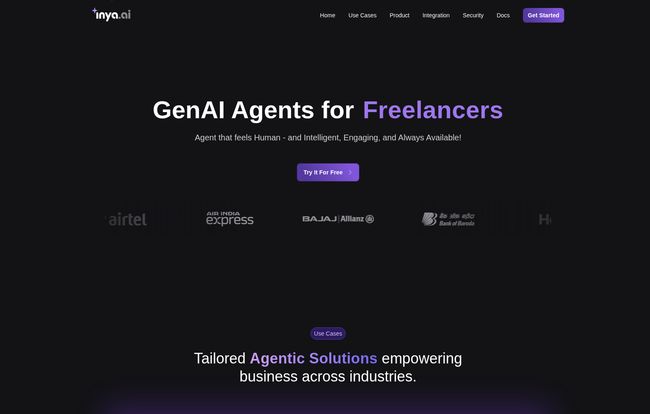
Then a platform called Inya.ai popped onto my radar. It makes a bold claim: you can build, customize, and deploy your own intelligent GenAI agents in a snap. No code required. As someone who’s spent more years than I’d like to admit in the trenches of SEO, traffic gen, and digital strategy, my hype-meter is pretty well-calibrated. I’ve seen a lot of ‘game-changers’ fizzle out. So, I decided to take a closer look. Is this the tool that finally democratizes AI for the rest of us?
What Exactly is Inya.ai Anyway?
First off, let’s get one thing straight. This isn’t just another chatbot builder. The term they use is “Agentic AI,” which sounds a bit like something out of a sci-fi movie, I know. But the concept is simple. Think of it less like a FAQ bot and more like hiring a team of hyper-efficient digital employees.
An agent built on a platform like Inya.ai is designed to do more than just answer a question from a script. It can understand intent, handle multi-step processes, qualify leads, and even integrate with your existing tools to perform actions. It’s the difference between a receptionist who can only say “hello” and one who can book an appointment, update your calendar, and send a confirmation email. See the difference? It’s a big one.
The “No-Code” Promise: Can You Really Build an AI Without Writing Code?
This is the part that always gets me. “No-code” is a fantastic marketing term, but it can often mean “low-code with a bunch of confusing menus.” So how does Inya.ai stack up? Their process seems to be broken down into three refreshingly simple steps:
- Pick Your Agent’s Blueprint: You start with a pre-built template. They have them for things like E-commerce Assistance, Healthcare Support, and even HR. This is smart. Instead of giving you a blank, intimidating canvas, they give you a coloring book that’s already 80% finished.
- Customize Your Agent: This is where you inject your brand’s personality. You can tweak the responses, define its goals, and—this is cool—customize its voice to sound more human and on-brand.
- Test and Deploy: You can chat with your new AI agent, see how it performs, and then set it loose on your website, WhatsApp, or other platforms.
This template-driven approach is a double-edged sword, and we’ll get to that later. But for the small business owner or freelancer who needs something up and running yesterday, it’s a godsend. You don’t need to understand the intricacies of natural language processing to get started.
Visit Inya.ai
Speaking the World’s Language (Literally)
Here’s a feature that really caught my eye, especially from an SEO and market expansion perspective. Inya.ai boasts support for over 10 Indic languages and 15+ global languages. This isn’t just a small feature; it’s a massive strategic advantage.
We’ve all seen websites with a clumsy Google Translate plugin. It’s better than nothing, I guess, but it doesn’t inspire trust. True multilingual support means the AI understands the nuances and context of Hindi, Tamil, or Spanish, not just a word-for-word translation of the English script. For any business looking to tap into the massive Indian market or expand globally, this is huge. You can offer genuine, localized customer support automation without hiring a dozen multilingual agents. That’s a powerful proposition.
The Big Numbers: Can It Really Cut Costs by 50%?
Okay, let’s talk about the claims on their homepage. 50% cost reduction, 90% time savings, 30% engagement boost. Are these real, or just marketing fluff? In my experience, the truth is usually somewhere in the middle.
- Cost Reduction: Can it cut costs by 50%? If you’re currently paying for a 24/7 human support team or a pricey call center, then yes, absolutely. Automating the first line of defense for common queries can drastically reduce your overhead.
- Time Savings: 90% is a huge number, but think about it. How much time do you or your team spend answering the same five questions every single day? Or manually qualifying leads? By automating that, you’re freeing up human brainpower for high-value tasks. So, plausible.
- Engagement Boost: This one I fully believe. The number one killer of online sales is slow response times. An AI agent offers instant gratification. A user gets an answer now, not in 24-48 business hours. This immediate interaction is key to keeping potential customers on your site and guiding them through a purchase.
These figures are obviously best-case scenarios, but they point to the core value of sales automation and support. It’s about efficiency and being perpetually available for your customers.
Let’s Talk Integrations and Security
An AI agent is pretty useless if it’s trapped on an island. It needs to talk to your other systems. Inya.ai seems to understand this, highlighting integrations with CRM, Chat, and Ticketing systems. This means your agent can create a new lead in Salesforce, open a support ticket in Zendesk, or pass a conversation to a live human in your chat tool. This is the stuff that turns a cool tech demo into a functional business tool.
Now, for the big one: security. Handing over customer conversations to an AI is a scary thought. Data privacy is not a feature; it’s a requirement. I was genuinely pleased to see a strong focus on this. They list four pillars for their security foundation: Data Governance, Identity & Access Management, Data Privacy & Compliance and Monitoring & Transparency. This shows they’re not just a fly-by-night startup jumping on the AI bandwagon. They’re thinking about the serious, enterprise-level concerns that businesses have. That builds a lot of trust.
The Not-So-Shiny Parts: A Realistic Look
No tool is perfect. As much as I’m intrigued by Inya.ai, it’s only fair to look at the potential downsides. Based on my experience with similar platforms, here are a few things to consider:
- The Template Trap: Those blueprints that make it so easy to start? They can also be limiting. If you have a truly unique, complex workflow, you might find yourself bumping up against the boundaries of what a template can do. Full customization might still require a more developer-focused solution.
- The “No-Code” Learning Curve: While you don’t need to write Python, you do need to think like a programmer. Building an effective agent requires logic, planning, and an understanding of conversational flows. It’s easier than coding, for sure, but don’t expect to build a perfect agent in five minutes with zero effort.
- Dependency on the Big Guys: The platform’s intelligence is ultimately powered by underlying large language models (like those from OpenAI, Google, etc.). If those models have a bad day or a weird update, your agent’s performance could be affected. It’s an external dependency you have little control over.
So, How Much Does Inya.ai Cost?
Ah, the million-dollar question. Or, hopefully, a lot less. At the time of writing, Inya.ai doesn’t have a public pricing page. This is pretty common for B2B SaaS platforms targeting a range of customers from freelancers to enterprises. It usually means pricing is customized based on your needs—things like the number of agents, the volume of interactions, or the specific integrations you require.
My guess? You’re looking at a tiered subscription model. You’ll likely need to contact their sales team for a demo and a custom quote. Don’t let that scare you off; it often means you won’t pay for features you don’t need.
My Final Take: Who Should Use Inya.ai?
After digging in, I’m genuinely optimistic. Inya.ai seems to be a serious contender in the no-code AI space. It’s not trying to be a one-size-fits-all solution for every AI problem on the planet. Instead, it’s focused on a very real, very painful business problem: managing customer and sales interactions at scale.
This is probably a great fit for:
Small to medium-sized businesses, busy freelancers and agencies, marketing and support teams within larger companies, and any business that wants to expand its reach to a global, multilingual audience without breaking the bank.
This might NOT be the best fit for:
Large enterprises with in-house AI teams that need to build completely proprietary systems from the ground up. If you need 100% control over the underlying model and architecture, you’re probably not the target audience.
Frequently Asked Questions about Inya.ai
-
1. Is Inya.ai just another chatbot?
- No. Think of it as a step up. A traditional chatbot follows a rigid script. An AI agent from Inya.ai is designed to understand intent, handle more complex, multi-step tasks, and integrate with other software to actually get things done.
-
2. How much technical skill do I really need?
- You don’t need to be a coder. However, you should be comfortable with logical thinking. If you can map out a customer journey on a whiteboard, you have the skills needed to build a basic agent here. There will be a learning curve, but it’s a business logic curve, not a coding one.
-
3. Can it handle languages like Hindi or Tamil effectively?
- This appears to be one of its core strengths. With dedicated support for 10+ Indic languages, it’s designed specifically to handle the nuances of these languages far better than a simple translation tool.
-
4. Is my customer data safe with Inya.ai?
- They put a heavy emphasis on security, with clear policies on data governance, privacy, and compliance. For any business, this should be a primary concern, and it seems Inya.ai has made it a priority.
-
5. How does it integrate with my existing tools like Salesforce or Zendesk?
- It’s built to connect with common business systems like CRMs and ticketing platforms. This allows the AI to perform real actions, like creating a support ticket or adding a new lead, making it a functional part of your workflow.
-
6. What’s the pricing model for Inya.ai?
- There’s no public pricing list. You’ll need to contact them directly for a quote. This typically means they offer custom packages based on your usage and needs.
Is the Revolution Here?
The world of AI for business is moving incredibly fast, and it’s noisy. It’s easy to get lost in the hype. But Inya.ai seems to cut through some of that noise with a practical, focused solution. The combination of a no-code interface, powerful multilingual capabilities, and a serious approach to security is compelling.
Is it going to put your entire customer service team out of a job tomorrow? No. But could it free them from repetitive tasks so they can focus on what humans do best? Absolutely. For any business feeling the pressure of being ‘always on’, Inya.ai is definitely worth a look. It might just be the digital team you’ve been waiting for.


