
Categories: AI Assistant, AI Copilot, AI Cover Letter Generator, AI Jobs, AI Resume Builder, Resume AI
Jobright Review: Your AI Copilot for Job Hunting?

Job hunting is a drag. It’s a soul-crushing, resume-flinging, hope-draining marathon that can make even the most optimistic person question their life choices. We’ve all been there, spending hours perfecting a resume and cover letter, launching it into the digital abyss of an online portal, only to get an automated rejection two minutes later. Or worse, complete silence. It feels like shouting into the void.
For years, we’ve been told to “play the game”—tweak keywords, network relentlessly, and basically become a full-time marketer for the brand of ‘Me’. But what if the game itself is changing? What if we could have a secret weapon, an intelligent partner to navigate the chaos? That’s the promise of tools like Jobright, which calls itself an AI job search copilot. And I have to admit, I’m intrigued.
So, What on Earth is an AI Job Search Copilot?
Forget everything you know about traditional job boards. They’re basically giant, clunky filing cabinets of job descriptions. You type in a title, and it spits back a thousand loosely related results. Jobright aims to be something different. Think of it less like a search engine and more like a strategic navigator for your career flight.
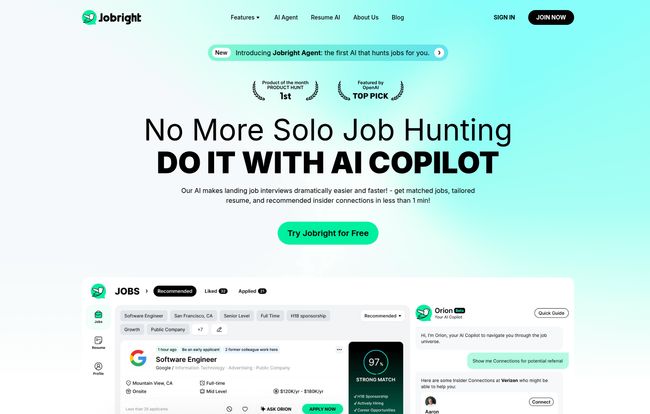
It’s designed to sit next to you in the cockpit, analyzing the terrain (the job market), optimizing your aircraft (your resume), and plotting the most efficient route to your destination (a job you actually want). It uses artificial intelligence not just to match keywords, but to understand your profile and the nuances of a job description. A pretty bold claim, but one that could genuinely change how we approach the job hunt.
Visit Jobright
Breaking Down The Jobright Toolkit
Okay, so “AI Copilot” sounds cool and futuristic. But what does it actually do? I poked around its features, and here’s the breakdown of its core components, based on what I’ve seen.
The Magic of AI-Powered Job Matching
This is the heart of the platform. Instead of you endlessly scrolling through LinkedIn or Indeed, Jobright’s AI sifts through the noise for you. You give it your resume, your experience, your skills, and it supposedly presents you with a curated list of jobs that are a genuine fit. Not just a keyword match, but a contextual fit. In theory, this means no more seeing “Senior Data Scientist” roles when you’re a junior graphic designer who once used Excel. The goal is to slash the time you spend searching and dramatically increase the relevance of what you find.
Your Resume, Now a Shape-Shifter
This feature, Resume AI, got my attention. Any seasoned job seeker knows the golden rule: tailor your resume for every single application. It’s also the most tedious, mind-numbing task in the entire process. I’ve spent countless nights rewording bullet points to mirror the language in a job post. It’s a game we all have to play to get past the initial screening bots, the infamous Applicant Tracking Systems (ATS).
Jobright automates this. Its AI analyzes a specific job description and then helps you tweak your resume to highlight the most relevant skills and experiences. It’s like having a tiny, hyper-efficient editor who knows exactly what the hiring manager (or their robot gatekeeper) is looking for. This alone could be a massive time-saver and significantly boost your chances of getting your resume into a human’s hands.
Cracking the Code on Insider Connections
We’ve all heard the frustratingly true adage: “It’s not what you know, it’s who you know.” Getting a referral is often the single most effective way to land an interview. But finding that connection can be awkward and difficult. Jobright’s “Insider Connections” feature attempts to digitize this process. It helps you identify people within your existing network—or maybe a degree or two away—who work at the companies you’re applying to. It streamlines the process of finding that ‘in’ and asking for a referral, turning a cold application into a warm introduction. It’s a smart move, because it leverages a timeless job-seeking truth with modern tech.
The Reality Check: The Good, The Bad, and The AI
Alright, it all sounds fantastic on paper. But as someone who’s seen a million ‘game-changing’ tech tools come and go, I’m naturally a little skeptical. Let’s weigh the potential highs and lows.
The Obvious Advantages
The biggest pro is time. The sheer amount of hours Jobright could save you is staggering. Automating the search, the resume tailoring, the network-combing… that’s dozens of hours back in your pocket. This frees you up to focus on what really matters: preparing for interviews, writing thoughtful follow-ups, and, you know, not losing your mind.
The strategic advantage is also huge. It forces a more targeted, less “spray and pray” approach. By focusing only on high-match-score jobs, you’re investing your energy where it has the best chance of paying off. That’s just smart strategy.
Some Potential Turbulence
Now, for the other side of the coin. First, any AI is only as good as the information you give it. If your resume is poorly written or you don’t provide clear career goals, the AI’s recommendations might be off-base. It’s a “garbage in, garbage out” situation. You still have to do the foundational work of knowing what you want and presenting your experience clearly.
Second, there’s the human element. Some might argue that over-relying on AI for resume tailoring could create a generation of cookie-cutter applications. While it’s great for getting past bots, you still need your personality to shine through in the interview. This is a tool, a copilot, not an autopilot. You’re still the one flying the plane.
Finally, there’s the question of access. The best features will almost certainly require a subscription. This is standard practice, but it’s a barrier for some job seekers, especially if they’ve been out of work for a while.
So, What’s the Damage to My Wallet?
This is the million-dollar question, isn’t it? As of my writing this, Jobright’s pricing isn’t plastered all over its homepage. This is pretty common for new SaaS tools, who might be testing different price points or offering customized plans. It likely operates on a freemium model—a basic free tier to get you hooked, with the powerful AI features locked behind a monthly or annual subscription. I’d expect it to be in line with other premium career tools, maybe somewhere in the $20-$50/month range, but that’s just my educated guess.
My Final Take: Is Jobright Worth a Shot?
In my opinion, yes. The modern job search is broken in so many ways, and I’m all for any tool that tries to fix it. The concept of an AI copilot that handles the most monotonous and soul-crushing parts of the process is incredibly appealing.
This tool seems perfect for:
- Tech professionals, marketers, and anyone in a competitive field where hundreds of applications are the norm.
- Career changers who need help aligning their past experience with new roles.
- Anyone who’s simply exhausted by the traditional job hunt and wants a smarter way to work.
It’s not a magic wand that will land you a job overnight. You still need to be qualified, personable, and good at interviewing. But Jobright could be the thing that gets your foot in the door more often, and with a lot less headache. It’s about working smarter, not harder, and in today’s job market, that might be the most valuable advantage of all.
Also Read: Aleph Alpha: Sovereign AI Beyond the Hype
Frequently Asked Questions About Jobright
- How is Jobright different from LinkedIn or Indeed?
- LinkedIn and Indeed are primarily massive job boards and networking platforms. Jobright is a more focused, strategic tool. It sits on top of the job market, using AI to actively help you search, tailor your resume for specific roles, and find connections, acting more like a personal career assistant than a simple database.
- Is Jobright’s AI resume builder safe to use?
- From a technical standpoint, yes. However, you should always treat it as a powerful suggestion tool. Use its recommendations to get past automated screening systems, but always give your resume a final human review to ensure it accurately reflects your voice and experience. Don’t just copy and paste without thinking.
- Can Jobright guarantee me a job?
- No, and you should be wary of any service that makes such a claim. Jobright is designed to increase your efficiency and effectiveness, leading to more interviews. It optimizes the top of the funnel. The rest—nailing the interview and securing the offer—is still up to you.
- Do I need to be a tech expert to use Jobright?
- Not at all. The interface I’ve seen appears clean and user-friendly. It’s designed for job seekers, not developers. If you can use other modern web applications, you should have no problem navigating Jobright.
- Is there a free version of Jobright?
- While pricing isn’t fully transparent, it’s highly likely there is a free trial or a limited free version available. This allows you to test out the platform before committing to a paid subscription for the more advanced AI-powered features.
Conclusion
The loneliness of the solo job hunt is a real thing. Having an intelligent tool to help manage the process, offer strategic advice, and handle the grunt work feels less like a luxury and more like a necessity in 2024. Jobright positions itself as that much-needed copilot. While it won’t fly the plane for you, it just might give you the instruments and navigation you need to finally reach your destination without running out of fuel. For any frustrated job seeker out there, that’s a very hopeful thought.


