
Categories: AI Agent, AI Data Mining, AI Document Extraction, AI Lead Generation, AI Web Scraping, AI Workflow
Jsonify Review: AI Data Extraction Without the Hassle?

If you’ve been in the digital marketing or data analysis game for more than a week, you’ve felt the pain. The mind-numbing, soul-crushing task of pulling data from the web. You know the drill: copy, paste, reformat, repeat. Or you set up a scraper, and it works perfectly… for about three days, until some dev changes a class name and the whole thing falls apart. It’s a constant, frustrating battle.
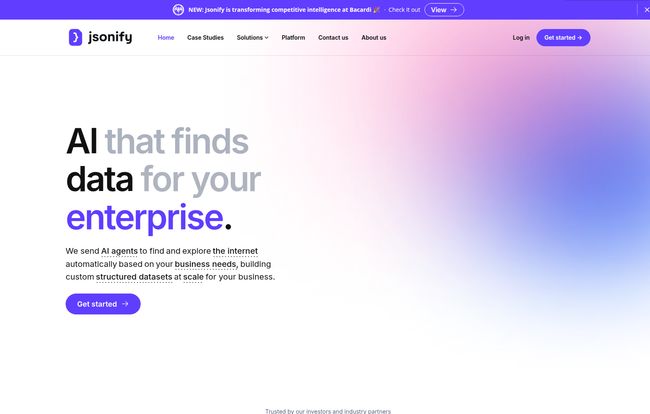
So when I see a tool pop up with the headline, “AI that finds data for your enterprise,” my curiosity gets piqued. But so does my skepticism. We’ve all seen promises of AI magic that turn out to be little more than a fancy macro. The platform in my sights today is Jsonify. They claim their AI agents can browse, monitor, and extract structured data all on their own, based on your objective. A big claim. So I decided to take a closer look, peel back the marketing language, and see what’s really under the hood. Is this the real deal or just another tool in the ever-growing MarTech pile?
Visit Jsonify
So, What Exactly Is Jsonify?
Okay, let’s break it down. Jsonify isn’t your standard web scraper. I’ve used plenty of those, from simple browser extensions to complex Python libraries like Scrapy and Beautiful Soup. Most of them are what I’d call ‘brittle’. They follow a rigid set of rules: “go to this page, find the div with the ID ‘product-price’, and grab the text.” The moment that ID changes, your script is toast.
Jsonify seems to take a different path. Instead of giving it a rigid map, you give it a mission. You don’t say “find this specific element,” you say “I need the names, prices, and stock levels for all the running shoes on this site.” The AI agent then navigates the website like a human would—clicking through pages, understanding layouts, and identifying the data you care about. It’s less like a robot following a script and more like hiring a team of hyper-focused research assistants who dont need sleep or coffee.
They’re aiming this at serious business problems: generating leads, keeping an eye on competitor pricing, automating sales enablement, even parsing complex documents. The kind of repetitive work that eats up thousands of man-hours at larger companies.
The Features That Actually Caught My Eye
Any platform can throw a list of features on a landing page. But after years of this, you learn to spot the ones that genuinely solve a problem. A few of Jsonify’s capabilities really stood out to me.
Self-Healing Scrapers: The Holy Grail of Data Extraction?
This is the big one. Jsonify calls it “self-healing scraping.” If you’ve ever managed a scraping project, you know the pain. A website you’re tracking pushes a minor update—they change their layout from divs to tables, or rename a CSS class—and your scraper breaks. You get a call from the sales team saying their data feed is empty, and you spend the rest of your day playing detective. It’s a nightmare.
The promise here is that Jsonify’s AI is smart enough to adapt to these changes. Because it understands the context of the data (e.g., “this is a price,” “this is a product name”) rather than just its location (e.g., “the text in the third span of the second div”), it can find that data again even if the site structure is different. Honestly, if this works as well as they claim, it’s a massive game-changer. It turns scraping from a high-maintenance chore into a set-and-forget process. That alone is worth a lot.
Custom AI Workflows for Your Business Needs
I’m not a fan of one-size-fits-all solutions. My agency’s needs are different from an e-commerce giant’s, which are different from a financial analyst’s. Jsonify seems to get this. They put a lot of emphasis on creating custom workflows. This means you can chain commands together and tailor the data extraction process specifically to your project.
Think about monitoring competitor promotions. A workflow could be: “Every 24 hours, visit these five competitor websites, find their ‘Special Offers’ page, extract the product name, discount percentage, and the promo’s end date. Then, compare the discounts to our own and alert me in Slack if any competitor drops their price by more than 15%.” That’s not just data collection; that’s automated business intelligence.
Beyond Just Grabbing Data
Getting the data is only half the battle. Raw data is often a mess. What I like is that Jsonify seems to have built-in tools for the next step. They mention intelligent tooling for comparing, filtering, and even visualizing data. Plus, and this is crucial for enterprise users, they talk about integration with leading BI suites. This means you can pipe your clean, structured data directly into tools like Tableau, Power BI, or your company’s own database without a complicated go-between step. Data is only useful if you can act on it, and this makes it actionable.
Who Is Jsonify Really Built For?
Let’s be clear, this probably isn’t a tool for a blogger looking to scrape a few quotes for an article. The scope and positioning (and as we’ll see, the price) are squarely aimed at the enterprise market. Judging by their case studies featuring brands like Bacardi and Geopost, they’re playing in the big leagues.
I see this being a perfect fit for:
- Marketing Intelligence Teams: For tracking competitor campaigns, market sentiment, and pricing strategies on a massive scale.
- Sales and Lead Generation Departments: Automating the process of finding and qualifying leads from across the web, like building lists of companies that just received funding or are hiring for a specific role.
- E-commerce Businesses: To monitor competitor stock levels, pricing, and new product launches in real-time.
- Financial and Research Firms: For aggregating data from news sites, financial reports, and regulatory filings to build custom datasets.
Basically, if your business relies on large-scale, fresh data from the internet to make decisions, you’re their target audience.
Let’s Talk Money: The Jsonify Pricing Pilot
Alright, the all-important question: what’s it cost? Jsonify is transparent about its entry point, which I appreciate. They don’t hide everything behind a “Contact Sales” button, though they have that too.
They offer a pilot program to get started:
| Plan | Price | Key Features |
|---|---|---|
| Explorer Pilot | $1,150+ / month | Managed, Dedicated Onboarding, Self-Service Dashboard, Tech Integration & Code Support |
| Custom | Custom Pricing | Fully Managed, On-Prem Deployment, Custom Workflows, Dedicated Team & Contact |
The starting price of $1,150 per month immediately tells you who this is for. It’s an investment. But you have to frame it in terms of ROI. How many hours would it take for an employee (or a team of them) to do this work manually? What’s the cost of that salary, and what’s the cost of the errors they’d inevitably make? When you do that math, $1,150 can start to look pretty reasonable for a company of a certain size.
The lack of a cheaper tier might put some people off, but in my experience, this can be a good thing. It suggests they’re focused on providing high-touch support and ensuring their clients succeed, rather than just selling software licenses to the masses.
The Potential Sticking Points
No tool is perfect. A balanced review needs to acknowledge the potential downsides. The first is obvious: the price. It’s a significant barrier for smaller businesses or startups. Secondly, while they offer dedicated onboarding, there will likely be an initial setup phase to define your workflows. This isn’t a magical plug-and-play box; you have to teach the AI what you want. Finally, you are placing a lot of trust in the AI’s accuracy. You’ll want to have some checks and balances in place, at least initially, to verify the data it’s pulling is correct.
Final Thoughts: Is Jsonify Worth It?
From everything I’ve seen, Jsonify is a seriously powerful platform. It seems to be addressing the most significant pain point in the world of web data extraction: the fragility of traditional scrapers. The combination of AI-driven, self-healing agents with customizable, business-focused workflows is a potent one.
For large organizations drowning in manual data work or frustrated with constantly breaking scripts, I think Jsonify could be a revelation. It represents a shift from simply scraping data to building an automated intelligence engine. It’s not a cheap tool, but for the right company, the value it provides in saved time, better data, and faster insights could far outweigh the cost. It’s definitely one to watch in the data automation space.
Frequently Asked Questions
- What is Jsonify in simple terms?
- Think of it as a smart robot you can send to any website with a goal, like “find all the marketing jobs in London.” It will then browse the site, understand the content, and pull that specific data for you into a clean, structured format, even if the website’s design changes over time.
- How is Jsonify different from a standard web scraper?
- Standard scrapers follow rigid rules and break when a website’s code changes. Jsonify uses AI to understand the meaning of the data, so it can adapt to website updates automatically. It’s more resilient and requires less maintenance.
- Is Jsonify suitable for small businesses?
- With a starting price of over $1,000 per month, it’s primarily designed for mid-to-large sized enterprises that have significant data extraction needs. A small business might not see the ROI unless data collection is a core and time-consuming part of their operations.
- What does “self-healing scraping” mean?
- It means the AI is designed to automatically adapt when a target website changes its layout or code. This prevents the scraper from “breaking” and ensures a continuous, reliable flow of data without manual intervention.
- Do I need to be a developer to use Jsonify?
- While some technical understanding is always helpful, Jsonify is positioned as a managed solution, especially in its pilot and custom tiers. They provide dedicated onboarding and support to help you set up your workflows, so you don’t need to be a coding expert.


