
Categories: Other
Keenly Review: AI Scam Blocking & Why It Shut Down

Your phone buzzes, you see an unknown number, and you play that fun little game of “Is this the delivery driver, my doctor’s office, or another extended car warranty scam?” It’s a modern-day digital roulette, and the house usually wins. Every so often, a tool comes along that promises to be the digital bouncer we’ve all been praying for. A while back, a service called Keenly caught my eye, and I was genuinely excited. It wasn’t just another call blocker; it was aiming for something bigger.
But in the fast-moving world of tech, sometimes the brightest flames burn out the quickest. I went to check on their site recently and was met with a dreaded “Oops!” page. And then I found the news in the fine print: Keenly was shutting down. It’s a huge bummer, honestly. So, let’s pour one out for a promising service and talk about what Keenly was, what it tried to do, and what we can learn from its short but interesting life.
So, What Exactly Was Keenly Supposed to Be?
In a sea of apps that just block numbers from a list, Keenly had a two-pronged approach that felt… smarter. I’ve been in the SEO and traffic game for years, and I know how valuable data is. Keenly understood that the problem isn’t just the calls themselves, but how scammers get your number in the first place. Their whole platform was built on two powerful pillars.
Your Own AI Phone Assistant
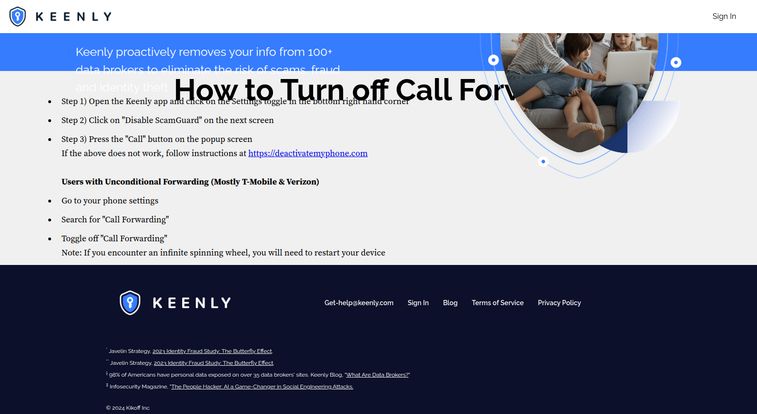
First, there was the AI Phone Assistant. Instead of just sending unknown calls to voicemail, Keenly would actually screen them. Think of it like a real-life receptionist for your personal phone. The AI would interact with the caller to figure out who they were and why they were calling. If it was a legitimate person—like that delivery driver with your late-night pizza—it would connect them. If it was a robocaller or a known scammer, it would shut them down cold. From the technical info I saw, it seemed to work by using call forwarding, routing calls through its own smart system first. A clever, if slightly complex, solution to a maddening problem.
Scrubbing Your Digital Footprint Clean
This was the part that really got my attention. Keenly didn’t just stop at blocking calls. It went after the source of the problem: data brokers. These are the shadowy companies that buy, collect, and sell your personal information—your name, address, phone number, and who knows what else. It’s a multi-billion dollar industry, and it’s why you suddenly start getting calls about solar panels after searching for them once. Keenly claimed to proactively remove your information from over 100 of these brokers. This is like turning off the spam firehose instead of just mopping up the floor. Its a much more effective, long-term strategy for digital privacy.
Visit Keenly
A Full-Blown Digital Identity Guard
And it didn’t stop there. Keenly was positioning itself as an all-in-one privacy suite, not just a one-trick pony. They bundled in a bunch of other features that you usually see in standalone identity theft protection services. We’re talking about things like:
- Dark Web Monitoring: Scanning the scummy corners of the internet to see if your credentials have been leaked in a data breach.
- SSN Monitoring: Alerting you if your Social Security number pops up in places it shouldn’t.
- $1 Million Identity Theft Insurance: This is pretty standard for these types of services, but it provides a safety net to cover financial losses if the worst happens.
- White-Glove Restoration: They promised to have specialists help you clean up the mess if your identity was ever stolen.
This comprehensive approach is what made it stand out. It wasn’t just about annoyance; it was about genuine security and fraud prevention. It was competing in the same space as big names like Aura or LifeLock, but with a unique focus on the initial phone call vector.
The Elephant in the Room: The Shutdown
So, with such a promising model, what went wrong? The brief notice I saw mentioned the service was shutting down on March 23rd. The ‘page not found’ errors on their site confirm that things are winding down. While they haven’t put out a big public press release detailing the reasons, we can speculate. The market for privacy tools is incredibly crowded and competitive. You’re fighting against massive, well-funded incumbents. Maybe the customer acquisition cost was too high. Maybe the tech behind the AI call screening and automated data broker removal was more expensive to maintain than they projected. Or, perhaps they were acquired and their tech is being folded into another company’s product. It’s the circle of life in Silicon Valley.
Whatever the reason, its departure is a reminder of how tough this business is. Building a great product is one thing, but building a sustainable business around it is another challenge entirely. A 2021 study by Javelin Strategy (one of the sources Keenly themselves cited) pointed out the sheer scale of fraud losses, so the need is definitely there. But need doesn’t always translate to an easy business model.
Where Do We Go From Here? Keenly Alternatives
If you were intrigued by Keenly’s promise, don’t despair. The good news is you can still piece together a similar level of protection using other tools. No single service might do exactly what Keenly did in one package, but you can get close.
| Protection Type | Example Services | What It Solves |
|---|---|---|
| AI Call Screening | Google Call Screen (Pixel phones), Truecaller, Hiya | Blocks spam calls in real-time. |
| Data Broker Removal | DeleteMe, Incogni, Kanary | Removes your personal info from the source. |
| All-in-One Suites | Aura, LifeLock, Identity Guard | Comprehensive monitoring, insurance, and restoration. |
My advice? Start with a data removal service. It’s the most proactive step you can take and will reduce your exposure across the board, from spam calls to email phishing. Then, layer on a good call screener. Your phone’s built-in options are getting better all the time, so check those out first!
Frequently Asked Questions about Keenly
- What was Keenly?
- Keenly was a service that combined an AI-powered phone call assistant to screen for scammers with a data removal service that took your personal information off data broker sites. It also included identity theft protection features like dark web monitoring and $1M in insurance.
- How did Keenly block scam calls?
- It used an AI assistant and call forwarding. When an unknown number called you, the call was first routed to Keenly’s AI, which would vet the caller. If it was a scam or robocall, it was blocked. If it was a legitimate caller, the call was forwarded to your phone.
- Why did Keenly shut down?
- There’s no official public statement, but the service was scheduled to shut down in March. Reasons for tech startups shutting down often include intense market competition, high operational costs, funding issues, or being acquired by another company.
- Are there good alternatives to Keenly?
- Yes! While there isn’t a perfect 1-to-1 replacement, you can combine services to get similar protection. For call blocking, look at apps like Truecaller or your phone’s native features. For data removal, services like DeleteMe or Incogni are excellent. For all-in-one protection, Aura and LifeLock are market leaders.
- Was Keenly a free service?
- Pricing information was never widely published, but given the comprehensive features like insurance and white-glove restoration, it was almost certainly a paid, subscription-based service, similar to other identity protection platforms.
- What happens to my data if I was a Keenly user?
- Typically, when a privacy-focused company shuts down, they have a policy for deleting user data. You should check their terms of service or any final communication you received. Reputable companies will purge user data securely after a set period.
A Promising Idea’s Final Call
It’s always a little sad to see an innovative tool fade away. Keenly was trying to solve a real, tangible problem that affects almost everyone with a phone. Their approach of tackling both the symptom (the calls) and the disease (the data brokers) was, in my opinion, the right one. Its story is a good lesson for all of us in the digital space—a great idea is just the first step. For now, we’ll have to keep fighting the good fight against scammers with the other tools at our disposal. Stay safe out there, and be careful who you give your number to.


