
Categories: AI Assistant, AI Book Summarizer, AI Chatbot, AI Quiz Generator
LibraLM Review: AI Book Summaries for Busy People

My ‘to-read’ pile is less of a pile and more of a looming, shame-inducing tower of books I swear I’ll get to. Every year, more must-read nonfiction hits the shelves. Books on habits, finance, psychology… and I just don’t have the time. I’m an SEO guy, I spend my days staring at analytics and keyword trends, not leisurely turning pages with a cup of tea. So when I stumbled upon a new tool called LibraLM, my interest was definitely piqued.
The promise? Understand nonfiction bestsellers in minutes. Chat with an AI about them. Get personalized quizzes. It sounds like something straight out of a sci-fi movie, but also… exactly what I need. But does it actually work, or is it just another flashy app that overpromises and underdelivers? I had to find out.
So, What Exactly is LibraLM?
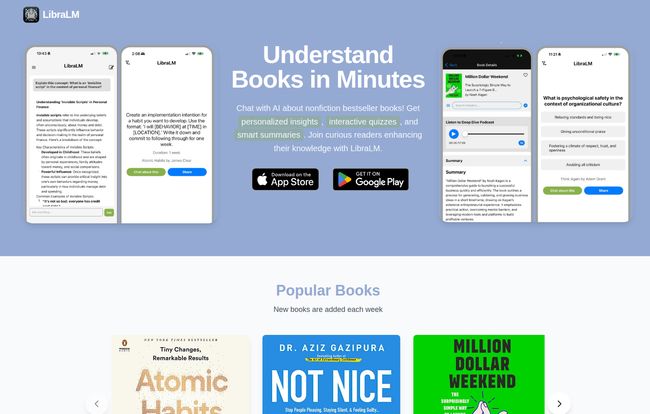
Think of it as a book summary service, but with a serious upgrade. It’s an AI-powered platform built specifically for nonfiction nuts who are short on time. Instead of just giving you a dry, bullet-point list of takeaways, LibraLM aims for a more interactive experience. You’re not just reading a summary; you’re supposed to be able to discuss the book with an AI, ask it questions, and even get custom quizzes to make sure the information sticks. It’s like having a hyper-intelligent, always-available book club partner in your pocket.
It focuses on the big hitters – the kind of books you see all over LinkedIn and in airport bookstores, like Atomic Habits or Million Dollar Weekend. The idea is to get you the core concepts without the 300-page commitment.
The Core Features That Caught My Eye
When I first opened it up, a few things immediately stood out. This isn’t just a wall of text. The platform is broken down into a few key functions that, I have to admit, are pretty slick.
Quick Insights: The ‘Too Long; Didn’t Read’ for Bestsellers
This is the bread and butter of the app. You pick a book, and it gives you the big ideas, the core arguments, and the actionable advice in a condensed format. I tried it with a few books I’ve actually read to see how it stacked up, and it did a surprisingly good job of capturing the essence. It’s not the same as reading the author’s original prose, of course, but for a quick refresher or to decide if a book is worth a full read, it’s incredibly effective.
The AI Chat Companion: Your Personal Bookworm Buddy
Okay, this is the feature that feels genuinely new. After getting the summary, you can open a chat with the LibraLM AI and just… talk about the book. I asked it to explain a concept from the book in a simpler way. I asked how two different ideas from the same book connected. I even asked, “What would the author say about my current project management struggles?” Its a pretty wild experience. It’s like having a tutor who has perfectly memorized every book on the shelf. This moves it beyond simple summarization and into the world of genuine learning support.
Visit LibraLM
Personalized Learning: Not Just a One-Size-Fits-All Summary
The other interesting piece is the personalization. The app can generate custom quizzes based on what you’ve just reviewed. This is a smart move. Passive reading (or summarizing) leads to poor retention. By forcing you to actively recall information with a quiz, you’re much more likely to remember it. The platform claims it can also tailor summaries to your interests, though I’m still exploring how deep that customization goes. Still, the intent is clear: make learning active, not passive.
My Honest Take: The Good, The Bad, and The AI
No tool is perfect, right? After playing around with LibraLM, I’ve got some thoughts. Part of me, the old-school book lover, cringes a little. But the SEO and content professional in me sees a goldmine.
“It’s not about replacing books, but augmenting how we access their knowledge. It’s a different tool for a different job.”
First, the good stuff. The speed is undeniable. Getting the gist of a dense book in 15 minutes is a superpower. The constant addition of new books (they say new ones are added weekly) keeps it fresh. And that AI chat is the real game-changer. It’s what separates this from a simple summary app like Blinkist and pushes it into a new category.
However, there are some clear limitations. It’s only nonfiction bestsellers. If you’re into fiction, obscure history, or academic texts, this isn’t for you. And the biggest caveat of all: its effectiveness hinges entirely on the AI’s ability to understand and summarize complex ideas accurately. A bad summary is worse than no summary at all. While my initial tests were positive, I’d still be cautious about using it as my only source for critical information.
Who is This Tool Actually For?
I can see a few groups of people getting a ton of value from LibraLM:
- Busy Professionals: The obvious one. C-suite execs, marketers, entrepreneurs who need to stay on top of the latest business thinking but are slammed for time.
- Content Creators & Marketers: This is where my SEO brain kicks in. Need to write a blog post about a popular business concept? LibraLM could be an incredible research tool to quickly generate ideas, outlines, and key talking points.
- Students: As a study aid to supplement their required reading? Absolutely. It could be fantastic for reviewing key concepts before an exam.
- The Curious but Committed: People who love learning but get bogged down. This is a great way to ‘sample’ a book to see if you want to commit to buying and reading the whole thing.
Let’s Talk About the Price… Or Lack Thereof
Here’s a slightly awkward bit. When I went to find the official pricing page to give you the details, I was met with a classic “404 Not Found” error. Happens to the best of us! This probably means they’re still finalizing the pricing model or updating the site.
Based on the App Store and Google Play buttons on their homepage, I’d speculate it will likely follow a ‘freemium’ model. Perhaps you get one or two book summaries for free, and then a monthly or annual subscription unlocks unlimited access. This is pretty standard for apps like this. For now, your best bet is to head directly to the app store on your device and check the latest details there.
The Verdict: Is LibraLM Worth Your Time?
So, what’s the final word? I’m genuinely excited about LibraLM. It’s not going to replace the deep, immersive joy of reading a physical book. Let’s get that straight. But that’s not its goal.
LibraLM is a knowledge tool. It’s a supplement. It’s a way to bridge the gap between our ambition to learn and the reality of our packed schedules. The interactive AI chat is more than a gimmick; it’s a genuinely useful feature that encourages active engagement with ideas. For anyone in the knowledge economy—which, let’s face it, is most of us—it’s a powerful new way to learn faster and stay informed. I’ll definitely be keeping it on my phone.
Frequently Asked Questions about LibraLM
What is LibraLM in simple terms?
LibraLM is a mobile app that uses AI to give you quick summaries of popular nonfiction books. It also has an AI chatbot you can talk to about the book’s ideas and personalized quizzes to test your knowledge.
How does the AI chat feature work?
After you review a book’s summary, you can open a chat window. You can ask the AI specific questions about the book, ask for simpler explanations of complex topics, or even explore how the book’s ideas might apply to your own life or work.
Is LibraLM a free tool?
The exact pricing model isn’t public yet as their pricing page is down. However, like many apps of this type, it will likely have a free version with limited features and a paid subscription for full, unlimited access.
What kind of books can I find on LibraLM?
The platform focuses exclusively on nonfiction bestsellers. You’ll find popular books on topics like business, self-improvement, psychology, and productivity. They state that new books are added every week.
Can LibraLM replace reading the actual book?
In my opinion, no. It’s a fantastic supplement for understanding key concepts quickly, refreshing your memory, or deciding if a book is worth reading in full. But it doesn’t replace the depth, nuance, and authorial voice of the complete work.


