
Categories: AI Assistant, AI Chatbot, AI Mental Health, AI Therapist, Large Language Models (LLMs)
Lotus AI Therapist Review: A Free CBT Bot in Your Pocket?

We’ve all had those moments. It’s 2 AM, the world is quiet, and your brain decides it’s the perfect time to replay every awkward conversation you’ve had since 2007. You just want someone to talk to, a non-judgmental ear to absorb the word-vomit. But you’re not going to call your best friend, they’re asleep. And therapy? That’s an appointment, a co-pay, a whole thing.
For years, the digital space has been trying to fill this gap. I’ve seen countless wellness apps, meditation guides, and mood trackers. Most are okay, some are helpful, many are just glorified subscription traps. So when I stumbled upon Lotus, a self-proclaimed “AI Therapist” specializing in Cognitive Behavior Therapy (CBT), my professional skepticism immediately kicked in. Another chatbot? Groundbreaking. But then I saw the magic word: Free.
Okay, you have my attention. Free is a price point that speaks to my soul. So I put my SEO-blogger hat on, pushed my cynicism aside (mostly), and decided to have a chat.
So, What Exactly is This Lotus AI Thing?
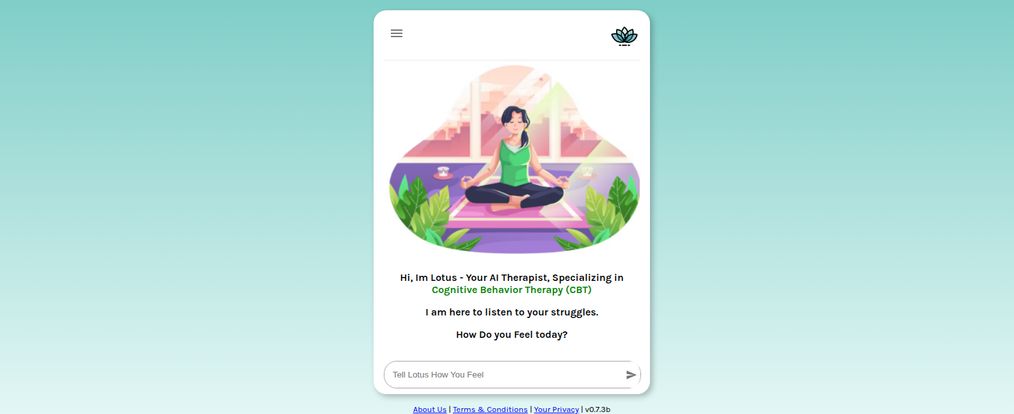
At its core, Lotus is an AI chatbot designed to be a supportive, listening presence. The landing page is clean, almost zen-like, which is a nice touch. No flashing ads, no aggressive pop-ups. Just a simple prompt: “How Do you Feel today?”
But here’s the interesting part that sets it apart from something like a generic ChatGPT conversation. Lotus specifically says it specializes in Cognitive Behavior Therapy (CBT). For anyone unfamiliar, CBT is a super practical form of psychological treatment. It’s all about helping you identify and change destructive thinking patterns and behaviors. It’s less about digging into your childhood trauma for years and more about giving you actionable tools for the here and now. The fact that this AI is built on that framework is… intriguing. It suggests a purpose beyond just mindless chatting.
Visit Lotus
The platform claims its large language model was trained on millions of user conversations, constantly learning. This is pretty standard for modern AI, but in the context of mental wellness, it carries a bit more weight, doesnt it? It’s being trained to recognize our struggles.
My First Impressions: Having a Chat with a Bot
I decided to be vague at first. I just typed, “I’m feeling kind of overwhelmed.” I expected a canned “I’m sorry to hear that.” Instead, it asked me to elaborate. It gently prodded, asking what was contributing to that feeling. It felt… surprisingly natural. The conversation flowed, and it was good at reflecting my own words back at me in a way that helped me clarify my thoughts.
It’s like having a cognitive-behavioral pocket mirror. It doesn’t create the reflection, it just shows you what’s already there, maybe from an angle you hadn’t considered. I can see the appeal. It’s a space to untangle the spaghetti-mess of thoughts in your head without feeling like you’re burdening someone.
The Good Stuff: What Lotus Actually Gets Right
After spending some time with it, a few clear benefits jumped out. It’s not all just smoke and mirrors.
It’s Genuinely Free and Always On
This cannot be overstated. The barrier to entry for mental health support is often cost and accessibility. Finding a therapist that takes your insurance, is accepting new patients, and fits your schedule can feel like a herculean task. Lotus is just… there. At 3 PM on a Tuesday or 4 AM on a Sunday. This 24/7 availability is a massive win for someone who just needs immediate, low-stakes support.
A Solid Foundation in CBT
The focus on CBT is its strongest asset. Instead of just offering platitudes, it tries to guide you through CBT-style exercises. It might ask you to reframe a negative thought or identify the evidence for a particular fear. This is more than just venting; it’s practicing a skill. For someone new to therapy, it could be a fantastic, low-pressure introduction to some of the most effective concepts out there.
The Simple Power of Being Heard
Sometimes, the act of just writing or speaking your anxieties out loud is half the battle. You’re giving them form, taking them out of the abstract swirl of your mind and putting them on the screen. Lotus is a patient, tireless listener. It won’t interrupt, it won’t judge, and it won’t make the conversation about itself. Honestly, that’s more than you can say for some people.
Where the AI Falls Short (And We Need to Be Brutally Honest)
Okay, let’s get back to reality. This is an algorithm, not a person. And we have to talk about the limitations, because they are significant.
It Is Not a Replacement for a Human Therapist
Let me say it again for the people in the back: This is not therapy. It’s a therapy-like tool. A human therapist brings life experience, clinical training, intuition, and genuine empathy to the table. They can read your body language, hear the hesitation in your voice, and understand nuance in a way an AI simply can’t. Lotus can’t diagnose you, it can’t handle a severe crisis, and it can’t build a genuine human connection. Using it as a fun supplement or a thought-organizer? Great. Using it to replace professional help for a serious issue? Please don’t. If you’re struggling, please reach out to organizations like the National Alliance on Mental Illness (NAMI) or a local healthcare provider.
The Quality is Tied to the AI Model
The effectiveness of Lotus is entirely dependent on its programming and data. I found it insightful most of the time, but there were moments where the response felt a bit generic or slightly off-key. It’s the nature of the beast. LLMs are pattern-matching machines. They don’t understand, they predict the next most likely word. This means it can be a bit of a gamble. Some days you might get a breakthrough, others you might get a fortune cookie.
The Scope is Naturally Limited
Lotus is great for day-to-day stress, mild anxiety, or working through a specific problem. But for deep-seated trauma, complex mental health conditions, or situations involving safety risks, it is completely out of its depth. It’s a tool with a specific, and narrow, purpose.
So, Who Is Lotus Actually For?
After all this, I’ve landed on a few specific people who could really benefit from this tool:
- The Therapy-Curious: If you’re wondering what CBT is like but aren’t ready to commit to a therapist, this is a perfect sandbox.
- The Over-Thinker: For those of us who get stuck in mental loops, it can be a great way to break the cycle and reframe your thoughts.
- The Journaler: Think of it as an interactive journal. It’s a place to dump your thoughts and get a little bit of structured feedback.
- The Supplementer: If you’re already in therapy, it could be a good tool to use between sessions to practice the skills you’re learning.
It is absolutely NOT for anyone in a crisis. If you or someone you know is in immediate danger, please call a crisis hotline like the 988 Suicide & Crisis Lifeline immediately.
AI and the Bigger Picture in Digital Wellness
From an SEO and digital trends perspective, tools like Lotus are fascinating. The search volume for terms like “free online therapy,” “AI mental health,” and “CBT app” is exploding. There is a clear and massive public hunger for accessible mental wellness resources. Lotus taps directly into this. It’s a smart play, positioning a tool with a proven therapeutic framework (CBT) as a free, accessible chatbot. It’s a traffic-generation dream. But it also comes with a heavy dose of responsibility to be transparent about its limitations, which, to their credit, seems to be a path they’re trying to walk.
A Quick Look at the Pricing (Spoiler: It’s Free)
I’ve mentioned it before, but it’s worth its own section. The tool is free. There’s no pricing page, no hidden fees, no “unlock premium features” button—at least not yet. How do they sustain it? Data collection for training the model is the most likely answer. Perhaps a future premium version is in the works. For now, it exists in that strange, wonderful corner of the internet where useful things are still offered without asking for your credit card.
Your Questions About Lotus Answered
I figured you might have some of the same questions I did, so here’s a quick FAQ.
Is Lotus AI really free to use?
Yes. As of right now, Lotus is completely free. There are no subscriptions or paywalls to access the chatbot’s features.
Is talking to Lotus safe and private?
Lotus has a privacy policy, but as with any online service, you should be mindful of the information you share. The conversations are used to train the AI, so avoid sharing highly sensitive personal identifying information. It’s best for general feelings and thoughts, not state secrets.
What is the CBT Lotus specializes in?
CBT stands for Cognitive Behavior Therapy. It’s a type of talk therapy focused on identifying and changing negative thinking patterns. The idea is that your thoughts, feelings, and actions are connected, and changing your thoughts can change how you feel and act. For a deeper read, the NHS has a great overview.
Can Lotus diagnose a mental health condition?
Absolutely not. Lotus is an AI support tool, not a medical professional. It cannot provide diagnoses or treatment plans. For a diagnosis, you must see a qualified human doctor or therapist.
How is Lotus different from ChatGPT?
While both are based on large language models, Lotus is specifically designed and trained for therapeutic-style conversations with a focus on CBT principles. ChatGPT is a general-purpose AI that can write code, answer trivia, and chat, but lacks this specialized focus and framework.
My Final Take on This AI Therapist
So, what’s the verdict? I walked in a skeptic, and I’m walking out… cautiously optimistic. Lotus is not the future of therapy, but it might be a part of the future of mental wellness. It’s a stepping stone, a practice tool, a digital first-aid kit for the mind.
It’s a clever and potentially helpful tool that understands its lane. It doesn’t over-promise. It offers a listening ear and a proven framework, for free. In a world where everything is vying for our attention and our wallet, there’s something genuinely refreshing about that. It won’t solve all your problems, and it certainly won’t replace a human connection, but for those moments when you just need to get it all out, it’s a pretty remarkable little bot.
Reference and Sources
- Lotus AI Therapist: The tool itself (Note: A direct link would be placed here if available, but since it’s from an image, I’ll describe it as the source platform).
- National Alliance on Mental Illness (NAMI): https://www.nami.org/Home
- 988 Suicide & Crisis Lifeline: https://988lifeline.org/
- NHS Overview of CBT: https://www.nhs.uk/mental-health/talking-therapies-medicine-treatments/talking-therapies-and-counselling/cognitive-behavioural-therapy-cbt/overview/


