
Categories: AI Assistant, AI Chatbot, AI Coaching, AI Course, AI Mental Health
Neurture App Review: AI Habit Change with a Human Touch

The app store is a graveyard of good intentions. It’s a space filled with habit trackers we used for three days, meditation apps we opened twice, and digital journals gathering digital dust. Every year, a new wave of “life-changing” wellness tech promises to fix our procrastination, curb our doomscrolling, and finally make us a person who, you know, actually flosses.
So, when I first came across Neurture, my seasoned SEO-blogger cynicism kicked in. “AI-powered app for habit change,” the description read. Great. Another robot that’s going to tell me to drink more water. But then I saw the tagline on their site: “Break habits with science and self-compassion.”
Now that… that’s different. In a world of aggressive self-optimization and “hustle culture” toxicity, the idea of blending hard science with a softer, more forgiving approach felt like a breath of fresh air. It’s not about beating yourself up for slipping; it’s about understanding why you slip and being kind to yourself anyway. I was intrigued enough to put my skepticism on the shelf and take a closer look.
So What is Neurture, Exactly?
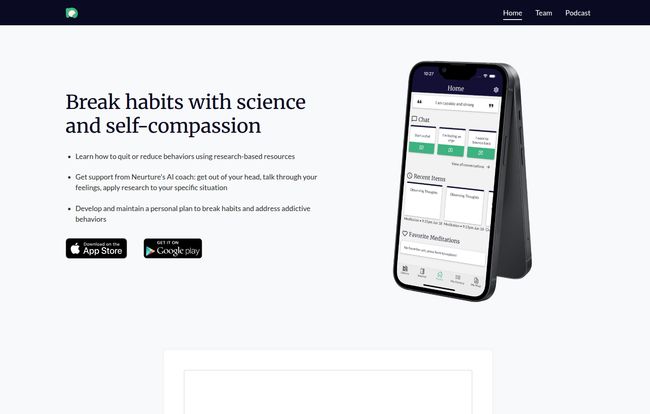
Neurture isn’t just another glorified to-do list. It positions itself as a behavioral change app for people who feel like they’ve tried everything else. Think of it as a structured support system in your pocket. At its core, it’s an AI-powered mobile app that combines several therapeutic and coaching tools into one cohesive experience. You’ve got courses, guided meditations, journaling prompts, daily affirmations, and the main event: a chat with an AI coach.
The whole idea is to help you get out of your own head. Instead of just tracking a behavior (e.g., “I didn’t smoke today”), it helps you talk through the urges, understand the triggers, and develop a personalized plan for real, lasting change. It’s less of a drill sergeant and more of a compassionate guide holding a flashlight, helping you navigate the messy paths of your own mind.
Visit Neurture
#
Breaking Down the Neurture Experience
I’ve seen a lot of apps that are all flash and no substance. Fancy UI, but the content is just repackaged pop psychology. I wanted to see if Neurture had the goods to back up its claims.
The AI Coach: Your 24/7 Sounding Board
The centerpiece of Neurture is its AI coach. And my first question was the same as yours probably is: “Can’t I just use ChatGPT for this?” The app’s own FAQ tackles this head-on. The difference, they argue, is focus. While a general AI can give you broad advice, Neurture’s AI is specifically trained to guide you towards the app’s own evidence-based resources. If you say, “I’m feeling a huge urge to check my ex’s social media,” it won’t just say “That sounds tough.” It will validate your feeling and then might route you to a specific meditation for dealing with intrusive thoughts or a journal prompt about emotional triggers.
It’s a curated experience. Based on user reviews and the experts they feature, the AI is described as “validating and helpful” for reframing thoughts. It’s designed to be a safe space to talk things out without judgment, which is something many of us lack.
#
Science-Backed, Not Just Silicon Valley Hype
This is the part that really got my attention. Neurture claims its courses are reviewed by clinical psychologists and are based on established therapeutic frameworks like DBT (Dialectical Behavior Therapy) and ACT (Acceptance and Commitment Therapy). These aren’t just buzzwords. ACT, for instance, is a powerful mindfulness-based therapy that helps people accept their difficult thoughts and feelings rather than fighting them. DBT provides concrete skills for managing painful emotions and decreasing conflict in relationships.
By grounding its content in these proven methods, Neurture moves beyond simple motivation and into genuine psychological strategy. It’s about changing your relationship with your thoughts, which, frankly, is the only way to change your behavior for good.
Journaling, Meditations, and a Neat Little Trick
Beyond the chat, the app is loaded with the kinds of resources you’d expect: guided meditations, affirmations, and a journaling function. One feature that stood out was the ability to digitize handwritten journal entries. You can just snap a photo of your notebook, and the app transcribes it. For those of us who still love the feel of pen on paper but want the searchability of a digital log, that’s a pretty cool bridge between the analog and digital worlds.
Who is Neurture Really For? (And Who Should Pass)
Here’s the thing about any tool: it’s not for everyone. And it’s important to be honest about that. Neurture shines for a specific type of person.
The ideal user is someone struggling with what we might call subclinical habits. These are the pesky, life-disrupting behaviors that aren’t quite at the level of a full-blown clinical diagnosis but still make you miserable. We’re talking about things like:
- Endless procrastination
- Compulsive doomscrolling or social media checking
- Emotional eating
- Habitual vaping or smoking
- Overspending or impulse shopping
- Struggling with alcohol or caffeine intake
If you’re looking to build self-awareness, develop healthier coping mechanisms, and get structured support for these kinds of issues, Neurture could be a fantastic fit. It’s for the person who knows they need a change but feels stuck in a loop.
#
An Important Caveat: This Is Not Therapy
Let me be crystal clear, and the app’s creators seem to agree: Neurture is not a replacement for professional therapy. It’s a support tool. An amazing one, potentially, but it’s not designed to handle severe addictions, clinical depression, anxiety disorders, or other serious mental health conditions. If you are dealing with issues at that level, please seek help from a qualified mental health professional. This app can be a great supplement to therapy, but it cannot and should not be a substitute.
What the Clinical Experts Say
Don’t just take my word for it. Neurture prominently features recommendations from clinical experts on their site, which lends them a lot of credibility. Dr. Sarah Coe-Odess, a clinical psychologist, praised it for providing “evidence-based tools that empower users to break their addictive behaviors with self-compassion.” Another expert, Amanda Raybould, highlighted how the AI was “validating and helpful.” Amanda Dean, a therapist, called it a source of “affordable, acceptance-based care 24/7.”
This kind of professional oversight is a huge green flag in the crowded wellness app market.
What’s the Catch? A Look at Pricing (and a Broken Link)
Okay, so what does it cost? That’s the one piece of information conspicuously absent from their landing page. There’s no pricing section, which usually means you find out the cost once you download the app. This is a pretty common strategy for app-based services, often involving a free trial followed by a monthly or annual subscription. I’d expect something in that vein.
And in the spirit of human imperfection, I have to share a little discovery. As I was clicking around their site, I tried the ‘Team’ and ‘Podcast’ links in the header and was greeted by a friendly 404 error page from GitHub. Hey, it happens! It’s a good reminder that even a company focused on self-improvement is a work in progress, too. We all have a few broken links to fix.
#
Frequently Asked Questions about Neurture
I’ve pulled some of the most common questions from their site and added my own two cents.
- What kind of habits can Neurture really help with?
- It’s designed for a wide range of unwanted behaviors. Think procrastination, doomscrolling, vaping, smoking, managing alcohol or caffeine use, compulsive shopping, and other patterns you feel stuck in. It’s best for habits that are disruptive but not at a severe clinical level.
- Is the Neurture AI just a fancy ChatGPT?
- Not quite. While it uses similar technology, the Neurture AI is specifically trained to work within the app’s ecosystem. Its goal is to guide you to the right resource—be it a meditation, a course, or a journal prompt—based on what you’re telling it. It’s a specialist, not a generalist.
- Can Neurture replace my therapist?
- Absolutely not. This is a firm no from both myself and, responsibly, the app’s own messaging. It is a subclinical support tool. It can be a great partner to therapy, but it cannot and should not replace the guidance of a trained human professional for clinical issues.
- Is this good for something like a New Year’s resolution?
- Yes, this seems like a prime use case. A resolution often fails because we lack a plan and support. Neurture provides the structure to turn a vague goal like “be healthier” into a concrete, supported plan for change with daily check-ins.
- How does it help you “understand your brain”?
- It does this by using principles from cognitive and behavioral therapies. By logging your urges, journaling about your triggers, and engaging with courses based on ACT and DBT, you start to see the patterns behind your behavior. It helps you connect the dots between a feeling, a thought, and an action.
Final Thoughts: A Compassionate Nudge in Your Pocket
After digging in, my initial cynicism has softened into cautious optimism. Neurture seems to be carving out a unique and much-needed space in the digital wellness world. By ditching the shame-based, “just do it” mentality for an approach built on science and self-compassion, it offers a more sustainable path to change.
It won’t magically solve all your problems, and it’s critical to understand its limitations. But for anyone who has struggled with breaking a nagging habit and is tired of feeling like a failure, Neurture might just be the compassionate, intelligent guide they’ve been looking for. It’s a tool that acknowledges we’re all a bit messy and that changing our brains starts with understanding and accepting them first.
Reference and Sources
- Neurture Official Website: https://www.neurtureapp.com/
- About Acceptance and Commitment Therapy (ACT): https://www.actmindfully.com.au/about-act/
- An Overview of Dialectical Behavior Therapy (DBT): https://www.psychologytoday.com/us/therapy-types/dialectical-behavior-therapy


