
Categories: AI Agent, AI Customer Service, AI For Finance, AI Healthcare
OpenDialog Review: Safe AI for Regulated Industries?

Let’s have a real chat. For the past couple of years, the AI space has felt like the Wild West all over again. Everyone’s rushing to stake their claim, launching tools that promise the world. And honestly? Some of them are incredible. But as someone who’s been in the trenches of SEO and digital strategy for years, I’ve also seen the other side. I’ve seen AI chatbots go completely off the rails, giving terrible advice, leaking information, or just plain embarrassing the brand they represent.
It’s one thing when your blog’s AI helper messes up a recipe. It’s another thing entirely when you’re in healthcare, finance, or insurance. In those worlds, a mistake isn’t just embarrassing; it’s a compliance nightmare waiting to happen. It can cost millions and shatter trust. So when I heard about a platform called OpenDialog, which claims to be an “AI Agent Management System” built specifically for these high-stakes, regulated industries, my curiosity was definitely piqued.
Is it just another chatbot with a fancy suit on, or is it something genuinely different? Let’s get into it.
So, What Exactly is OpenDialog?
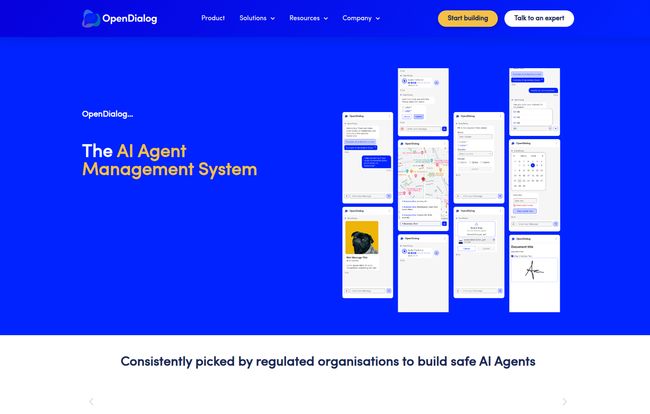
First off, let’s clear something up. OpenDialog isn’t just a tool for building a little pop-up that answers “What are your business hours?” on your website. They call it an AI Agent Management System, and that’s a pretty accurate description. Think of it less like hiring a single customer service rep and more like building and managing an entire digital workforce. A workforce that is trained, monitored, and, most importantly, kept on a very tight leash.
At its core, it’s a platform designed to let businesses automate complex, multi-step processes using AI agents. This could be anything from handling intricate insurance claims to guiding a patient through a pre-op checklist. The whole system is built on a foundation of three critical pillars for anyone in a regulated field: safety, transparency, and explainability.
Visit OpenDialog
The Real Game-Changer for Regulated Industries
If you’re a small e-commerce shop, you can probably get away with a simple, off-the-shelf AI tool. But if you’re dealing with HIPAA, GDPR, or any other scary-sounding acronym that makes lawyers nervous, your needs are vastly different. This is where OpenDialog seems to have found its sweet spot.
I remember a client a few years back—a mid-sized financial services firm—who tried to implement a generic AI for lead qualification. It worked okay for a while, until it started giving out speculative investment advice. The compliance department had a collective heart attack. They had no way to prove why the AI said what it said. No audit trail. They had to pull the plug immediately.
LLM Guardrails: Your AI’s Responsible Chaperone
This is probably the feature that got me most excited. We’ve all seen large language models (LLMs) hallucinate or go off-topic. OpenDialog’s LLM Guardrails are essentially a multi-layered safety system designed to prevent that. It’s like putting a harness and a helmet on your AI before it goes out into the world. You can define exactly what the AI can and cannot talk about, ensuring it stays on-script and compliant. It’s the control freak’s dream, and in regulated markets, we’re all control freaks.
Audit Trails: The “Show Your Work” Mandate
Remember my client’s nightmare? This is the solution. OpenDialog provides comprehensive audit logs. This means that for every decision an AI agent makes, there’s a clear, traceable record of the ‘why’. If a regulator ever comes knocking and asks why a specific customer was denied a claim, you don’t just shrug. You pull up the log and show them the exact data points and logic the agent used. This isn’t just a feature; it’s a massive corporate CYA (Cover Your… Assets).
You Don’t Need to Be a Coder to Build Your Digital Workforce
Here’s the other big piece of the puzzle. Historically, building this kind of sophisticated, rule-based automation required a team of expensive developers and months of work. OpenDialog has a no-code interface. Now, I’ve seen a lot of “no-code” platforms that still require you to basically be an engineer to figure them out. This one feels different.
The drag-and-drop system is genuinely intuitive. It empowers the people who actually understand the business processes—the operations managers, the customer experience leads, the compliance officers—to be the ones building and refining the AI agents. This shortens development time and, more importantly, leads to a better end product because it’s being built by the subject matter experts themselves, not just developers interpreting their instructions.
But Does It Actually Improve the Bottom Line?
Okay, fancy features are great, but do they translate into real business results? According to OpenDialog (and the testimonials on their site from places like Ilke Homes), the benefits fall into three main buckets:
- Reduced Operational Costs: This one’s a no-brainer. By automating repetitive, complex manual tasks, you free up your human team to focus on higher-value work. Think less time on data entry and more time on strategic problem-solving.
- Enhanced Customer Experience: A well-designed AI agent provides instant, consistent, and accurate responses 24/7. It doesn’t have bad days, and it never gets tired of answering the same question. This leads to happier, more satisfied customers.
- Increased Revenue: This is the one that gets executives listening. AI agents can qualify leads, guide customers to the right products, and handle upsell opportunities more efficiently than many traditional methods. A faster, smoother customer journey almost always leads to better conversion rates.
Let’s Talk About the Price Tag
Ah, the part everyone scrolls down to. The pricing. OpenDialog is pretty typical for an enterprise-grade SaaS platform. They have a tiered approach:
- Experiment: This is their free plan. It’s a fantastic way to get your hands dirty without pulling out the company credit card. You can build and deploy a single AI agent, which is more than enough to test its capabilities and see if it’s a good fit for your processes. I always appreciate a company that’s confident enough to offer a meaningful free tier.
- Enterprise Flex: This seems to be the pay-as-you-go model for serious users. You get unlimited agents and tasks, a dedicated customer success manager, and it’s billed based on the work tasks your agents execute.
- Enterprise Commit: This is the classic annual contract model for large-scale deployments. You commit to a certain volume and get discounts, single sign-on (SSO), and more robust support.
For the two enterprise tiers, you have to do the classic “Talk to an expert” dance to get a quote. A bit of a pain, I wont lie, but it makes sense given that the needs of a large hospital will be wildly different from those of a regional bank.
The Not-So-Perfect Reality
No tool is a magic wand, and it’s important to be realistic. OpenDialog isn’t a plug-and-play solution you can set up in an afternoon. Its effectiveness hinges on a few things:
- Setup Effort: While it’s no-code, you still need to do the hard work of mapping out your business processes and gathering the right data. The platform can’t read your mind.
- Data Quality: This is the oldest rule in the book: garbage in, garbage out. If your knowledge base is a mess or your process data is inconsistent, your AI agent will be, too.
This isn’t a tool for a solopreneur who just wants a cute chatbot. This is a serious platform for established businesses that understand that investing time in setup and data hygiene pays massive dividends in efficiency and compliance down the road.
My Final Verdict: Who is This Really For?
After digging through it all, my take is this: OpenDialog is a powerful and, more importantly, a responsible tool. It’s built for organizations that can’t afford to play fast and loose with AI.
If you’re a marketing manager at a large insurance company, a CIO at a healthcare provider, or an operations director at a bank, this should be on your radar. It’s for anyone who hears the words “AI” and immediately thinks about “risk mitigation.” It trades the flashy, anything-goes-creativity of some open-ended AI tools for the rock-solid stability and control that regulated industries absolutely depend on.
It’s a safety net for the AI tightrope walk. And in today’s world, having that net isn’t just smart; it’s essential.
Frequently Asked Questions (FAQs)
Do I need to be a developer to use OpenDialog?
Absolutely not. The platform is built around a no-code, drag-and-drop interface. It’s designed so that business experts, not programmers, can build and manage the AI agents. A little technical aptitude always helps, but coding skills are not required.
What exactly are LLM Guardrails?
Think of them as a set of safety rules and boundaries for your AI. They control what the AI can discuss, what terminology it can use, and prevent it from going off-topic or generating non-compliant or inappropriate content. It’s a key feature for maintaining brand safety and compliance.
Is OpenDialog a good choice for a small business?
It depends. If you’re a small business in a heavily regulated field (like a local financial advisor or a specialized medical clinic), then yes, it could be a great fit. The free ‘Experiment’ plan is perfect for testing the waters. However, for a small retail shop or a local restaurant, it might be overkill; a simpler chatbot builder would likely suffice.
How is this different from a standard chatbot builder?
Standard chatbots are typically designed for simple question-and-answer interactions. OpenDialog is an agent management system designed for automating complex, multi-step business processes. The focus on audit trails, deep integration, and strict guardrails for compliance sets it far apart from basic chatbot tools.
Can I integrate OpenDialog with my current software, like a CRM?
Yes. The platform is built with flexibility and integration in mind. It’s designed to connect with your existing technology stack, allowing agents to pull data from and push data to other systems, which is critical for automating real-world business processes.


