
Categories: AI API, AI App Builder, AI Developer Tools, AI For Finance, AI Report Generator, No-Code&Low-Code
Openkoda Review: An Open-Source Insurtech Game Changer?

Alright, let’s have a real chat. In the world of SEO and digital business, I’ve seen more platforms, frameworks, and “game-changers” than I can count. Most of them promise the moon and deliver… well, a moon rock if you’re lucky. A very expensive moon rock. So when I heard about Openkoda, I was skeptical. An open-source, AI-powered platform for building business apps, with a heavy slant towards the insurance industry? It sounded a bit too good to be true.
But the more I looked into it, the more I felt that familiar tingle of excitement. You know the one. It’s the feeling you get when you find a tool that doesn’t just solve a problem, but changes how you approach the problem altogether. So, I rolled up my sleeves and did a deep dive. Is this the real deal? Let’s find out.
So What is Openkoda, Really?
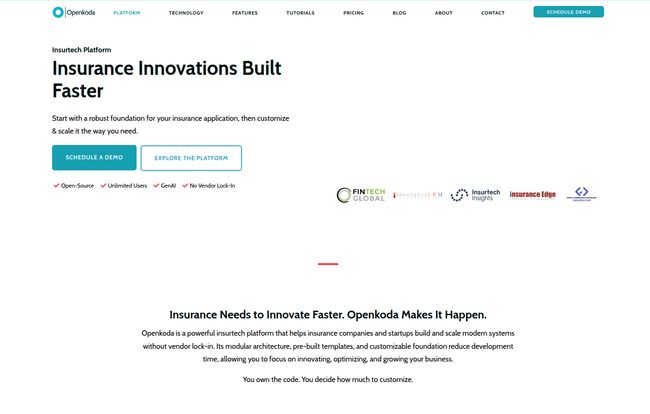
Forget the corporate jargon for a second. At its heart, Openkoda is like a professional-grade LEGO Technic set for building complex business applications. Specifically, applications for the often-clunky and outdated insurance world. You get a powerful set of foundational pieces—pre-built modules, a solid architecture, AI-powered tools—but you have complete freedom to build whatever you want, however you want.
It’s designed to slash development time (they claim by up to 60%, which is… ambitious, but I’ll get to that) and free businesses from the golden handcuffs of vendor lock-in. We’ve all been there, right? Stuck with a SaaS provider whose roadmap doesn’t align with yours, facing outrageous fees for every little customization. Openkoda’s whole philosophy is about giving you back the keys. You own the code. You call the shots. For anyone who’s ever felt trapped by a rigid system, that’s a powerful statement.
Visit Openkoda
The Features That Actually Matter
A feature list is just a list until you see how it applies in the real world. Openkoda has a bunch, but a few things really jumped out at me from an efficiency and strategy standpoint.
Pre-Built Insurance Solutions are a Massive Head Start
This is probably its biggest differentiator. Instead of starting from absolute zero, Openkoda provides ready-to-go components for core insurance functions. We’re talking about things like:
- Claims Management
- Policy Management
- Embedded Insurance
- Customer Dashboards
This isn’t just a time-saver; it’s a sanity-saver. Building these systems from scratch is a monstrous task, fraught with regulatory pitfalls and complex logic. Having a battle-tested foundation means your development team can focus on innovation and customization, not reinventing the wheel. It’s the difference between building a car from a pile of sheet metal and starting with a rolling chassis.
Finally, an Escape from Vendor Lock-In
I have to keep coming back to this because it’s so important. The fact that Openkoda is open-source is its superpower. When you build on their platform, you’re not just ‘renting’ a solution. You can download the code, modify it, host it wherever you want, and never have to worry about the provider suddenly tripling their prices or discontinuing a feature you rely on. This level of autonomy is rare, and in my opinion, incredibly valuable for long-term business strategy. It allows you to be agile and adapt, which is something the insurance industry desperately needs.
AI That’s Practical, Not Sci-Fi
“AI-powered” is the hottest buzzword since… well, since the last buzzword. But here, it seems to be applied practically. The main AI integration I see is in reporting and business process automation. Imagine AI helping you analyze claims data to spot fraud trends, or automating complex underwriting workflows. It’s less about a robot taking over and more about giving your team intelligent tools to make better, faster decisions. That’s AI I can get behind.
Let’s Talk About the Money: A Breakdown of Openkoda’s Pricing
Pricing can make or break a tool, no matter how great it is. Openkoda has a tiered approach that seems pretty smart. It’s not one-size-fits-all, which I appreciate. Here’s my quick-and-dirty breakdown:
| Plan | Price | Best For |
|---|---|---|
| Openkoda Core Open-Source | Free! | Developers, startups, and teams wanting to build a proof-of-concept or a full application on their own infrastructure. |
| Openkoda Enterprise Self-Hosted | Contact for Pricing | Larger businesses that want all the advanced features and professional support but want to manage the hosting and infrastructure in-house. |
| Openkoda Enterprise Managed Cloud | Contact for Pricing | Businesses that want the full power of the platform without the headache of managing servers and deployment. The ‘done for you’ option. |
The free open-source tier is a genius move. It lets developers and tech leads really kick the tires without any financial commitment. The “Contact for Pricing” for the enterprise tiers is standard practice, but it’s always a bit of a bummer when you can’t see a ballpark number. My guess is it’s highly dependent on the scale of your operation and the level of support you need.
Who Is This Platform Really Built For?
This is not a tool for everyone, and that’s okay. Powerful tools require skilled hands.
The Sweet Spot User
I see Openkoda being a perfect fit for an established insurance company tired of their creaky legacy system. Or a fast-moving insurtech startup that needs to get a robust product to market quickly without building everything from the ground up. It’s for organizations that have access to development talent (either in-house or contracted) and prioritize flexibility and ownership over a simple, locked-down, no-code solution.
Who Might Want to Pass?
If you’re a small business owner with zero technical knowledge looking for a drag-and-drop website builder to manage your three-person team, this is probably overkill and overly complex. Openkoda is a development platform first and foremost. While it speeds things up immensely, it still assumes a certain level of technical expertise to truly customize and get the most out of it.
Frequently Asked Questions About Openkoda
I had a bunch of questions myself, so here are some answers to what’s likely on your mind.
- Is the free Openkoda Core actually useful?
- Absolutely. It includes the core application foundation, form builders, dashboards, and more. It’s more than enough to build a powerful, custom application if you have the dev team to do it. It’s not a stripped-down demo; it’s the real engine.
- How exactly does Openkoda use AI?
- From what I’ve gathered, it’s primarily focused on enhancing back-end processes. Think AI-powered reporting to generate deep insights from your data and system automation to build smarter, more efficient business logic and workflows.
- What’s the main difference between Self-Hosted and Managed Cloud?
- It really boils down to control vs. convenience. Self-Hosted means you run Openkoda on your own servers (or your own private cloud). You have maximum control but are responsible for maintenance and uptime. Managed Cloud means the Openkoda team handles all that for you. It’s less work but you’re paying for that service and have slightly less control over the underlying infrastructure.
- Will I be trapped if I use Openkoda?
- Nope. This is their big promise. Because the core is open-source, you can always take your code and run. You own your application, your data, and your destiny. A refreshing change of pace.
- Does this completely replace the need for developers?
- Definitly not. It empowers developers, it doesn’t replace them. It handles the boring, repetitive parts of application building so your devs can focus on creating unique features that give your business a competitive edge. It’s a power tool, not an autopilot.
My Final Verdict on Openkoda
So, am I still skeptical? Not really. I’m cautiously optimistic and genuinely impressed. Openkoda isn’t a magic wand that will instantly create a billion-dollar insutech company. But it is a seriously powerful and well-thought-out platform that addresses some of the biggest pain points in modern application development, especially in the insurance sector.
The commitment to open-source and fighting vendor lock-in is more than just a marketing slogan; it’s a fundamental shift in how businesses can approach their own technology. For the right team—one that values flexibility, speed, and ownership—I think Openkoda could be less of a game-changer and more of a new rulebook entirely. It’s definitely one to watch.


