
Categories: AI Character, AI Chatbot, AI Roleplay
PeopleAI Review: Chat with History & Build a Digital Twin?

The AI space is getting crowded. Every other day, there’s a new tool that promises to write your emails, design your logos, and probably walk your dog if you ask nicely. Most are just variations on a theme. But every so often, something pops up that makes you tilt your head and go, “Huh. That’s… different.”
That was me this week when I stumbled upon PeopleAI. On the surface, it presents itself as one thing, but then it hits you with a completely different, and arguably more powerful, proposition. It’s a bit of a mullet of an AI tool: history in the front, future of personal branding in the back. And I gotta say, I’m intrigued.
So, I did what any self-respecting SEO and traffic nerd would do: I spent a few hours playing with it, poking its weak spots, and trying to figure out if it’s a shiny new toy or a legitimate tool for the future. Here’s what I found.
What Exactly Is This PeopleAI Thing?
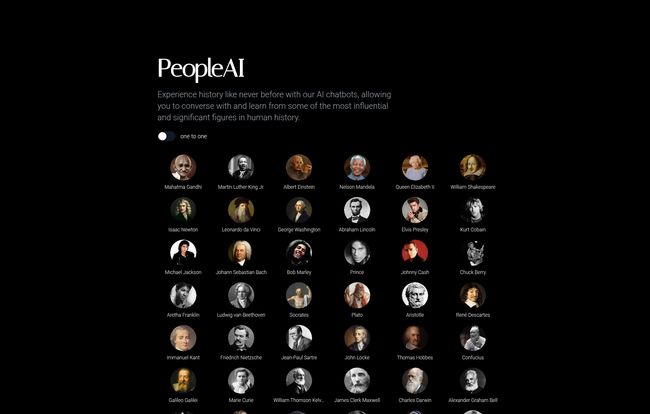
PeopleAI is basically a platform with two very distinct personalities. First, it’s a time-traveling chatroom. Imagine having a Rolodex filled with the greatest minds in history—from Leonardo da Vinci and Marie Curie to Martin Luther King Jr. and Shakespeare—and being able to strike up a one-on-one conversation with any of them. That’s the first half of PeopleAI. It uses AI chatbots to simulate conversations with these influential figures.
But then there’s the other side. The side that really caught my marketing brain’s attention. PeopleAI also lets you create a digital twin of yourself. A 24/7 AI-powered brand ambassador who can engage with your audience, answer questions, and represent you online, even when you’re sleeping. This isn’t just a chatbot; it’s a personalized AI version of you. Pretty wild, right?
The whole thing is billed as a “tech experiment” by the folks at ChatKit.ai, which helps set the right expectations. It’s not a perfectly polished, billion-dollar enterprise tool. It’s a playground, and that’s part of its charm.
Let’s Talk to the Past: My Conversation with a Dead Genius
I had to try the historical figures first. The grid of faces is impressive, almost overwhelming. Who do you talk to first? I skipped the obvious political leaders and went straight for Albert Einstein. I’ve always wondered what he’d think about the internet.
The conversation was… surprisingly good. It wasn’t just spouting Wikipedia facts. I asked about his thought experiments, his views on creativity, and how he’d explain relativity to a five-year-old. The responses felt thematically correct, capturing a bit of that gentle, curious, and deeply intellectual spirit you read about. It was engaging. It was fun. It felt less like a search query and more like a real (albeit simulated) interaction.
“It’s a fascinating educational tool. I can see students using this to understand historical context in a way a textbook never could. Asking Joan of Arc about her motivations is a lot more memorable than reading a paragraph about it.”
Of course, is it perfectly accurate? Probably not. It’s an AI interpretation. But as a way to spark curiosity and learn in a novel way, it’s a home run. It makes history feel alive, not like something trapped in a dusty book.
Visit PeopleAI
The Future of Personal Branding? Your Own Digital Twin
Alright, now for the part that could genuinely change things for creators, entrepreneurs, and anyone building a personal brand. The digital twin.
The idea is simple but powerful. You feed the AI with your knowledge, your content, your voice—and it creates an interactive version of you. Your followers, clients, or website visitors can then have a conversation with “AI-You.” They can ask about your services, your opinions on industry trends, or for advice you’ve previously shared. It’s the ultimate FAQ page, but with a personality. Your personality.
For a consultant who gets the same ten questions every day, this is a game-changer. For an online creator with a massive audience, it’s a way to provide personal-feeling engagement at an impossible scale. It’s your own knowledge base, turned into an interactive experience. This is teh kind of leverage that gets me excited about AI.
The Good, The Bad, and The AI
No tool is perfect, especially one that’s still an “experiment.” So let’s break down the highs and the lows from my experience.
What I Really Liked
First off, the interface is dead simple. You click a face, you start typing. There’s no complex setup. The sheer novelty and engagement factor is off the charts. It’s a unique concept that immediately grabs you. For personal branding, the innovation is obvious. Offering a digital twin on your website is a massive differentiator that will make people stop and take notice. It’s a bold move that signals you’re on the cutting edge.
Where It Gets a Little… Complicated
As much as I enjoyed talking to Einstein, a part of me kept asking, “Would he really have said that?” The accuracy of historical representations is a big question mark. It’s an AI’s best guess, and that comes with inherent limitations. Then there’s the whole ethical rabbit hole of digital twins. What’s to stop someone from creating a malicious twin of a public figure? Or what happens if your own digital twin gives bad advice that you didn’t personally sign off on? These are serious questions we need to think about as this technology becomes more common. Finally, while the list of historical figures is long, you might not find a more obscure person you’re looking for, though they do have a request feature which is a nice touch.
So, How Much Does This Cost?
This is the million-dollar question, isn’t it? As of writing this, PeopleAI appears to be free to use. There’s no pricing page, no credit card form, nothing. This fits with its positioning as a tech experiment. My guess is that they’re currently in a beta phase, gathering data and feedback. I wouldn’t be surprised to see a subscription model in the future, perhaps with different tiers for creating and maintaining a digital twin. But for now, you can jump in and play around without spending a dime.
Who is PeopleAI Actually For?
I see two main groups getting a ton of value here.
- The Curious & The Learners: Students, history lovers, writers, or just anyone with an inquisitive mind will find the historical chatbots endlessly fascinating. It’s a brilliant tool for informal learning and creative inspiration.
- The Brand Builders & The Busy: Influencers, coaches, consultants, authors, and entrepreneurs. Anyone whose business is tied to their personal brand and knowledge should be paying close attention to the digital twin feature. It’s a new frontier for audience engagement and lead generation.
For some, it might just be a cool party trick. For others, it could become an indispensable part of their digital strategy.
In the end, PeopleAI is one of the more interesting AI tools I’ve seen this year. It’s ambitious, a little weird, and brimming with potential. It successfully bridges the gap between education, entertainment, and cutting-edge marketing. While the ethical and accuracy questions are real and important, they don’t overshadow the sheer innovation at play. It’s a glimpse into a future where our digital interactions are far more personal, dynamic and frankly, a lot more interesting.
Is it a gimmick? I don’t think so. I think it’s a sign of where things are headed. And I, for one, am excited to see where it goes.
Frequently Asked Questions about PeopleAI
- What is PeopleAI?
- PeopleAI is an AI platform with two main features: it allows you to have conversations with AI-powered chatbots of famous historical figures, and it enables you to create a “digital twin” of yourself for personal branding and audience engagement.
- Can I really talk to historical figures? How accurate is it?
- Yes, you can chat with AI versions of figures like Abraham Lincoln, Cleopatra, and Isaac Newton. However, the conversations are AI-generated interpretations based on historical data. While designed to be thematically accurate, they should be viewed as educational entertainment rather than perfect historical records.
- What is a digital twin and why would I want one?
- A digital twin is an AI version of you, trained on your content and knowledge. It can be placed on your website to answer questions from your audience, acting as a 24/7 brand representative. It’s useful for scaling engagement, automating answers to common questions, and offering a unique interactive experience for your followers or clients.
- Is PeopleAI free to use?
- Currently, PeopleAI is presented as a free “tech experiment.” There is no pricing information available on the site, so you can use its features without charge for now. This could change in the future as the platform develops.
- How do I get my own digital twin on the platform?
- The process for creating a personal digital twin is not yet fully public. Since the platform is experimental, this feature might be in a closed beta or require a direct request to the PeopleAI team. It is best to visit their website for the most current information.
- Who is behind PeopleAI?
- PeopleAI is a technology experiment created by the team at ChatKit.ai.
Reference and Sources
- PeopleAI Website: An official website URL is not explicitly provided in the image, but the project name is PeopleAI.
- ChatKit.ai: https://chatkit.ai/


