
Categories: AI Blog Generator, AI Content Detector, AI Description Generator, AI Outline Generator, AI SEO Tools, AI Title Generator, SEO Writing AI
Positional Review: Is This the SEO Tool You Need?

Alright, let’s talk shop. As an SEO, my digital life is a chaotic ballet of tabs. One for keyword research, another for a SERP analyzer, a third for the content editor, a fourth for rank tracking… you know the drill. It’s a bit like trying to cook a gourmet meal in a kitchen where all the utensils are in different rooms. You can do it, but man, it’s inefficient.
So, whenever a new tool pops up promising to be the “all-in-one” solution, my ears perk up. My skepticism does too, but that’s a story for another day. The latest platform to land on my radar is Positional. It bills itself as a modern toolset for content and SEO teams, designed to connect the entire workflow. A noble goal.
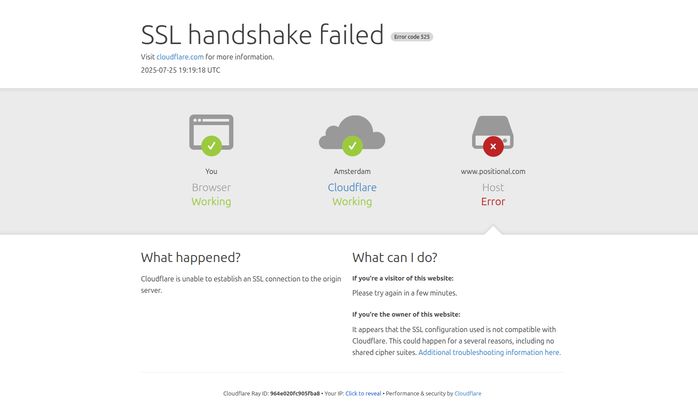
Now, for a little bit of real-talk. As I sat down to write this, I navigated to their website and was greeted by a big, fat “SSL handshake failed” error. Error code 525, for the curious. The irony of an SEO tool’s website having a security certificate issue is not lost on me. It’s like a world-class chef forgetting to turn the oven on. It happens, and it’s a strangely humanizing little blip. It was fixed shortly after, but it’s a good reminder that in the digital world, nobody’s perfect.
So, What is Positional, Really?
Let’s get past the temporary server woes. Positional aims to be the central nervous system for your content strategy. Instead of a messy toolbox filled with single-purpose gadgets, it wants to be your shiny new Swiss Army knife. The idea is to have one place where you go from the spark of a keyword idea to a fully optimized, published article, and then back again to analyze its performance.
In my experience, many platforms that try to do everything end up being a master of none. They have a dozen features, but only two are actually good. The rest feel like they were tacked on to fill out a pricing page. The big question for me was: does Positional break that mold? Does it manage to tie everything together in a way that actually… works?
It’s built around the idea of focusing on results, not just vanity metrics. We’ve all been there, chasing a keyword that gets tons of traffic but zero conversions. Positional tries to steer you away from that by integrating things like buyer journey analysis directly into the process. A welcome change of pace.
A Look Under the Hood at Positional’s Features
This is where the rubber meets the road. A tool is only as good as its features, and Positional has a lot of them. Let’s break down the ones that matter most.
From Idea to Insight: Research and Strategy
Everything starts with a good idea. Positional bundles its Keyword Research, Keyword Clustering, and Competitor Research tools to help you find them. The keyword research tool is solid, giving you the metrics you’d expect: volume, difficulty, CPC. But the real magic, for me, is the clustering feature. Instead of just getting a list of keywords, it groups them by topic and intent. This is a massive time-saver and helps you build out pillar pages and topic clusters much more intelligently. You’re not just targeting one keyword; you’re planning to dominate an entire topic. That’s how you win in 2024.
Crafting Content That Actually Ranks
Once you have your topic, you need to write. This is where the Optimize tool comes in. It’s a content editor, similar to what you might see in Surfer SEO or Frase, that gives you data-driven suggestions as you write. It analyzes top-ranking pages and provides recommendations on word count, headings, and important terms to include. I’ve always had a love-hate relationship with these editors. They can sometimes lead to robotic writing if you follow them too rigidly. However, used as a guide rather than a rulebook, Positional’s editor is quite powerful. It integrates with Google Docs, which is a huge plus for collaborative teams.
It also has a feature called Internals, which suggests internal linking opportunities from your existing content to your new piece. Building a strong internal linking structure is one of the most underrated SEO tactics, and having a tool automate the discovery process is frankly a godsend.
Beyond Publishing: Analytics and Audits
Hitting ‘publish’ isn’t the end. Positional’s Content Analytics lets you track how your content is performing, connecting your work directly to traffic and keyword rankings. The Site Audit tool helps you keep an eye on the technical health of your site, flagging issues like broken links or slow pages. It’s not as deep as a dedicated crawler like Screaming Frog, but for most content teams, it’s more than enough to catch critical problems before they hurt your rankings.
One of the more… interesting features is AutoDetect. It’s an AI content detector. As with all AI detectors, take its results with a grain of salt. None of them are 100% accurate, and they can sometimes flag human writing as AI-generated. Still, in an age where AI-assisted writing is common, it’s a handy tool to have for a quick check, especially if you manage a team of writers.
The Good, The Bad, and The Pricey: An Honest Breakdown
No tool is perfect. Let’s get into the nitty-gritty. I love the all-in-one concept. The user interface is clean and pretty intuitive, which is a refreshing change from some of the more cluttered legacy platforms. The data-driven recommendations are genuinely helpful, and the integration with Google Docs shows they understand how content teams actually work.
On the flip side, the sheer number of features means there can be a bit of a learning curve. You’ll need to spend some time clicking around to really get the hang of it all. And as mentioned, the AutoDetect tool isn’t foolproof. But my biggest hesitation for smaller operations would be the price. Once you move past the free and lite tiers, it starts to become a significant investment.
Let’s Talk Turkey: Positional’s Pricing
Positional offers a tiered structure, which is pretty standard. Here’s how it breaks down:
- Free Tier ($0/month): This is your test drive. You get limited access to the Optimize tool (5 reports a month) and the Site Audit. It’s perfect for a freelancer or a small blogger who wants to see what the platform feels like. No credit card required, which is always nice.
- Lite Tier ($49/month): This tier unlocks more tools, including Content Analytics and AutoDetect. It’s for a single user and a single domain. I see this as a good fit for a dedicated solo content creator or a small business just getting serious about SEO.
- Base Tier ($99/month): Now we’re talking. This brings in the full research suite—keyword tracking, research, clustering, competitor research—plus the editorial calendar. It includes 3 seats and 3 domains, making it the sweet spot for small content teams and agencies.
- Growth Tier ($399/month): The big leagues. This adds Social Listening and Buyer Journeys, with more seats (5) and domains (10). This is clearly aimed at larger businesses and established agencies that need the full spectrum of data and collaboration tools.
Honestly, the pricing feels fair for the value provided, especially the Base tier. It packs a punch and is competitive with other major players in the space.
Who Should Actually Use Positional?
So, who is this for? In my opinion, Positional is ideal for in-house content marketing teams and SEO agencies. The collaborative features, the end-to-end workflow, and the pricing structure of the Base and Growth tiers are tailor-made for them. An ambitious solo blogger or a small business owner with a solid content budget would also get a ton of value from the Lite or Base plans.
Who is it not for? If you’re a complete beginner on a shoestring budget, this might be overkill. You can piece together free tools to get started. But if you’re at the point where the time you’re wasting juggling a dozen different tools is costing you more than the subscription fee, then it’s time to consider a platform like Positional.
Frequently Asked Questions
- Is Positional good for beginners?
- It can be, but there’s a learning curve. The Free and Lite tiers are a good way to get started without being overwhelmed. However, a total novice might find the sheer number of features a bit daunting at first.
- How accurate is the AutoDetect AI detector?
- It’s a useful guide, but like all AI detectors, it’s not infallible. It’s best used as one of several signals rather than a definitive judgment. I wouldn’t rely on it 100%.
- Can I really use Positional for free?
- Yes! The Free Tier gives you limited access to the content optimizer and site audit. It’s a great way to try out the platform’s core functionality without any commitment.
- How is Positional different from giants like Ahrefs or Semrush?
- While there’s a lot of feature overlap, Positional’s main differentiator is its focus on the content workflow. It’s built specifically for content teams, aiming to connect every step from research to analysis in one cohesive interface. Ahrefs and Semrush are arguably more powerful on the backlink analysis and technical SEO fronts, but Positional competes very strongly on the content side of things.
- Does Positional integrate with other tools?
- Yes, it has key integrations that content teams will love, most notably with Google Docs and Slack, which helps it fit into your existing workflow more smoothly.
My Final Verdict
After spending some quality time with Positional (and after its SSL cert decided to start playing nice again), I’m genuinely impressed. It’s not just another clone in a crowded market. It has a clear vision: to unify the chaotic world of content marketing. It succeeds in a lot of ways.
Is it the one tool to rule them all? Maybe not for every single person. If you’re a technical SEO who lives and breathes backlink audits, you might still keep your specialized tools. But for a content team, a marketing agency, or anyone whose primary goal is to create high-quality, high-ranking content more efficiently, Positional is a very, very compelling option. It’s a well-designed platform that understands its audience, and in this industry, that’s half the battle.


