
Categories: AI Detector, AI For Data Analytics, AI Predictions, AI Real Estate
Quensus Review: Stop Leaks & Cut Your Water Bills

Let me tell you a story. A few years back, I was consulting for a mid-sized retail company. They had a gorgeous flagship store in a historic downtown building. On a long holiday weekend, a tiny, unassuming pipe on the third floor decided to give up the ghost. Nobody was there. For three days, water trickled, then flowed, then cascaded down through the floors. The scene on Tuesday morning was… biblical. Ruined inventory, warped hardwood floors, crumbling plaster. The cost was staggering, not just in repairs but in lost business. It’s one of those things you dont think about, until it’s all you can think about.
That memory came flooding back (pun absolutely intended) when I first came across Quensus. The tagline on their site is simple: “Say goodbye to property damage with automatic water shutoff.” My first thought? Yeah, right. But as an SEO guy who lives and breathes data, risk management, and ROI, I had to dig in. Because if there’s one thing I know, it’s that proactive solutions are always, always cheaper than reactive disasters.
So, What is Quensus, Really?
At its core, Quensus is a high-tech guardian for your building’s plumbing. Think of it like a sophisticated security system, but instead of watching for intruders, it’s constantly monitoring for water leaks, unusual flow, and potential pipe bursts. It’s an enterprise-level water management solution that combines smart hardware with an intelligent software platform to give you total control over your water usage.
It’s not just a single gadget; it’s a whole ecosystem. You’ve got a range of devices working together:
- Smart Meters that track every single drop of water flowing into your property in real-time.
- Automatic Valves that can shut off the water supply instantly, either on your command or automatically when a leak is detected.
- Leak Cables and Splash Sensors that act like digital tripwires, sensing moisture in critical areas like server rooms, basements, or behind appliances.
All this hardware feeds data into their main platform, the FlowReporter. And that’s where the magic really happens. It’s the brain of the operation, turning raw data into actionable insights.
The True Cost of an Unchecked Drip
We all know water damage is bad. But I don’t think most facility managers or property owners grasp the full scope until it’s too late. It’s not just the bill from the restoration company. It’s the sky-high water bill for the month of the leak. It’s the increased insurance premiums for years to come. It’s the operational downtime, the damage to your brand’s reputation if you’re a hotel or retailer, and the sheer administrative headache of it all.
A friend in the insurance game, told me once that non-weather-related water damage is one of the most common and costly types of commercial property claims. It’s the silent killer of budgets. A system like Quensus aims to stop that killer in its tracks.
How Quensus Puts a Stop to Water Worries
This isn’t just about plugging a leak. It’s a multi-layered defense system. Let’s break down how the pieces fit together.
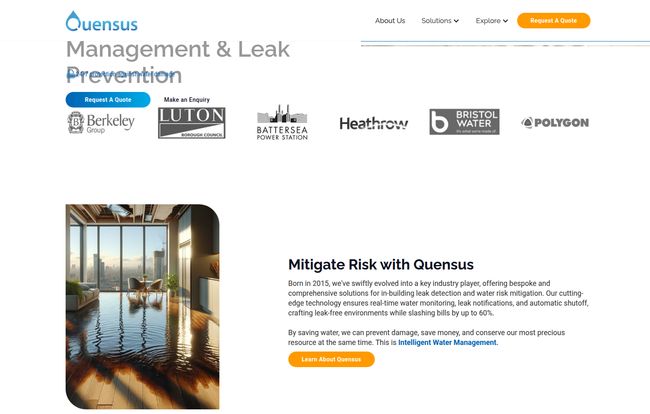
Visit Quensus
The Hardware: Your Eyes and Ears on the Pipes
The system starts with the physical devices. The smart meters are the gatekeepers, measuring every liter and giving you a baseline of what your normal water usage looks like. This is huge. Once the system learns your patterns—say, high usage in the morning when a building opens, low usage overnight—it can immediately spot anomalies. Is water running at 3 AM on a Wednesday when it never has before? Alert!
Then you have the automatic shutoff valves. These are the muscle. When the system detects a serious leak, it doesn’t just send you a notification and hope you see it. It takes action, shutting off the main valve to prevent a small problem from becoming a catastrophe. You can also control these valves remotely from your phone. Stuck in traffic and get an alert? Shut it down. Peace of mind from anywhere.
For pinpoint accuracy, the leak cables and splash sensors are brilliant. You can run these along the floors of high-risk areas. The second they detect moisture, the alarm is raised. It’s the earliest possible warning you can get.
The Software: FlowReporter Is Your Command Center
All that hardware is pretty useless without the software to make sense of it all. The FlowReporter dashboard is where you see everything. It’s not just a bunch of numbers; it’s a visual representation of your building’s water health. You can see consumption trends over time, compare usage across different sites, and generate reports. This is gold for anyone trying to hit sustainability targets or just understand where their money is going. For a data nerd like me, this is the best part. You can finally answer questions like, “Which of our locations is the least water-efficient?” or “Did that new initiative to save water actually work?”
The Bottom Line Benefits: Savings, Safety, and Sanity
So, you install this system. What’s the actual payoff? It boils down to a few key areas.
First, the most obvious: massive bill reduction. Quensus claims it can save businesses up to 60% on their water bills. That number sounded a bit high to me at first, but when you consider all the hidden leaks—running toilets, dripping taps, underground pipe issues—that go unnoticed for months, it starts to make sense. You’re not just preventing disasters; you’re trimming the constant, wasteful fat from your utility expenses.
Second, compliance and sustainability. For many modern companies, this is just as important as the direct cost savings. The detailed reporting helps you meet standards like BREEAM and manage risks associated with things like Legionella L8 by ensuring water isn’t stagnating in pipes. It’s a tangible way to demonstrate your commitment to ESG (Environmental, Social, and Governance) goals. You’re not just saying you’re green; you have the data to prove it.
Finally, there’s the 24/7 protection and peace of mind. Knowing that your property is protected even when no one is there is invaluable. It turns water management from a reactive, stressful task into a proactive, controlled process.
The Investment Question: Let’s Talk Cost
Alright, this all sounds great, but what’s the catch? As with any enterprise-grade solution, there’s an initial investment. You won’t find a “Buy Now” button with a fixed price on the Quensus website. The cost will depend entirely on the size of your building, the complexity of your plumbing, and the specific components you need. You’ll need to get a custom quote.
Yes, there’s a cost for the equipment and likely professional installation. And yes, the premium features of the FlowReporter platform require a subscription. Some people might see this as a con, but I see it differently. You’re not buying a product; you’re investing in an insurance policy with an ROI. You have to weigh the upfront cost against the astronomical potential cost of a major water event and the guaranteed month-over-month savings on your utility bills. In most cases, the math works out pretty favorably.
My Final Word on Quensus
As someone who has seen the aftermath of a commercial water leak firsthand, I’m probably biased. I believe solutions like Quensus are the future of property management. It’s moving from a place of hoping for the best to a place of being prepared for the worst.
It’s a smart, data-driven approach to a problem that has always been messy and unpredictable. If you manage a commercial property, a block of apartments, a hotel, or even a construction site, you owe it to yourself—and your balance sheet—to at least look into it. The potential savings in both money and stress are just too significant to ignore. Its one of those investments that pays for itself, first in prevention, and then in optimization.
Frequently Asked Questions
- How much can I realistically save with Quensus?
- Quensus claims savings of up to 60%. Your actual savings will depend on your current water usage and the extent of any undetected leaks. Even without major leaks, the detailed data often reveals inefficiencies that can lead to significant savings of 10-20% or more.
- Can I install the Quensus system myself?
- While some components might be simple, installing the main meters and valves on a commercial water main typically requires a professional plumber. It’s best to factor professional installation into your initial budget to ensure everything works correctly from the start.
- What happens if my building’s WiFi goes down?
- This is a great question. While remote monitoring and alerts depend on an internet connection, the core function of leak detection and automatic shutoff can often operate locally. The system is designed to protect your property even if connectivity is temporarily lost. You should confirm the specifics for your exact configuration with Quensus.
- Is Quensus only for huge corporate buildings like Heathrow?
- Not at all. While they have impressive enterprise clients, the system is scalable. It’s suitable for a wide range of properties, including smaller retail locations, apartment blocks, schools, and hospitality venues. The key is that it’s designed for commercial, not typically individual residential, use.
- How exactly does Quensus help with Legionella L8 compliance?
- Legionella bacteria can grow in stagnant water. The FlowReporter platform can help identify areas of low or no water flow. This allows facility managers to schedule regular flushing of these outlets, a key requirement of L8 compliance, and provides a data log to prove these actions were taken.
Conclusion
Look, managing a property comes with a thousand moving parts and a million potential problems. Fire, security, HVAC—we have sophisticated systems for all of them. For too long, water has been the wild card. Quensus brings that wild card into the fold, giving you the data and control you need to manage it effectively. It’s a shift from worrying about water to being wise about it. And in this business, being wise is how you win.


