
Categories: AI Healthcare, AI Report Generator, AI Summarizer
Read My MRI Review: AI That Finally Explains Your Report

You know the feeling. That notification pings. Your medical report is ready. Your stomach does a little lurch, a mix of anxiety and a desperate need for answers. You open the file, and… it’s gibberish. A wall of text stares back, filled with words like “moderate degenerative disc desiccation,” “subtle T2 hyperintensity,” and “osteophyte formation.”
My first reaction? Straight to Google. Which, as we all know, is a one-way ticket to convincing yourself you have a rare, incurable disease that only affects three people in history. It’s a spiral. You start with a simple term and thirty minutes later you’re reading a forum post from 2008 by a guy named “BoneCrusher23” about his cousin’s uncle’s dog. Not helpful.
This whole song and dance is something I’ve done more times than I care to admit. As someone who’s spent a fair bit of time in the SEO and digital trends world, I’m always watching for tech that tries to solve these very human problems. We’re seeing a wave of patient-focused tools, and I stumbled upon one that promised to be a decoder ring for this medical gobbledygook: Read My MRI. The claim is simple: Give us your confusing report, and we’ll give you back a version in plain English. For a guy whose brain turns to mush in the face of medical terminology, I had to try it.
What Exactly is Read My MRI? (And Why Should You Care?)
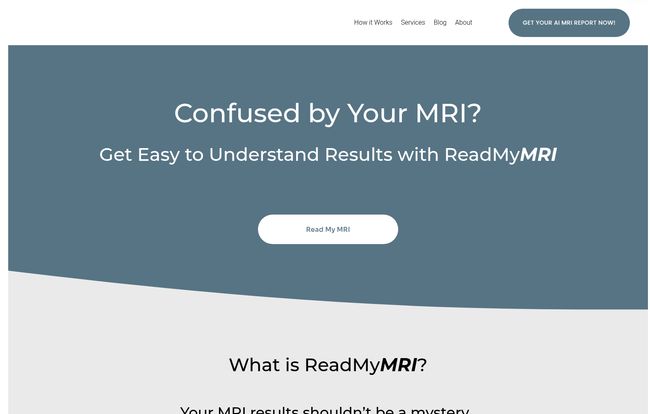
So what’s under the hood? At its core, Read My MRI is an AI-powered service that acts as a translator. Think of it like Google Translate, but instead of turning Spanish into English, it turns Doctor-Speak into Human. You take that dense, intimidating report from your radiologist—whether it’s for an MRI, CT scan, PET scan, X-Ray or even an Ultrasound—and you upload the text. The AI then gets to work.
In just a few minutes, it churns out a simplified summary. It breaks down the findings, explains what they mean without the ten-dollar words, and gives you a clear overview. The whole point is to bridge that massive communication gap between what a highly specialized doctor writes and what a regular person can actually comprehend. It’s about taking you from a place of confusion and fear to a place of understanding and empowerment before you even step into your follow-up appointment.
How It Works: A Walkthrough of the Process
The beauty of it is its simplicity. There’s no complicated software to install or a 50-page manual to read. The process is about as straightforward as it gets.
- Get Your Report: First, you need the actual text-based report from your imaging center or hospital portal. This is the document the radiologist typed up.
- Upload It: You just upload that document directly to their website.
- Receive Your Summary: Within minutes, their AI analyzes the text and generates a patient-friendly report. No waiting for days.
That’s it. The platform is designed to be incredibly user-friendly, because let’s face it, if you’re already stressed about a medical report, the last thing you need is a tech headache.
Visit Read My MRI
The Good, The Bad, and The AI: My Honest Take
Alright, let’s get into the nitty-gritty. No tool is perfect, right? After running a report through the system, here’s my breakdown of what I genuinely liked and what you need to be aware of.
The Stuff I Absolutely Loved
The single biggest win here is the clarity. It’s that “a-ha!” moment when a terrifying phrase like “foraminal stenosis” is explained as simply “a narrowing of the canals where nerves exit the spine, which can sometimes cause pinching.” Okay, I get that. I can visualize that. The panic recedes and is replaced by actual understanding.
But it’s more than just a dictionary. The feature I found most valuable was the generation of personalized questions to ask your doctor. This is brilliant. It changes the entire dynamic of your follow-up appointment. Instead of walking in and just passively receiving information, you’re armed with specific, intelligent questions about your own results. You’re no longer a passenger; you’re a co-pilot in your own healthcare. For anyone who has ever left a doctor’s office and immediately thought of five things they forgot to ask, this is a game-changer.
The speed is also a huge plus. Getting this breakdown in minutes can seriously reduce the anxiety of waiting for a follow-up appointment that might be weeks away.
Some Things to Keep in Mind
Now, let’s be real. There are some critical caveats here. The most important one, which they state clearly on their site, is this: Read My MRI is for educational purposes only. It is not a doctor and it does not replace medical advice.
Think of it as the best study guide you’ve ever had. It prepares you for the exam, but it isn’t the exam itself. Your doctor is the final authority. This tool is there to help you understand the conversation, not to have the conversation for you. It’s a subtle but hugely important distinction.
Also, it doesn’t currently accept insurance, so the cost is out-of-pocket. We’ll get to the price in a second. And one more technical point: as of now, the service analyzes the written radiology report, not the medical images themselves. You’re not uploading your MRI scan, just the text file describing it. They mention image uploads are coming soon, which will be an interesting development.
Let’s Talk Money: The Read My MRI Pricing
So, what’s the damage for this peace of mind? The pricing is straightforward: $99 per AI MRI Report, for a single body region or report. When I first saw that, I had a little bit of sticker shock. A hundred bucks for a summary?
But then I thought about it. How much is clarity worth? How much would you pay to reduce days or weeks of anxiety? Compared to the cost of a specialist co-pay or a private consultation just to have someone explain a report to you, $99 starts to look pretty reasonable. It’s an investment in your own understanding and sanity. Plus, they offer a 100% satisfaction guarantee, which takes a lot of the risk out of the equation. If you dont find it helpful, you’re covered.
Who Is This For, Really?
I can see a few groups of people getting massive value from this:
- The Anxious Waiter: The person who has their report but the doctor’s follow-up is still two weeks away. This can provide immense relief.
- The Proactive Patient: Someone who believes in being an active participant in their healthcare and wants to come to their appointment fully prepared.
- The Confused Caregiver: If you’re trying to help a parent or a loved one navigate their health, this can be an incredible tool for translating the complex information for them (and for you).
- The “It’s Probably Nothing” Patient: Anyone who’s been told, “Oh, the report looks fine, just some normal wear and tear,” but the report itself contains scary-sounding words. This tool can confirm what’s truly benign and what might be worth asking a follow-up question about.
AI in Healthcare: A Slippery Slope or a Helping Hand?
There’s a lot of chatter and, frankly, a lot of fear about AI in medicine. People are rightly concerned about algorithms making life-or-death decisions. But I think that misses the point of tools like Read My MRI. This isn’t diagnostic AI. It’s not trying to be a doctor.
It’s what I’d call an information symmetry tool. For decades, the flow of medical information has been one-way, from the all-knowing provider to the often-confused patient. This technology helps to balance that. It empowers the patient with the same currency the doctor has: knowledge. Their tagline, “Made by humans. Powered by AI,” feels pretty spot-on. It’s using technology to enhance the human experience, not replace it.
In my opinion, this is the best application of AI in the consumer health space right now—not replacing professionals, but empowering the people they serve.
So, is it worth it? If you’ve ever felt that pit in your stomach while trying to decipher a medical report, I think the answer is a resounding yes. It’s a small price to pay to turn anxiety into understanding and to walk into your next doctor’s appointment feeling confident and in control.
Frequently Asked Questions about Read My MRI
- Can Read My MRI diagnose my condition?
- Absolutely not. It is an educational tool designed to explain your existing radiology report in simple terms. It does not provide medical advice, diagnoses, or treatment recommendations. Always consult with your qualified healthcare provider.
- Is my medical data safe and private?
- According to their website, they take privacy seriously. The AI-generated report is delivered within hours while keeping your data private and protected. As with any online health service, it’s always a good idea to review their specific privacy policy.
- What kinds of reports can I upload?
- The service is designed to work with a variety of radiology reports, including MRI, CT scans, PET scans, X-Rays, and Ultrasound reports.
- Does Read My MRI accept medical insurance?
- No, it is a direct-to-consumer service and the $99 fee is paid out-of-pocket. It is not currently covered by insurance.
- What happens if I’m not satisfied with the summary?
- Read My MRI offers a 100% satisfaction guarantee. If you’re not happy with the educational report you receive, you can likely get a refund, which lowers the barrier to trying it out.
- Can I upload the actual images from my scan?
- Not at this time. The service currently only analyzes the written text of the radiologist’s report. They have indicated that image analysis is a feature they are working on for the future.


