
Categories: AI Contract Management, AI Copilot, AI Documents Generator, AI For Data Analytics, AI Knowledge Management, AI Project Management, AI Workflow, AI Writing Assistants
Reqi Review: Is This AI Tool the Future of Requirements?

If you’ve ever managed a complex engineering or infrastructure project, you know the special kind of chaos that is requirements management. It often feels like you’re trying to build a skyscraper where the blueprints are scattered across a dozen different emails, a few hundred spreadsheet tabs, and the occasional napkin sketch. It’s a mess. We’ve all been there, trying to trace a single requirement through a tangled web of dependencies, and it’s enough to make you want to go live in a cabin in the woods.
So when a tool like Reqi comes along, promising to make requirements “simple,” my inner cynic immediately perks up. Simple? Systems engineering? Those two words don’t usually hang out together. But then I saw they were bringing AI into the mix, and my curiosity got the better of me. Could this actually be the modern solution we need to tame the beast of project requirements?
I’ve spent years in the SEO and digital project space, and while the stakes are different, the core problem of keeping everyone aligned is universal. So, let’s get into what Reqi is, who it’s for, and whether it lives up to its own hype.
So, What Exactly is Reqi?
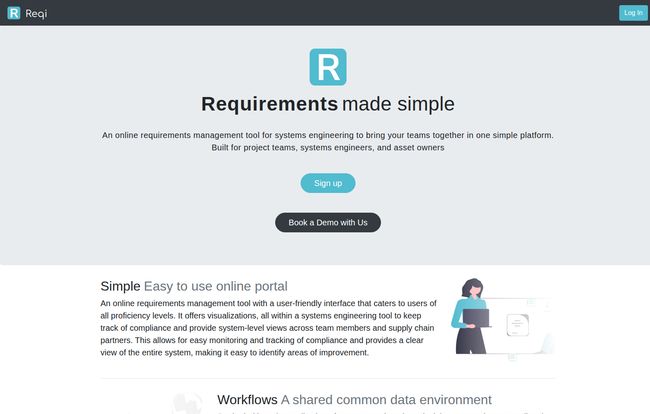
At its heart, Reqi is an online requirements management platform built specifically for systems engineering. Think of it as a central nervous system for your project. Instead of having information siloed in different departments or, worse, with different supply chain partners, Reqi puts everything onto one shared platform. It’s designed for project teams, the engineers on the ground, and the asset owners who need a high-level view without getting lost in the weeds.
The entire framework is built on a foundation of systems engineering principles. This isn’t just another generic project management tool with a few extra fields. It’s designed from the ground up to handle the entire lifecycle of a complex project, from the initial concept all the way through to delivery and operation.
The Features That Actually Matter
A shiny feature list is one thing, but what actually makes a difference in the day-to-day grind? Based on what I’ve seen, Reqi has a few standout capabilities that are worth talking about.
Visit Reqi
A Single Source of Truth for Your Whole Team
This is the big one. The holy grail of project management. Reqi provides a single source of truth that connects your team directly to the contract requirements. It means everyone, from the project manager to the subcontractor, is looking at the same information. This traceability is critical. You can see how a change in one area might affect another, helping you to spot potential risks and dependencies early. No more “I thought you meant…” conversations. This is huge for projects that involve a long and complicated supply chain, where miscommunication can lead to massive delays and cost overruns.
Visualizing the Chaos
I’m a visual person. I can look at a spreadsheet for hours and my eyes just glaze over. Reqi seems to get this. They offer visualization tools that let you see the system architecture and track compliance in a way that actually makes sense. Imagine being able to pull up a dashboard that shows exactly where you stand on every single requirement, with clear visual cues for what’s on track and what’s falling behind. It’s about turning abstract data into actionable intelligence. For a project manager, that’s pure gold.
Meet REX, Your AI Assistant
Okay, here’s the part that really caught my eye. Reqi has an AI-powered bot named REX. Its job? To help you generate new requirements and refine existing ones. I have to admit, this sounds incredibly cool. We’ve all seen poorly written, ambiguous requirements that cause endless problems down the line. REX can analyze your inputs—from tenders, specs, or even just ideas—and help you craft clear, concise, and complete requirements. Think of it as a super-smart intern who never gets tired and has read every best-practice manual on the planet.
On top of that, there’s an AI-driven risk assessment tool. It helps you identify and manage potential issues before they become project-derailing disasters. This proactive approach is a far cry from the reactive firefighting that plagues so many projects.
My Honest Take: The Good and The Not-So-Good
No tool is perfect, right? From my perspective as a professional who lives and breathes digital tools, here’s my breakdown of Reqi.
I’m genuinely impressed by the clean interface and the clear focus on one specific problem. It’s not trying to be a Swiss Army knife; it’s a scalpel. The platform’s dedication to real systems engineering principloes feels authentic, not just like a buzzword thrown on a landing page. And the collaboration features, especially for managing a supply chain, are a massive selling point. The AI assistant, REX, could be a legitimate game-changer for teams, freeing up senior engineers from the drudgery of administrative work to focus on actual engineering. A real time-saver.
Now, let’s talk about the elephant in the room: the price. If you go to Reqi’s website, you won’t find a pricing page. You’ll find a “Book a Demo” button. This is pretty standard for enterprise-level SaaS platforms, but it can be frustrating if you’re a smaller team just trying to figure out if you can afford it. It suggests a higher price point and a sales process that involves direct contact. Also, while the site mentions it’s “customisable,” my experience tells me that deep, meaningful customisation is often reserved for top-tier enterprise plans. It’s something to ask about during that demo, for sure.
Who Should Be Booking a Demo for Reqi?
So, who is this for? If you’re a solo developer building an app, this is probably overkill. But if you’re in one of these fields, you should pay attention:
- Systems Engineers & Project Managers in sectors like infrastructure, defense, aerospace, or large-scale manufacturing.
- Asset Owners who need to maintain oversight and ensure compliance across the entire project lifecycle.
- Companies with Complex Supply Chains that struggle with keeping all their partners and subcontractors on the same page.
Basically, if your project’s requirements document looks more like a phone book and you have nightmares about traceability, Reqi is probably aimed directly at you.
Final Thoughts on Reqi
After looking it all over, I’m optimistic about Reqi. It’s a specialized tool for a specialized field, and it seems to address the most significant pain points with a modern, AI-enhanced approach. It’s not trying to compete with generic tools like Jira or Asana; it’s playing in a different league entirely.
The success of a tool like this always comes down to adoption and execution, but the foundation is solid. It’s a platform that understands the problem it’s trying to solve. And in the world of complex engineering, understanding the problem is more than half the battle.
Frequently Asked Questions about Reqi
- What is Reqi used for?
- Reqi is an online requirements management tool specifically for systems engineering. It helps teams manage complex project requirements, track compliance, collaborate with suppliers, and assess risks from concept to delivery.
- Does Reqi use AI?
- Yes, it features an AI-powered bot called REX that helps users generate and refine project requirements. It also uses AI for its risk assessment tool to help identify potential issues early.
- Who is the ideal user for Reqi?
- The ideal users are systems engineers, project managers, and asset owners working on large-scale, complex projects, particularly those in industries with strict compliance standards and extensive supply chains.
- How much does Reqi cost?
- Reqi does not list its pricing publicly. You need to contact their team and book a demo to get pricing information, which is a common model for enterprise software solutions tailored to specific client needs.
- Is Reqi difficult to learn?
- The platform is designed with a “simple, easy to use online portal.” While the concepts of systems engineering are complex, the tool itself aims to be user-friendly with clear visualizations and dashboards.
Conclusion
In the end, Reqi represents a focused, modern take on a timeless problem. It’s not about adding more features; it’s about providing the right features, powered by smart technology, to bring clarity to complexity. If you’re still wrestling with spreadsheets and praying that nothing falls through the cracks, it might be time to look at a dedicated solution like this. It could be the difference between a project that succeeds and one that becomes a cautionary tale.


