
Categories: AI API, AI Speech Recognition, AI Speech-to-Text, AI Summarizer, AI Transcription, AI Translate
Rev AI Review: More Than Just a Speech-to-Text API?

In the world of content and data, we are absolutely drowning in audio and video. Podcasts, Zoom meetings that could have been emails, customer support calls, user interviews… it’s an endless stream. And for years, the big challenge has been turning that messy, unstructured spoken audio into clean, usable text. We’ve all been there, right? Trying to decipher a garbled auto-transcription from some free tool, wondering if your client actually said “launch the new campaign” or “lunch with new companions.”
I’ve tested more speech-to-text APIs than I can count. Some are lightning fast but about as accurate as a weather forecast from last week. Others are accurate but cost an arm and a leg. So when I started hearing the buzz around Rev AI, I was skeptical but curious. They claim to have the “world’s most accurate API,” which is a pretty bold statement. But they also offer a fascinating mix of pure AI horsepower and actual, real-life human transcription. It’s an interesting combination.
So, What’s the Big Deal with Rev AI Anyway?
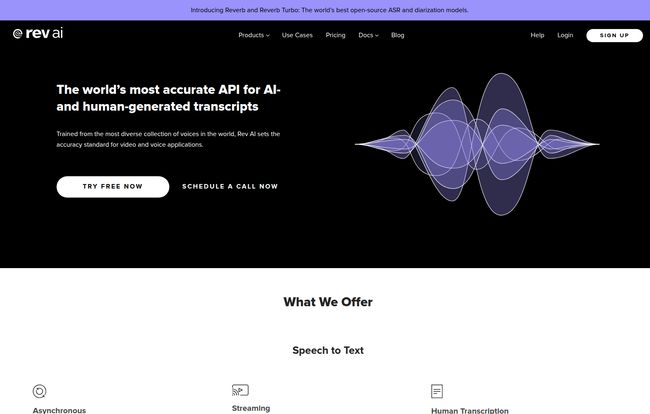
At its heart, Rev AI is a speech recognition service. You feed it an audio or video file, and it spits back a transcript. Simple. But calling it just a transcription tool is like calling a smartphone just a telephone. It’s technically true, but you’re missing the whole point.
Rev AI is built on two main ways of working with your audio:
- Asynchronous API: This is for your pre-recorded files. Think podcast episodes, recorded interviews, or a batch of customer service calls you need to analyze. You send the file, and you get the text back a short while later.
- Streaming API: This is for the live stuff. It transcribes in real-time as the audio is happening. This is perfect for live captions on a webinar, transcribing a live event, or building a voice-controlled application.
But here’s where things get really interesting. It’s the ‘Insights’ that got my attention.
Visit Rev AI
Going Beyond Simple Transcription with Insights
This is the secret sauce. Rev AI doesn’t just give you the words; it gives you context. It’s like having a junior analyst built right into the API. They offer a bunch of extra features that can pull out some serious intelligence:
- Sentiment Analysis: Is the customer in this support call happy, angry, or neutral? It analyzes the tone and word choice to give you a sentiment score. Gold dust for anyone in customer experience.
- Topic Extraction: It can scan a long-winded meeting transcript and pull out the main topics discussed. No more re-reading two hours of text to figure out what was actually important.
- Language Identification: Got a folder full of audio files from all over the world? The API can automatically detect the language being spoken. A small thing, but a huge time-saver.
Honestly, the topic extraction alone is a game-changer for my own content research. I can feed it a bunch of competitor webinars and get a bird’s-eye view of their talking points in minutes. Pretty neat.
The Classic Showdown: AI Transcription vs. Human Touch
Rev AI puts you right in the middle of one of the biggest debates in this space: should you trust a machine or a person? The cool part is, they let you choose.
When to Go with the AI
The AI transcription, especially their Whisper Fusion model, is ridiculously cheap and surprisingly accurate for most general-purpose audio. We’re talking fractions of a cent per minute. If you have a mountain of audio and just need a solid, searchable text version, the AI is your best friend. It’s built for speed and scale. They boast about a low Word Error Rate (WER), and from my own tests with some clear audio, it holds up. It’s not perfect, but it’s gotten scarily good.
When You Absolutely Need a Person
But sometimes, “good enough” isn’t good enough. If you’re dealing with a legal deposition, a medical dictation with complex terminology, or a noisy recording with multiple speakers and thick accents, you need a human. Rev AI’s human transcription service is much pricier, but you’re paying for near-perfect accuracy and nuance. A human can understand context, sarcasm, and industry-specific jargon in a way that AI… well, it’s just not there yet. One thing to note: the human service is English-only, so keep that in mind.
Let’s Talk Money: The Rev AI Pricing Model
Pricing is always the elephant in the room. Complicated, tiered subscription models are the bane of my existence. I was pleasantly surprised to see Rev AI uses a much more straightforward pay-as-you-go model. You pay for what you use. That’s it.
Here’s a quick look at some of their rates as of late 2023. I’d definitely check their pricing page for the most current numbers.
| Service | Price |
|---|---|
| Human Transcription | $1.99 / minute |
| Whisper Fusion Transcription | $0.005 / minute |
| Standard AI Transcription | $0.20 / hour |
| Topic Extraction | $0.0008 / 10 words |
They also offer an Enterprise plan for the big fish, which comes with a dedicated account manager and better support. And yes, they give you some free credits to start, so you can kick the tires before you commit any real cash.
The Good, The Bad, and The Just Okay
No tool is perfect. After spending some quality time with Rev AI, here’s my balanced take.
What I Really Like
The accuracy-to-cost ratio of their AI models is fantastic. Especially Whisper Fusion at half a cent per minute. That’s disruptive pricing. I’m also a big fan of the developer-first approach. The documentation is clean, and the code examples are straightforward. The biggest win for many businesses, though, will be the security compliance. Being compliant with SOC II, HIPAA, GDPR, and PCI is not a small thing. If you handle sensitive customer or patient data, this is a non-negotiable feature, and they have it covered.
Where It Could Be Better
The main drawback is the language limitations on the more advanced features. Sentiment analysis, topic extraction, and human transcription being English-only is a significant limitation for global companies. If your primary audience is in Germany or Japan, you’re missing out on some of the coolest features. The translation API is there, but it only supports about 11 languages last I checked, which is a bit behind some competitors. It’s not a dealbreaker for everyone, but it’s something you need to be aware of.
Final Thoughts: Who Should Use Rev AI?
So, what’s the verdict? I’m genuinely impressed. Rev AI has managed to carve out a really smart space for itself. It’s not just another transcription mill; it’s an audio intelligence platform.
If you’re a developer building an application that needs a voice component, it’s a top contender. If you’re a business sitting on a mountain of call center recordings and you want to understand what your customers are really saying, the insights features are incredibly powerful. And if you’re a content creator who just needs fast, affordable, and pretty darn accurate transcripts for your videos or podcasts, this is a fantastic option.
It has its limitations, particularly with non-English languages for its fancier tricks. But for English-language audio, it offers a flexible, powerful, and developer-friendly toolkit that’s hard to beat on price and performance.
Frequently Asked Questions about Rev AI
1. How accurate is Rev AI’s transcription?
Rev AI claims to have one of the lowest Word Error Rates (WER) in the industry for its AI transcription. For its human transcription service, the accuracy is near-perfect, typically around 99% or higher, as it’s done by professional transcriptionists.
2. How much does Rev AI cost?
Rev AI uses a pay-as-you-go model. Prices vary by service. For example, human transcription is around $1.99/minute, while their efficient Whisper Fusion AI model is as low as $0.005/minute. It’s best to check their official pricing page for the latest rates.
3. What languages does Rev AI support?
The AI transcription supports numerous languages (the website says 36+). However, some of the advanced insight features like Sentiment Analysis and Topic Extraction, as well as the Human Transcription service, are currently English-only. Their Translation API supports 11 languages.
4. Is Rev AI safe for sensitive data like medical or financial information?
Yes. Rev AI is compliant with major security and privacy standards, including SOC II, HIPAA, GDPR, and PCI. This makes it a suitable choice for industries that handle confidential information.
5. What is the difference between Asynchronous and Streaming APIs?
The Asynchronous API is used for transcribing pre-recorded audio or video files. You upload the file and get the transcript back later. The Streaming API is for real-time transcription, providing text as the audio is being spoken, which is ideal for live events and applications.


