
Categories: AI Creative Writing, AI Description Generator, AI Story Generator
Songtell Review: Can AI Really Explain Song Lyrics?

There are some things in life that are just universal. The smell of coffee in the morning. The feeling of dread when you see a ‘we need to talk’ text. And, of course, that moment when you’ve been singing a song for 15 years and suddenly realize the lyrics are not, in fact, “hold me closer, Tony Danza.” We’ve all been there.
For decades, figuring out what a song was really about was an analog process. It involved liner notes, heated debates with friends, and maybe a trip to a sketchy Geocities fan page. Then came sites like Genius, which felt revolutionary with its user-generated annotations. But now, we’re in a new era. The AI era. And it was only a matter of time before it came for our music.
Enter Songtell. The premise is simple and seductive: “Unravel the stories behind the lyrics you love” using the power of AI. As someone who spends their days neck-deep in algorithms, trends, and content, I had to see this for myself. Is this the future of music interpretation, or just a robot guessing what Kurt Cobain was angsty about? Let’s get into it.
So, What’s the Big Deal with Songtell?
At its core, Songtell is an AI-powered repository of song meanings. The website claims to have over 20,000 interpretations in its database, and it’s growing. You type in a song, and its AI model spits out a summary of the story and meaning behind the lyrics. It’s like having a musicologist on speed dial, but one who was born in a server farm.
The interface is clean, almost minimalist. Big, bold headline. A single search bar. No fluff. I appreciate that. In a web cluttered with pop-ups and autoplay videos, a simple search bar feels like a breath of fresh air.
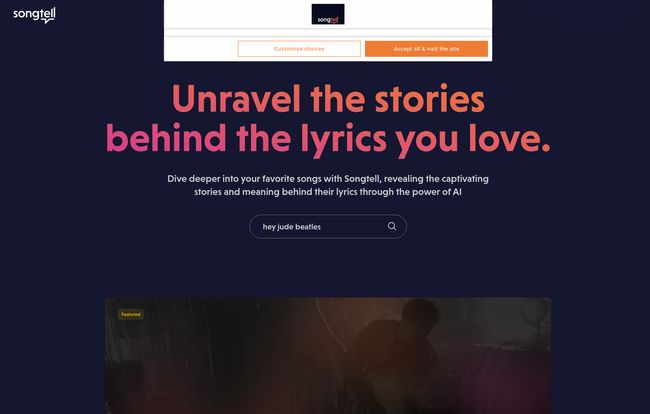
Visit Songtell
Taking It for a Spin
To test it out, I decided to throw a few different tracks at it. First, the obvious one from their own search bar suggestion: “Hey Jude” by The Beatles. The AI correctly identified that the song was written by Paul McCartney to comfort John Lennon’s son, Julian, during his parents’ divorce. It gave a solid, textbook-correct interpretation. Okay, not bad. It passed the entry-level exam.
Next, I tried something a bit more modern and abstract: “Blinding Lights” by The Weeknd. Songtell’s AI talked about themes of longing, desperation, and the need for a relationship to feel whole, referencing the constant drive through a city at night. It was a pretty good take, capturing the general vibe of the song. It felt a little… generic, but not wrong.
Finally, I gave it a personal favorite, a song with notoriously ambiguous lyrics: “Common People” by Pulp. The AI explained it as a critique of class tourism, where a wealthy student wants to experience poverty for the thrill of it. Again, spot on. It even picked up on the mix of anger and dark humor in the lyrics. I was pretty impressed.
The Good, The Bad, and The Artificially Intelligent
After playing around for a while, a clear picture of Songtell’s strengths and weaknesses started to form. It’s one of those tools that is both incredibly useful and slightly concerning at the same time.
The Good Stuff: Why It’s Kinda Awesome
The biggest pro is the sheer convenience. You get a coherent, well-structured explanation of a song in seconds. No more sifting through forum threads where a dozen people are arguing about a single line. For a quick dose of curiosity, it’s fantastic. The database is also impressive. I threw some relatively obscure indie artists at it and, more often than not, got a hit.
And then there’s the poster feature. Songtell lets you order a physical poster with the AI-generated meaning of your favorite song printed on it. I have to admit, this is a clever monetization strategy. It turns a fleeting digital query into a tangible piece of art for your wall. I can see this being a really popular gift idea. It’s a unique hook that sets it apart from a simple database.
The Not-So-Good: Can an AI Really Get Art?
Here’s the rub. Art isn’t data. Music isn’t a math problem. While the AI is great at synthesizing information that’s already out there—interviews, articles, common interpretations—it lacks a soul. It can tell you what the song is about, but it can’t tell you why it makes you feel a certain way.
My main concern is that the AI’s interpretation might not reflect the artist’s true intent, or worse, it might be just plain wrong. An AI hasn’t experienced heartbreak, or political rage, or the simple joy of a summer afternoon. It’s pulling from a vast ocean of text, but it’s never actually been for a swim. This can lead to interpretations that are technically correct but emotionally sterile. There’s also the risk of relying too heavily on it. Half the magic of music is personal interpretation, right? The song becomes part of your story. If we start accepting an AI’s take as the definitive one, we might lose a little bit of that magic. It feels a bit like Roland Barthes’ “The Death of the Author,” but in this case, the author is being replaced by an algorithm.
An SEO’s Perspective on a Tool Like Songtell
Putting on my SEO hat, Songtell is fascinating. The idea of using AI to generate thousands of unique pages of content is a classic SEO play. But in the age of Google’s Helpful Content Update (HCU), it’s also a risky one. The HCU is all about rewarding content made for humans, with real experience and expertise. Can a site based entirely on AI-generated content truly thrive long-term?
For a fellow content creator or blogger, my advice is to see Songtell as a brainstorming partner, not a content factory. You could definately use it to get a baseline understanding of a song for an article, but please, for the love of all that is holy, don’t just copy and paste the text. Use it as a starting point. A spark. Then, add your own human experience, your own interpretation, your own voice. That’s what will connect with readers and what Google wants to see. A tool like Genius, with its human annotations and community discussions, still holds a different kind of value for deeper research.
What’s the Price of Admission?
This is where things get a bit murky. As of this writing, there’s no clear pricing information on the Songtell website. The core feature of looking up song meanings seems to be free. When I tried looking for a pricing or subscription page, I actually hit a 404 error—the classic “page not found.” This could mean a few things. Maybe they plan to keep it free and rely on poster sales and ads. Maybe they’re still in a beta phase and haven’t rolled out a subscription model yet. It’s a bit of a mystery, which in itself is kind of intriguing.
So, Who Is Songtell For?
After all this, who would I recommend this to? I think Songtell is perfect for the casual music listener. The person who hears a line on the radio and thinks, “Huh, I wonder what that means?” and wants a quick, easy answer. It’s for the person looking for a unique, personalized gift for a music-loving friend. It’s also a decent starting point for bloggers or students who need to quickly get the gist of a song before doing a deeper analysis.
Who isn’t it for? Probably the hardcore music nerds, the academics, and the fans who live on forums debating the nuance of every single word. For them, the joy is in the process of discovery and debate, not in being handed an answer from a machine.
Final Thoughts
Songtell is a genuinely cool and innovative tool. It’s a snapshot of where we are in 2024—finding new and interesting ways to apply AI to aspects of our lives we never thought we would. It’s fast, it’s easy, and the poster idea is brilliant.
But it’s also a tool that should be used with a bit of caution. It’s a great assistant, but a poor master. I’ll probably keep using it to satisfy my fleeting curiosities. But I’ll never let it replace the messy, beautiful, and deeply personal experience of letting a song wash over me and deciding for myself what it all means. That’s a connection no algorithm can replicate. At least, not yet.
Frequently Asked Questions About Songtell
- What is Songtell?
- Songtell is a website that uses artificial intelligence to generate meanings and interpretations for song lyrics. It has a large database of over 20,000 songs and also offers a service to print these meanings on personalized posters.
- How accurate are the AI-generated song meanings?
- In my experience, they are generally quite accurate for capturing the main themes and widely accepted interpretations of a song. However, as it’s an AI, it may miss subtle nuances, personal artist intent, or the deeper emotional context that a human might pick up on.
- Is Songtell free to use?
- The core feature of searching for and reading song meanings appears to be free. There is currently no visible pricing or subscription information on their site. Their main source of revenue seems to be from selling custom posters.
- Can I use Songtell’s content for my own blog or website?
- I would strongly advise against simply copying and pasting content from Songtell. While it can be a great research or brainstorming tool, relying on AI-generated content can be problematic for SEO and may not provide value to your readers. It’s always best to write in your own voice.
- How does Songtell compare to a site like Genius?
- Songtell provides a single, AI-generated summary. Genius, on the other hand, is a community-driven platform with line-by-line annotations from various users, and sometimes even the artists themselves. Think of Songtell as a quick encyclopedia entry and Genius as a detailed, collaborative study guide.
Reference and Sources
- Songtell Official Website
- Genius | Song Lyrics & Knowledge
- Google’s Guidance on Creating Helpful, Reliable, People-First Content
- Brandblock (Credited with brand identity on Songtell’s site)


