
Categories: AI Animation Generator, AI Models, AI Research Papers, AI Video Generator, Image to Video, Large Language Models (LLMs), Text to Video
OpenAI Sora: Is This The Future of Video? An SEO’s Take

I remember exactly where I was when I first saw the Sora demos. I was scrolling through X (yeah, I still call it Twitter sometimes), probably putting off a keyword research report, and then I saw it: a stunningly realistic video of a stylish woman walking through a neon-lit Tokyo street. Then another one of woolly mammoths trudging through a snowy landscape. My first thought was, “What movie is this from?”
It wasn’t a movie. It was AI. Specifically, OpenAI’s new text-to-video model, Sora.
As someone who’s spent years neck-deep in digital marketing, SEO, and content creation, I’ve seen my fair share of “next big things.” Some fizzle out, some become niche tools, and a rare few completely change the game. Friends, I have a feeling Sora falls into that last category. But is it the perfect, world-eating video machine the initial hype suggests? Or are there cracks in the digital celluloid? Let’s get into it.
So, What Exactly is This Sora Thing?
At its core, Sora is a text-to-video model. You give it a written prompt—anything from “a dramatic shot of a wave crashing against a cliff” to “a fluffy monster reading a book in a field”—and it generates a video clip up to a minute long. Simple, right?
But the tech behind it is anything but simple. It’s from the same folks who brought us ChatGPT and DALL-E, so you know the pedigree is there. Sora isn’t just stitching images together. It’s trying to understand the physics of our world. It’s building a little simulated universe in its digital brain to figure out how light should reflect, how fabric should flow, and how a character should move through a scene. It’s like teaching a computer to have its own dreams, based on scripts we write.
This is a massive leap from the janky, short-form AI video clips we were seeing just a year ago. We’re talking about a tool that understands not just objects, but the context and emotion behind them. It’s wild.
The Truly Mind-Blowing Stuff Sora Can Do
Okay, let’s talk about the highlights, because honestly, they are impressive. The most obvious win is the sheer visual quality. The lighting, the textures, the camera movements… a lot of the initial clips are genuinely hard to distinguish from real footage. It’s got that cinematic flair.
One of the biggest struggles for previous AI models was consistency. You’d generate a character, and in the next frame, they’d have a different shirt or an extra finger. Spooky. Sora seems to have made huge strides here. It can maintain a character’s appearance and the overall visual style across multiple shots. This is huge for anyone who wants to tell a story that lasts longer than five seconds.
But here’s what really gets my marketing brain buzzing. Sora isn’t just about creating from scratch. The landing page mockups and OpenAI’s own papers show it can do so much more. Think about extending an existing video, creating a perfect seamless loop for a website background, or even combining two completely different videos into one coherent clip. You can even use it to fill in missing frames or paint new elements into a scene. It’s not just a video generator; it’s a potential video editor on steroids.
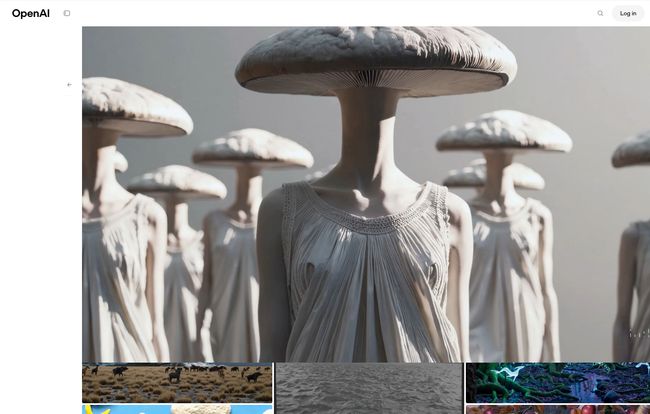
Visit Sora
This feels less like a simple generator and more like a full-blown video creation suite powered by a prompt. The potential for creating unique b-roll, social media ads, and product visualizations without a massive budget or production team is just… staggering.
Where Sora Still Trips Up (It’s Not Perfect… Yet)
Alright, let’s ground ourselves for a second. As amazing as Sora is, it still has its weird quirks. It’s like watching a blockbuster movie where you suddenly notice a boom mic dipping into the frame—it breaks the illusion.
Sora’s understanding of physics, while impressive, can sometimes go sideways. A glass might shatter weirdly, or an object might bend in a way that just feels… wrong. It can also get confused with complex spatial details. Ask it to show someone’s left hand, and it might get it right, or it might confidently give them two right hands. Whoops.
And then there’s the truly strange stuff. Sometimes, people or animals can just spontaneously appear in a scene out of nowhere. It’s the AI equivalent of a photobomb. While these glitches are kind of funny now, they’re a significant hurdle for any serious professional use. You can’t have a random cat just walk into your client’s serious corporate video. Or maybe you can, depending on the client.
For me, these little imperfections are what put it squarely in the uncanny valley of AI video. It’s so close to perfect that the small mistakes are even more jarring. But hey, this is early days. I fully expect these issues to get ironed out over time.
The Million-Dollar Question: Sora Pricing and Access
This is the part you’re probably scrolling for. How much will Sora cost, and when can I get my hands on it? The short answer is: we don’t know for sure yet.
Currently, Sora is in a very limited-access phase. OpenAI has given it to a group of “red teamers” (security experts who try to break it) and a handful of visual artists and filmmakers to get feedback. There’s no public waitlist to sign up for at the moment.
However, we can make some educated guesses based on the info out there. The Sora landing page that’s been floating around mentions two tiers: “Sora in ChatGPT Plus” and a “Sora API.” This makes a ton of sense. It follows the same model OpenAI used for DALL-E 3, integrating the tool into their premium subscription for everyday users while offering API access for developers and businesses to build on top of it. If this holds true, you might be able to access Sora for the price of a ChatGPT Plus subscription, which is currently around $20/month. That would be an incredible value.
But this is all speculation for now. OpenAI is playing this one close to the chest, likely to manage expectations and ensure safety protocols are rock-solid before unleashing it on the world.
So, Should Video Editors and Marketers Be Worried?
The “Will AI take our jobs?” question comes up every time a tool like this drops. And it’s a valid concern. My take? No, but our jobs are definitely going to change.
Sora isn’t a replacement for human creativity; it’s an amplifier. Think of it like Photoshop. When Photoshop arrived, it didn’t eliminate graphic designers. It gave them unbelievable new powers and changed their workflow forever. The designers who refused to learn it got left behind, while those who embraced it became more efficient and creative.
I see Sora in the same light. It will dramatically lower the barrier to entry for producing high-quality video content. Small businesses that couldn’t afford a video shoot can now create stunning product ads. Indie filmmakers can storyboard and even generate entire scenes for their passion projects. As a marketer, I’m already imagining the A/B testing possibilities for video ad creative. We’ll be able to generate dozens of variations in the time it used to take to produce one.
The creative director, the editor, the storyteller—those roles become even more important. The new skill will be in crafting the perfect prompt, in guiding the AI to produce your vision, and in curating and editing the output into a compelling final product. Prompt engineering is about to become a seriously hot skill in the visual arts.
FAQs About OpenAI’s Sora
- How can I get access to Sora?
- Right now, you can’t. Access is limited to a small group of testers and creators. OpenAI has not announced a public release date or a waitlist, so keep an eye on their official blog for updates.
- How much is Sora going to cost?
- Official pricing hasn’t been released. However, speculation based on OpenAI’s other products suggests it might be included in the ChatGPT Plus subscription, with a separate pricing model for API access.
- What makes Sora different from other AI video tools like Runway or Pika?
- The main differences appear to be video length, coherence, and a deeper understanding of the physical world. Sora can generate clips up to 60 seconds long while maintaining character consistency and producing more realistic motion and object interaction than many of its competitors.
- Can Sora create a video from an image?
- Yes, according to OpenAI. Sora can animate a static image and also extend existing videos or fill in missing frames, making it a versatile tool for both generation and editing.
- What are the biggest limitations of Sora right now?
- Its main weaknesses include occasional struggles with physics simulation (things behaving unnaturally), spatial confusion (like left vs. right), and the spontaneous appearance of objects or characters in a scene.
- Is Sora’s output copyrighted?
- The legal framework around AI-generated content is still evolving. Generally, ownership and copyright policies are determined by the platform’s terms of service. Users should consult OpenAI’s latest policies once Sora is publicly available to understand their rights to the content they create.
Final Thoughts on a New Creative Era
Look, the hype around Sora is real, and for good reason. It represents a monumental step forward in generative AI. It’s not perfect, and it’s not going to put Hollywood out of business tomorrow. But it is a powerful new paintbrush for creators of all stripes.
For years, high-quality video has been the most expensive and time-consuming content to produce. Sora has the potential to democratize it. The scripts are being written, the AI is learning to direct, and our ability to bring imagination to life is about to take a massive leap forward. I, for one, can’t wait to see the movies, the ads, the art, and the absolute nonsense memes that people create with it. It’s going to be a wild ride.


