
Categories: AI Audio Enhancer, AI Music Generator, AI Song Cover, AI Song Generator, AI Sound Effect Generator, AI Stems Splitter, AI Text-to-Music, AI Vocal Remover
StockmusicGPT Review: AI Music for Creators?

Alright, let’s have a real chat. If you’re a content creator, marketer, or anyone who’s ever had to make a video, you know the pain. The dread. You’ve finished your edit, the visuals are popping, the message is clear… and now you have to find music. For me, this used to be a multi-hour ordeal that ended in one of three ways: 1) settling for a bland, overused corporate track that has all the personality of a beige wall, 2) falling in love with a song only to see a price tag that costs more than my camera, or 3) using a supposedly “free” track and getting a copyright claim from YouTube a week later. Fun times.
It’s a grind. And it’s why my ears perked up when the AI music generation scene started getting louder. I’ve been in the SEO and traffic game for years, and I’ve seen how AI has changed writing and image creation. Audio was the next logical step, right? So I decided to jump in and check out one of the platforms making waves: StockmusicGPT. Is it just another gimmick, or is it the solution to our collective stock music headache?
So What is StockmusicGPT, Anyway?
In short, StockmusicGPT is an AI-powered platform designed to spit out royalty-free stock music, sound effects, and even song covers in minutes. Think of it less like a library you browse and more like a composer you direct. You don’t search for a song; you tell the AI what kind of song to create. It’s a pretty big shift in how we approach soundtracks. Instead of finding something that kinda fits, the goal is to generate something that’s custom-built for your project on the spot.
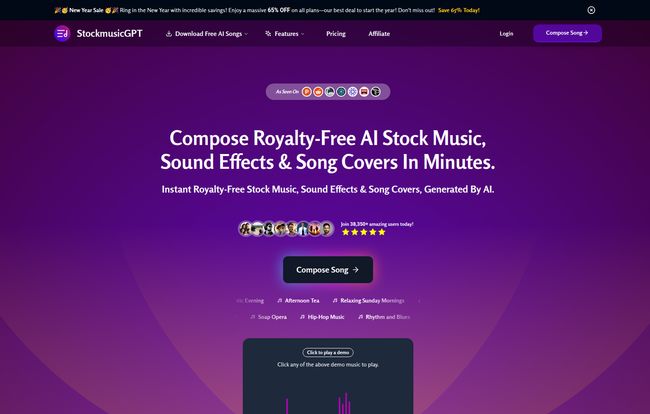
The whole pitch is for people like us: creators, musicians, agencies, and businesses who need unique audio without the traditional licensing nightmares and endless searching. My first impression of their site was surprisingly clean. No clutter, just a big purple button that says “Compose Song.” I like that. It gets straight to the point.
Visit StockmusicGPT
The Core Features That Actually Matter
A platform is only as good as its tools. StockmusicGPT has a bunch of them, but a few stood out to me as being particularly useful, or at least, interesting.
From Text Prompts to Full Tracks
This is the main event. The “Text to Music” feature works exactly like you’d think, especially if you’ve played around with AI image generators like Midjourney. You type in a description, a prompt, and the AI gets to work. I tried a few things like,
upbeat, funky synth bassline for a tech tutorial, 90 seconds long
and
somber, atmospheric piano for a dramatic vlog intro
The results were… surprisingly usable. They weren’t just random notes; they had structure. A beginning, a middle, and an end. It’s not going to put Hans Zimmer out of a job, but for a YouTube background track? It’s a massive timesaver. It understands mood, genre, and instrumentation to a degree that’s genuinely impressive.
Turning a Picture into a Melody
Now this one felt a little more out there. “Image to Music.” You upload an image, and the AI generates a track inspired by it. I was skeptical. I uploaded a picture of a neon-lit Tokyo street, and it produced a fast-paced, electronic track with some synthwave vibes. Then I tried a serene beach photo, and got a calm, acoustic guitar piece. It’s a bit of a novelty, but I can see some cool creative applications. Imagine creating a custom score for a specific thumbnail or a piece of hero art on a website. It’s a neat party trick that might just be brilliant for branding.
The Audio Toolkit for Tinkerers
This is where StockmusicGPT surprised me. It’s not just a generation tool; it’s also a bit of an audio Swiss Army knife. It has a Stem Splitter that can separate a song into vocals, bass, drums, etc. This is huge for remixing or creating instrumental versions. It also has a dedicated Vocal Remover, which is pretty self-explanatory.
And then there’s the AI Music Extension. You give it a snippet of audio, and it continues the song in the same style. This is a godsend for when you find an almost-perfect loop but it’s only 15 seconds long and your video segment is a minute. These tools show they’re thinking not just about creation, but about post-production and manipulation, which I respect.
The Big Question: Is The Music Any Good?
Okay, let’s be real. Is an AI-generated track going to have the same emotional depth and intricate nuance as a piece composed by a human who has poured their life experience into their art? Probably not. At least, not yet.
There’s a certain predictability to it sometimes. A sameness. You have to learn how to write good prompts to steer it away from the generic. But that’s a skill, just like prompt engineering for images. The music is, for the most part, exceptionally competent. It’s the difference between a Michelin-star restaurant and an amazing, gourmet food truck. One is a complex, artistic experience. The other serves up something delicious, fast, and exactly what you need in the moment. StockmusicGPT is that food truck, and most days, that’s exactly what I’m looking for.
For background music, intros, outros, and sound beds, the quality is more than sufficient. It’s clean, well-produced, and most importantly, original. That means no copyright flags. For a creator, that peace of mind is worth its weight in gold.
Let’s Talk Money: StockmusicGPT Pricing
So, what’s the damage? The platform runs on a subscription model, which is pretty standard. They seem to be running a huge New Year Sale right now, so the prices I’m seeing are apparently 65% off, which is a pretty aggressive promotion.
Here’s a quick breakdown of their yearly plans:
| Plan | Price (Billed Annually) | Key Features |
|---|---|---|
| Lite | $2.92 /month | 6,000 Song Credits/month, 100 Tracks Cloud Storage |
| Basic | $11.67 /month | 15,000 Song Credits/month, 500 Tracks Cloud Storage |
| Standard | $23.33 /month | 30,000 Song Credits/month, 5,000 Tracks Cloud Storage |
| Pro | $58.33 /month | 90,000 Song Credits/month, Unlimited Cloud Storage |
The tiers seem pretty logical. The Lite plan is a no-brainer for a solo creator or someone just starting out. The Basic and Standard tiers look geared towards full-time YouTubers or small marketing teams. The Pro plan is clearly for agencies or power users who are churning out a ton of audio-visual content. The main limitations are credits and storage, which is a fair way to segment the user base.
My Final Verdict After Kicking the Tires
I came into this skeptical, and I’m walking away… well, pretty impressed. StockmusicGPT isn’t perfect, and it’s not trying to be a replacement for human composers on blockbuster films. It’s a tool. A powerful one.
It solves a very real, very annoying problem for a huge number of people. It democratizes music creation in a way that was unthinkable just a few years ago. The ability to generate a custom, royalty-free track in the time it takes to make a cup of coffee is, frankly, a bit of a superpower for content creators.
Will I use it? Absolutely. For my quick-turnaround SEO explainer videos and social media clips, it’s a perfect fit. It saves time, it saves money, and it saves me from the soul-crushing experience of browsing generic stock music libraries. And for that, I’m a fan.
Also Read: IMAGINE Studios AI: An SEO's Honest Review
Frequently Asked Questions
Is the music from StockmusicGPT really royalty-free?
Yes, that’s their main selling point. Once you generate a track with your subscription, you get a perpetual license to use it in your projects, commercial or personal, without worrying about future fees or copyright claims. This is a massive relief for anyone who’s ever dealt with YouTube’s Content ID system.
What are “Song Credits” and how do they work?
Think of credits as your currency on the platform. Each time you generate a piece of music, it consumes a certain number of credits. The length and complexity might affect the cost, but it’s their way of metering usage. The monthly plans come with a generous allotment of credits that should be more than enough for most users.
Can I use the music for my business’s commercial ads?
Yes. The license you get with the music generally covers commercial use, which means you can use it for advertisements, promotional videos, monetized YouTube channels, and other business-related content. It’s always a good idea to double-check their latest terms of service, but this is a primary use case they cater to.
How does the AI Song Cover feature work?
This is a more experimental feature where you can upload a vocal track and have an AI voice sing it. It’s part of the growing trend of AI covers you might see on social media. It’s a fun tool for creating unique content, but be mindful of the copyright of the original song’s lyrics and melody when using it publicly.
Is there a way to try StockmusicGPT for free?
While they don’t seem to have a traditional free trial for the subscription features, their website does have a “Download Free AI Songs” section. This is a great way to get a feel for the quality and style of the AI’s output before committing to a paid plan. You can test out some of their pre-generated tracks in your projects to see if they fit your vibe.
Conclusion
Look, the creative world is changing fast, and AI is a huge part of that. Tools like StockmusicGPT are not just novelties; they are becoming essential parts of the modern creator’s workflow. It’s fast, it’s cost-effective, and it solves a problem that has plagued us for years. If you’re tired of the stock music grind, I’d say it’s definitely worth a look. The future of your channel’s soundtrack might just be a text prompt away.


