
Categories: AI Chatbot, AI Mental Health, AI Therapist, AI Voice Assistants
AI Therapy: A Real Look at TherapywithAI’s Platform

The digital marketing world is a pressure cooker. We’re constantly chasing algorithms, analyzing traffic drops, and trying to predict the next big trend. Some days, it feels like you’re spinning a dozen plates at once, and if one falls, the whole set shatters. It can take a toll. And I’ve noticed, I’m not the only one feeling it. More and more, conversations in our industry are turning to burnout and mental wellness.
So, when the AI explosion happened—you know, ChatGPT, Jasper, Midjourney, all of it—I watched with a mix of excitement and, honestly, a bit of dread. And now, that wave is crashing into a very, very personal shore: mental health. A tool called TherapywithAI popped onto my radar, promising a “Personal AI Therapist.” My first thought? Yeah, right. My second thought? Well, I have to see this for myself.
Is this the next big thing in accessible mental health, or just another piece of tech hype? Let’s get into it.
What Exactly is TherapywithAI?
At its core, TherapywithAI is an AI-powered platform designed to be a conversational partner for your mental well-being. Think of it as a chatbot, but instead of helping you track a package, it’s there to help you unpack your thoughts. The whole premise is built on accessibility. It’s for the people who find traditional therapy too expensive (which, let’s face it, is a lot of us), for those stuck on a multi-month waiting list, or for anyone who just needs to talk to something at 2 AM without feeling like a burden.
You can chat via text or even use a voice chat feature, which is an interesting touch. The platform claims its AI is personalized and learns from each conversation, so it’s not like you’re starting from scratch every single time you log in. It’s trying to mimic the continuity you’d get with a human therapist, which I’ve gotta admit, is a pretty ambitious goal.
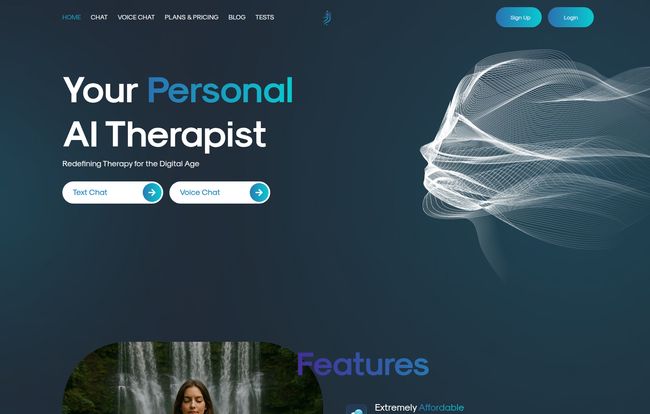
Visit TherapywithAI
First Impressions and Getting Started
Hopping onto the site, the first thing I noticed was the clean, calm design. No flashing ads or confusing navigation. It felt… respectful. Which is what you want when you’re dealing with something this personal. The homepage immediately presents you with a choice: “Test Chat” or “Voice Chat.” There’s no massive sign-up form or demand for your credit card info right off the bat. That low barrier to entry is smart. It removes the hesitation. You can just… start talking.
This approach feels less like a clinical intake and more like opening a messaging app to talk to a friend. For someone who might be apprehensive about therapy in the first place, this frictionless start is a huge win.
The Core Features That Actually Matter
You can list features all day, but which ones really move the needle? After looking through the platform, a few things stood out.
Always on Call
This, for me, is the biggest game-changer. Anxiety doesn’t keep a 9-to-5 schedule. That brilliant (or terrible) idea that keeps you up at 3 AM doesn’t wait for your weekly appointment. Having a 24/7 resource means you can engage with your thoughts in the moment they’re happening. The ability to just pull out your phone and work through something right then and there, without having to book a session weeks in advance, is incredibly powerful.
Personalized Conversations
The idea that the AI “learns about you with every conversation” is intriguing. It’s like a digital journal that talks back and, more importantly, remembers. It remembers that project at work that’s stressing you out or the family issue you mentioned last week. This continuity is what separates it from just shouting your thoughts into a void. It attempts to build a thread, a narrative of your own mental state, which is a core part of what makes talk therapy effective.
Privacy is a Big Deal (And They Know It)
I was genuinely pleased to see how prominently they feature their Privacy and Terms of Service. In an age where our data is the product, the idea of pouring your innermost thoughts into a tech platform is… scary. They seem to understand this. They make a point of stating their commitment to providing a safe and secure environment. Of course, a healthy dose of caution is always warranted, but it’s a good sign that they’re addressing the concern head-on rather than hiding it in teh fine print.
Let’s Talk About Money (Or Lack Thereof)
Here’s where TherapywithAI really got my attention. They have a completely free plan. It’s not a trial; it’s just a free tier with limited messages. For anyone curious about therapy but held back by the cost, this is massive. A single session with a human therapist can easily run from $100 to $250, so even the paid plans on this platform are a drop in the bucket by comparison.
Here’s a quick breakdown of their pricing structure:
| Plan | Price per Month | Key Features |
|---|---|---|
| Default Free | $0.00 | Limited Messages, 24/7 Availability, Confidential |
| Standard | $14.99 | Up to 30 Messages a Day |
| Unlimited | $19.99 | Unlimited Messages |
| Premium | $29.99 | Unlimited Messages + Premium AI Model |
For less than the cost of two movie tickets, you can get unlimited access. The value proposition is undeniable, especially for the lower-stakes support it’s designed to provide.
The Elephant in the Room: Can AI Really Provide Therapy?
Okay, let’s get to the big, thorny question. This is where we have to be critical thinkers. The testimonials on their site are glowing. Janet Westin says, “The ability to use it whenever I needed help working out my issues was a huge help for me.” Miles Harper calls it a “turning point.” I believe their experiences are genuine. But we need to be crystal clear about something.
This is not a replacement for a licensed human therapist. Especially not for severe mental health conditions, trauma, or if you’re in a crisis. The platform itself states that you should not use the service if you’re in a crisis or have severe mental health problems. It’s a support tool, not a medical one.
I like to think of it like this: TherapywithAI is your running buddy. It keeps you accountable, it’s there for you to check in with, and it helps you stay on track with your goals. A licensed therapist is your physical therapist. You see them when you have a serious injury that needs professional diagnosis and a structured rehabilitation plan. You need both for different reasons, and one doesn’t replace the other.
The American Psychological Association has been discussing this emerging field, noting both the potential for increased access and the ethical questions that arise. It’s a space that’s still being defined. The potential for misuse is real if people start seeing it as a cure-all and avoid the professional help they truly need.
Who is This AI Therapist Actually For?
So, who wins with a tool like this? I see a few clear groups:
- The Therapy-Curious: If you’ve always wondered about therapy but felt intimidated by the process or cost, this is a perfect, zero-pressure way to dip your toes in the water.
- The Budget-Conscious: Students, freelancers, people between jobs—anyone for whom a $150/hour session is simply not an option. This makes support radically more affordable.
- The Over-Scheduled Professional: Can’t block out a full hour in the middle of your workday? You can chat with this AI for 10 minutes between meetings.
- The Person on a Waitlist: If your doctor has referred you to a therapist but the waitlist is three months long, this can be an invaluable bridge to keep you supported in the interim.
Final Thoughts From a Fellow Human
I came into this investigation as a full-blown skeptic. And while I’m not fully converted to the idea of an “AI therapist,” I’m walking away… impressed. I’m impressed by the thoughtfulness of the approach, the focus on accessibility, and the clear understanding of the user’s potential anxieties.
TherapywithAI isn’t going to replace human connection and professional expertise. It’s not supposed to. What it does is create a new layer of mental health support—one that’s immediate, private, and ridiculously affordable. If used with the right expectations, as a supplement and not a substitute, I think it could be a genuinely helpful tool for a lot of people. And in a world that feels increasingly overwhelming, that’s something worth paying attention to.
Frequently Asked Questions (FAQ)
Is TherapywithAI really free to use?
Yes, they offer a “Default Free” plan that includes limited messaging. It’s a great way to try out the service without any financial commitment. They also have several paid tiers for more frequent users.
Is my data and conversation private?
The company emphasizes its commitment to privacy and confidentiality on its website. However, as with any online platform, it’s always wise to be mindful of the information you share and review their privacy policy for yourself.
Can TherapywithAI replace my human therapist?
No. It should be seen as a support tool, not a replacement for professional medical advice or treatment from a licensed therapist. It’s best used for day-to-day support, self-exploration, and as a supplement to traditional therapy.
What should I do if I’m having a serious mental health crisis?
TherapywithAI is not intended for crisis situations. If you are experiencing a mental health crisis, you should contact a crisis hotline, such as the 988 Suicide & Crisis Lifeline, or seek immediate help from a medical professional.
Does it only offer text chat?
No, the platform offers both text and voice chat options, allowing you to choose the communication method that feels most comfortable for you.
How does the AI personalize the experience?
The AI is designed to retain your conversation history (confidentially, of course) to learn about your situation, remember key details you’ve shared, and provide a more continuous, tailored conversation over time.


