
Categories: AI Chatbot, AI Customer Service, AI Marketing, AI Sales Assistant, AI Shopping Assistant, AI Social Media
Tictuk Review: Is Chat the Future of Your E-commerce?

Let’s have a real chat. In the world of SEO and traffic generation, we’re obsessed with funnels, user journeys, and conversion rates. We spend countless hours (and dollars) driving people to our sites, only to watch them bounce, abandon their carts, or just get lost in a clunky checkout process. It’s maddening. For years, the solution has been to simplify, simplify, simplify. But what if the next step isn’t simpler, but… smarter? What if it’s more conversational?
I’ve been hearing the term “conversational commerce” thrown around for a while now. The idea of customers placing orders through a simple chat interface sounds futuristic, but also incredibly intuitive. No app downloads. No new account sign-ups. Just talking, tapping, and buying. This led me down a rabbit hole and I stumbled upon a platform called Tictuk, which claims to be the “Ultimate Conversational Ordering & Marketing Platform.”
Big words. So, as someone who has seen a million “ultimate” solutions come and go, I had to see if it lived up to the hype. Is this the real deal or just another shiny object?
So What Is Tictuk, Really? It’s Not Just a Chatbot
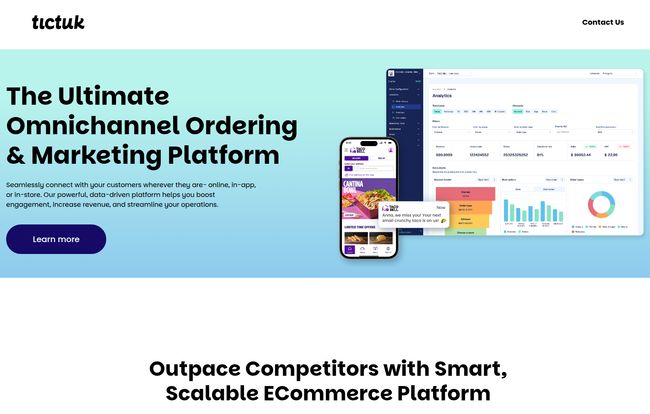
First off, let’s get one thing straight. Calling Tictuk a chatbot is like calling a smartphone a calculator. Sure, it does that, but you’re missing the entire point. Tictuk’s goal is to create a unified ecosystem for your business. It wants to be the central nervous system for your sales, connecting your website, your Facebook page, your WhatsApp, and even your physical QR codes into a single, seamless ordering experience.
Their big promise? Guiding a customer from discovery to a completed order in under 60 seconds. That’s a bold claim. I’ve seen checkout processes that take longer than a coffee break. But the idea is sound: meet customers where they already are—scrolling through social media or browsing your site—and remove every possible piece of friction. It’s less of a traditional storefront and more of a personal shopper that follows your customer around, helpfully guiding them to what they want.
Visit Tictuk
The Omnichannel Dream Becomes Reality
We marketers love the word “omnichannel,” dont we? It sounds so professional. But making it work is a whole other story. It usually involves a messy web of plugins, APIs, and a prayer that nothing breaks. Tictuk seems built from the ground up to solve this exact problem.
Imagine this: A customer sees your ad on Facebook. They click it and are instantly in a Messenger chat, looking at your menu or catalog. They can order right there. Or, they’re on your website, and a chat pop-up offers to help them. Or, they’re at your physical location and scan a QR code on the table, which opens a direct ordering channel. It’s all the same system, the same dashboard for you, the same smooth experience for them. That’s the dream.
And the integrations are a huge part of this. The site shows connections with giants like DoorDash, Firebase, Uber Eats, and Wolt. This tells me Tictuk is serious about being the main hub, not just another add-on. It plugs into the tools businesses are already using, which is a massive plus in my book. No one wants to reinvent their entire tech stack.
Key Features That Actually Move the Needle
A long list of features can be overwhelming. So instead of just listing them, let’s talk about what they actually do for a business trying to grow its revenue and customer base.
Streamlining the Sale Itself
At its core, Tictuk is designed to make buying easier. Features like Instant Checkout are a given, but it’s the little things that stand out. Group Orders and Split Payments directly through chat? That’s brilliant. It solves a real-world headache for customers ordering food or gifts with friends. By removing that social friction, you’re making it that much easier for them to hit “confirm order.” This is how you increase your Average Order Value (AOV) without even trying.
Putting Your Marketing on Autopilot
This is where my SEO brain gets excited. Tictuk isn’t just an ordering tool; it’s a marketing machine. It has a built-in Lead Generator to capture user info. But the real power is in the Retargeting capabilities. Because the interaction happens on platforms like Messenger, Tictuk can proactively send alerts, notifications, and personalized coupons to bring customers back. This isn’t just a generic email blast; it’s a targeted, personal nudge based on their past behavior. This is how you boost Customer Lifetime Value (LTV).
The Brains Behind the Operation
The platform uses AI Learning to personalize the shopping experience over time. It learns a customer’s preferences and can suggest items they might like. All of this is managed from a single Dashboard with analytics and reporting. You can see what’s working, what’s not, and monitor orders in real-time. It’s about making data-driven decisions without needing a degree in data science.
The Good, The Bad, and The 404 Page
No tool is perfect. Let’s get into the nitty-gritty. What I love, what gives me pause, and one glaring omission.
What I genuinely like is the holistic approach. It’s a comprehensive solution that feels thought-out. The multilingual support is a fantastic touch for businesses in diverse areas or with international ambitions. And the sheer potential for boosting engagement by being so native to social platforms is undeniable.
But let’s be real. There are some hurdles. The initial setup requires you to upload your catalog and get everything configured. That’s true for any powerful system, but it’s not a magical one-click install. It’s also heavily reliant on customers being comfortable with chat-based interaction. While this is second nature to many, some demographics might still prefer a traditional website layout. It’s something to know about your own audience.
And now, for my biggest pet peeve. The pricing. There isn’t any. The pricing page on their website leads to a 404 error. Look, I get the whole “Contact Us for a Demo” sales model, but in 2024, transparency is king. Not showing even a hint of your pricing tiers can be a red flag for many businesses, especially smaller ones who need to know if a tool is even in their budget. It’s a shame, because the platform itself looks so strong. I hope they fix this, and soon.
So, Who Is This For?
After digging in, Tictuk isn’t for the hobbyist running a small blog. It’s a professional-grade tool for businesses where transactions and customer engagement are everything. I see this being a massive win for:
- Quick Service Restaurants (QSRs) and Cafes: The integrations with delivery services and the scan-to-order feature are tailor-made for this industry.
- Retail Brands with a Strong Social Following: If you’re already engaging customers on Facebook and Instagram, why not let them buy right there?
- Any Business Focused on Local Delivery: It bridges the gap between online discovery and getting a product to someone’s door.
If you’re just starting out and only have a handful of products, this might be overkill. But if you’re hitting a wall with cart abandonment or looking for a way to truly unify your sales channels, Tictuk is definitely worth investigating.
Your Tictuk Questions Answered
How is Tictuk different from a normal website chatbot?
A standard chatbot typically answers questions or directs users to a page. Tictuk is a full commerce system within the chat. It handles the entire process from browsing the catalog and personalizing suggestions to taking payment and monitoring the order, all within the chat interface.
Can Tictuk completely replace my e-commerce website?
For some businesses, particularly food service, it potentially could. However, for most, it’s designed to work with your existing online presence. It adds a powerful new channel (chat commerce) and integrates with your website via a pop-up shop, rather than replacing it entirely.
Is Tictuk suitable for a small business?
It depends. If your small business relies on high-volume, quick transactions (like a busy local pizza place or a popular online t-shirt store), then yes. The automated marketing and streamlined ordering could be a huge benefit. If you’re a consultant or have a very low-volume, high-touch sales process, it might be more than you need.
What kinds of integrations does Tictuk support?
It integrates with major social platforms like Facebook Messenger and WhatsApp, payment providers, and critically, last-mile delivery services like DoorDash and Uber Eats. It also uses tools like Firebase for backend infrastructure, suggesting a robust and scalable system.
How much does Tictuk cost?
This is the million-dollar question! As of this writing, Tictuk does not list its pricing publicly on its website. To get cost information, you’ll need to contact their sales team directly to schedule a demo and get a custom quote.
The Final Word: Is It a Game-Changer?
Tictuk is making a powerful play in the conversational commerce space. It’s ambitious, comprehensive, and solves very real pain points for businesses struggling to connect all their different sales channels. The ability to engage, sell to, and retarget customers on the platforms they use every single day is a massive advantage.
Yes, the lack of pricing transparency is frustrating, and it’s not a plug-and-play solution for absolute beginners. But the strategy behind it is sound. Conversational commerce isn’t a fad; it’s a logical evolution of how we shop online. And from what I’ve seen, Tictuk isn’t just following the trend—it’s building the road. If you’re serious about reducing friction and boosting customer loyalty, you should probably give them a call. Just be sure to ask about the price.


