
Categories: AI Creative Writing, AI Story Generator, AI Text-to-Speech
BookLed Review: The AI Storytelling Book We Need?

I spend my days swimming in the digital surf, chasing traffic trends and decoding Google’s latest mood swings. So it takes a lot to make me stop and say, “huh, that’s different.” Most new tech feels like another app, another platform, another screen vying for our already fried eyeballs. But every so often, something comes along that doesn’t want to replace the old ways, but build on them. That’s the feeling I got when I stumbled upon BookLed.
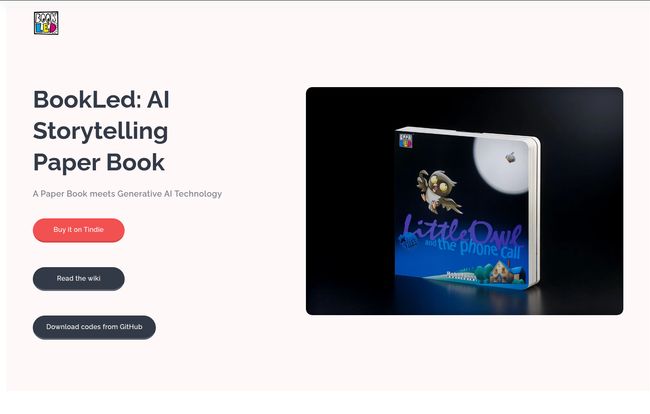
At first glance, it’s a book. You know, paper, ink, that lovely book smell. The one pictured on their site is called Little Owl and the Phone Call. Cute. But then you read the tagline: A Paper Book meets Generative AI Technology. Okay, now you have my attention. We’re in an age where people are terrified AI will kill creativity, and these folks are embedding it directly into the most traditional storytelling medium we have. That’s either crazy or brilliant, and I’m here to figure out which.
So, What Is BookLed, Really?
Let’s break it down. BookLed isn’t an ebook or an app. It’s a physical, hardcover paper book that has electronic hardware baked right into its spine and pages. Think of it like a pop-up book for the 21st century, but instead of paper tabs, you have circuits and sensors. The purpose of this tech isn’t just to be flashy; it’s to connect the physical act of reading with the dynamic, endless possibilities of generative AI.
Visit Tindie
According to its creators, Roboloons S.r.l., this creates an interactive experience where children don’t just read the story, they interact with it. The book can respond to touch, maybe a change in light, or who knows what other inputs, and use AI to generate new content, new story paths, or new character dialogues. It’s a conversation with a book. The idea is to take the magic of a tablet and put it inside the timeless form of a paper book, aiming to reignite that pure, simple love of reading in a generation raised on swiping.
Fighting Screen Fatigue with Smarter Paper
Let’s be honest, the battle for our kids’ attention is a tough one. As a parent and a tech guy, I see it every day. The allure of a glowing screen with its infinite stream of videos and games is powerful. Books can feel… static. Slow. And while many of us believe in the power of that quiet, focused experience, it’s getting harder to sell to a seven-year-old.
This is where BookLed makes its case. It’s not trying to drag kids away from technology. It’s a trojan horse, smuggling the wonder of tech inside the book itself. This is a subtle but important distinction. The focus remains on the physical object, on turning the pages, on the illustrations and the printed words. The tech is there to augment, not dominate.
An Innovative Tool for Curious Minds
The potential educational benefits here are pretty obvious. An interactive, AI-powered book can adapt to a child’s reading level. It can introduce problem-solving elements. It can make learning feel like play. Imagine a story where the main character asks the reader for advice, and the AI generates a unique response based on what the child says or does. That’s powerful stuff. It transforms passive reading into active participation, which is a cornerstone of modern pedagogy. It’s a fantastic application of STEM principles in an unexpected place—the bedtime story.
It’s a Project, Not Just a Product
Here’s what really got me excited. On the BookLed site, there’s a button to “Download codes from GitHub.” This tells me everything I need to know. This isn’t a closed-off, Apple-esque walled garden. It’s a nod to the maker movement. They’re inviting you to look under the hood. For parents who code, for tech-savvy educators, for hobbyists—this opens up a world of possibilities. You could potentially tweak the code, create your own stories, or modify the hardware. BookLed becomes a platform for creativity, not just a finished item you buy off a shelf.
The All-Important Question: Where Can I Buy One?
Alright, so I was sold on the concept. I wanted to see it in action. The website has a big, friendly button that says “Buy it on Tindie.” For those who don’t know, Tindie is a fantastic marketplace for independent creators selling niche electronic hardware. It’s the Etsy for people who love circuit boards. A perfect home for a product like this.
So I clicked it. And… I got a 404 page. “Pagina non trovata.” Page not found.
Now, my heart sank a little, but honestly, this felt… authentic. This is the reality for so many cool, independent projects. They are works in progress. The link might be old, they might have sold out, or they might be in between production runs. It’s a reminder that this isn’t a mass-produced gadget from a mega-corporation. It’s something being built, likely by a small, passionate team. While I couldn’t buy one today, the fact that it’s connected to a platform like Tindie is a good sign. It means it’s aimed at the right community and will likely pop up for sale again. I’m keeping my eyes peeled.
Frequently Asked Questions About BookLed
Based on their site and my own snooping, here are some common questions you might have.
How exactly does the AI interaction work?
The book contains electronic hardware—likely sensors and a small microcontroller. When a reader interacts with the book (e.g., touches a specific spot), the hardware sends a signal. This signal is then processed, possibly connecting to a generative AI model via a local network or built-in logic, to create a unique response, which could be text, sound, or light. The magic is in how the physical action translates into a digital, creative output.
What are the main educational benefits?
The big one is fostering engagement. By making the story interactive and responsive, it encourages active participation rather than passive consumption. It can help build critical thinking skills as children’s choices affect the narrative. Plus, the open-source nature of the code provides a fantastic introduction to STEM and coding concepts for older kids or curious parents.
Who is the ideal user for BookLed?
I see three main groups. First, parents and educators who want to find innovative ways to promote literacy in a tech-saturated world. Second, kids who are naturally curious and love both stories and gadgets. And third, the maker community—hobbyists, coders, and DIY enthusiasts who will love the challenge of modifying, programming, and creating their own AI-powered books.
So, can I actually buy the book?
As of right now, the direct purchase link seems to be down. The best bet is to monitor the BookLed website and the Tindie marketplace. Small-batch hardware projects often have limited availability, so you might need a bit of patience.
Is this project open source?
Yes, and that’s one of its most exciting features! The inclusion of a link to download code from GitHub indicates a commitment to open-source principles. This allows users to learn from the project, adapt it, and even contribute to its development.
Is This the Future of the Humble Book?
Probably not for every book. I don’t think your copy of Moby Dick needs a circuit board, and there will always be a place for the pure, unadulterated paper book. I definitly hope so. But for a certain type of experience, especially in children’s education, BookLed feels like a step in a very interesting direction.
It respects the form of the book while thoughtfully integrating technology to enhance the experience, not hijack it. It’s a bridge between two worlds that are often seen as being at odds. Instead of seeing AI as a threat to human stories, BookLed uses it as a tool to make those stories more magical. And even if it’s still a work in progress with a few broken links, the idea itself is fully-formed and frankly, pretty inspiring. I, for one, will be following along, waiting for the day I can get my hands on one.
Reference and Sources
- BookLed Official Website: (The website shown in the image, e.g., bookled.ai)
- Tindie Marketplace: https://www.tindie.com/
- Maker Movement Overview: https://makezine.com/category/maker-movement/
- STEM Education Resources: https://www.edutopia.org/stem-education-resources


