
Categories: AI Agent, AI For Data Analytics, AI Lead Generation, AI Predictions, AI Research Tool
Trade Foresight Review: AI for Global B2B Trade?

If you’ve ever tried to find a reliable international supplier, a new export market, or just some solid data on global trade trends, you know the struggle. It’s like trying to find a specific shade of beige paint in a warehouse with the lights off. You spend hours, days, even weeks sifting through outdated directories, sending emails into the void, and attending trade shows that feel more like a social mixer than a business opportunity.
I’ve been in the digital marketing and traffic game for a long time, and I’ve seen a parade of platforms promise to fix this. Most are just prettier versions of the same old Rolodex. So, when I came across Trade Foresight, which touts itself as the “world’s first AI-based trade platform,” my professional skepticism kicked in. AI in global trade? Sounds fancy. But does it actually work?
I decided to put on my investigator hat and see if this thing is just another shiny object or a genuinely useful tool for businesses looking to go global. So grab a coffee, and let’s get into it.
So, What’s the Big Idea Behind Trade Foresight?
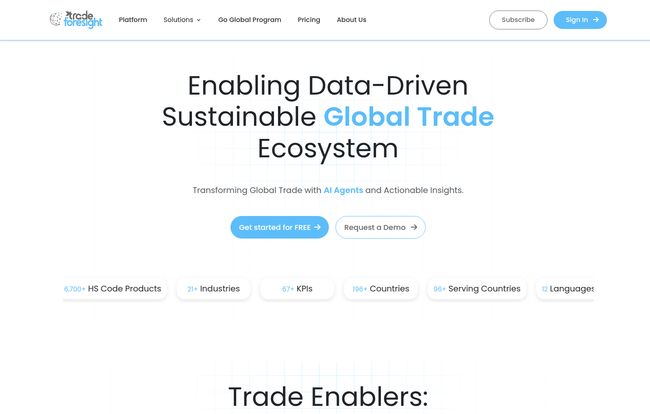
At its core, Trade Foresight isn’t just a list of companies. That’s the old way. Think of it more like a business intelligence engine specifically built for the messy world of international trade. They claim to have a database of over 23 million global businesses, which is a hefty number. But the secret sauce, the thing they’re betting the farm on, is their use of AI.
Instead of just giving you a name and an email, the platform is designed to provide actionable insights. Who are the fastest-growing importers of your product in Southeast Asia? What are the key compliance standards for exporting to Germany? Who are the verified traders you can actually trust? The goal is to move you from guessing to knowing. It’s less of a phone book and more of a strategic advisor that happens to live on your computer.
Who Should Be Paying Attention?
From what I’ve gathered, Trade Foresight isn’t trying to be for everyone. It’s not for the person selling handmade crafts on Etsy. It’s built for a few specific groups who feel the pain of global trade logistics most acutely.
The Ambitious SME
If you’re a small or medium-sized enterprise that has saturated your local market, this is squarely aimed at you. You have a great product but lack the massive research department of a multinational corporation. Tools like this are meant to level the playing field, giving you access to the kind of data that used to be prohibitively expensive.
The Connectors and Facilitators
I’m talking about trade consultants, freight forwarders, and industry associations. Their entire job is to connect the dots for others. A platform that can quickly identify and vet potential partners for their clients could be a massive time-saver and value-add for their services.
Governments and Policy Makers
This was an interesting angle. Governments can use the macro data to analyze economic trends, promote local businesses on a global stage, and attract foreign investment. It’s a bird’s-eye view of the entire trade ecosystem.
The Features That Actually Matter
A platform is only as good as its tools. Here’s what stood out to me from their offerings.
The AI-Powered Brains of the Operation
This is the centerpiece. The AI-driven insights are what separates Trade Foresight from a simple directory. It’s supposed to help you spot market trends, identify potential risks, and optimize your supply chain. For instance, instead of just seeing a list of 500 potential suppliers, the AI might highlight the top 20 based on their production capacity, financial stability, and recent trade history. That’s a powerful claim.
A Rolodex Backed by Heavy Hitters
That 23 million business number is impressive, but my first question is always, “Where’s the data from?” Anyone can scrape a list. What gives me a bit more confidence here is their list of data partners. They’re working with some absolute titans of data and trade policy: The World Bank, Dun & Bradstreet, the World Trade Organization, and UN Comtrade. This suggests the data isn’t just pulled from thin air; it’s grounded in credible, established sources. It’s a huge stamp of legitimacy.
More Than Just Data Dumps
Finding a contact is only step one. Trade Foresight seems to understand this by including tools to actually, you know, do business. They have built-in virtual meeting capabilities, which is a must-have these days. Plus, with multilingual support, they’re trying to lower the communication barriers that can so easily derail a promising deal. It’s about closing the loop from discovery to handshake.
Visit Trade Foresight
Let’s Talk Money: The Price of Foresight
Alright, the all-important question: what does it cost? The pricing is tiered, which is standard for SaaS platforms. They offer both quarterly and annual payment options, with a nice 25% discount for paying annually. Here’s a quick breakdown of their main plans:
| Plan | Annual Price | Best For | Key Features |
|---|---|---|---|
| Professional | $600 | SMEs starting to expand globally | 24,000 Business Profile Views, 100 Custom Trader Lists |
| Business | $750 | Businesses needing more data and analytics | 36,000 Business Profile Views, 150 Custom Trader Lists |
| Enterprise | $900 | Large companies with a global presence | 72,000 Business Profile Views, 250 Custom Trader Lists |
They also offer more custom solutions like a full Platform Deployment (where they build it on your premises with your branding) and a Data API starting at $500/month for those who want to integrate the data into their own systems. For my money, the Professional plan looks like a really solid starting point for most SMEs. It’s a serious investment, for sure, but when you compare it to the cost of one failed international shipment or a single trip to an overseas trade show, the value proposition starts to make sense.
The Good, The Bad, and The Data-Reliant
No tool is perfect. Let’s weigh the pros against the potential cons.
The Upsides
The biggest pro is the potential to save an incredible amount of time and reduce risk. Having high-quality data from sources like The World Bank at your fingertips is a huge advantage. As one user, Mohammad Amer, mentioned in a testimonial on their site, their white-label deployment helped them “seek potential avenues to increase the Saudi market’s exports.” That speaks volumes. The platform is also scalable, from the SME just dipping their toes in, to the enterprise that needs a firehose of data via API.
The Potential Hiccups
First, any platform like this lives and dies by its data. While their sources are top-notch, the world changes fast. A company’s status can change overnight. So, you can’t treat the data as infallible gospel; its a powerful guide, but good old-fashioned due diligence is still your best friend. Second, there’s likely a learning curve. This isn’t a simple search bar. To really get value from the advanced analytics and AI insights, you’ll need to invest some time in learning the system. Finally, the cost. This isn’t a tool for casual browsers. It’s a professional instrument, and it carries a professional price tag, which might put it out of reach for very small startups or sole proprietors.
My Final Take: Is Trade Foresight Worth the Investment?
After digging in, my initial skepticism has softened into cautious optimism. Trade Foresight isn’t just another B2B directory. It’s a genuine attempt to build a business intelligence platform for the complexities of global trade. It’s for the business that has graduated from basic Google searches and is ready to adopt a data-driven strategy for international growth.
Is it a magic bullet that will instantly triple your exports? Probably not. But it’s a powerful weapon to add to your arsenal. If you’re serious about expanding your business globally and you’re tired of shooting in the dark, I believe Trade Foresight is absolutely worth a serious look. It represents a shift from who you know to what you know, and in today’s market, that could make all the difference.
Frequently Asked Questions
- 1. How is Trade Foresight different from a site like Alibaba?
- Think of it as intelligence vs. marketplace. Alibaba is primarily a marketplace to connect buyers and sellers, often focused on products. Trade Foresight is a data and intelligence platform designed to help you analyze markets, vet partners based on trade data, and make strategic decisions, not just transactional ones.
- 2. How accurate is the trade data?
- The data is sourced from highly reputable organizations like The World Bank and Dun & Bradstreet, which gives it a strong foundation of accuracy. However, no database is 100% perfect in real-time. It’s best to use the platform as a primary research and vetting tool, followed by your own direct communication and due diligence.
- 3. Can I get a free trial of Trade Foresight?
- Yes, the pricing plans on their website all have a “Free Trial” button, so you can test out the platform to see if it’s a good fit for your business before committing to a paid plan.
- 4. Can I integrate Trade Foresight data with my company’s CRM?
- Yes, for larger needs, they offer a Data API plan. This would allow your development team to pull Trade Foresight’s data directly into your own internal systems, such as a CRM or other business intelligence tools.
- 5. Is this platform right for a small, one-person business?
- It depends on your goals. If you’re a solopreneur with serious ambitions for import/export, the Professional plan could be a worthwhile investment. However, given the cost and feature depth, it’s primarily geared towards established SMEs and larger corporations ready to scale their global operations significantly.


