
Categories: AI Assistant, AI Detector, AI Fitness, AI Image Recognition
VitAI Review: Snap a Pic, Track Your Nutrients?

If you’ve ever seriously tried to track your food intake, you know the drill. It starts with good intentions and quickly descends into a special kind of data-entry hell. The endless logging. The barcode scanning. The guilt when you eat your grandma’s mystery casserole and have no earthly idea how to log it in your app.
For years, we’ve been promised that technology would make this easier. And for years, it’s been… fine. Barcode scanners are better, databases are bigger, but it’s still a chore. It’s like doing your taxes by hand when you know TurboTax exists. So when I see a tool like VitAI pop up with the audacious claim that you can track your nutrients with just a picture, my cynical SEO-blogger brain immediately has two thoughts: 1) That sounds amazing, and 2) No way it actually works.
But I’m here to tell you, it’s not science fiction. It’s just really, really clever AI. So, let’s take a look at what VitAI is bringing to the table.
What Exactly is VitAI? The 30-Second Pitch
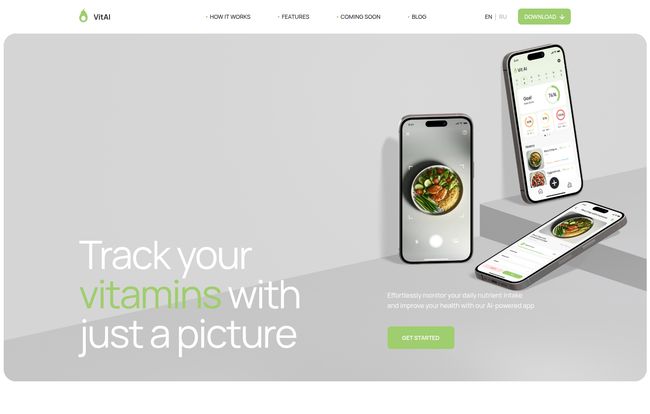
Imagine this: You sit down for lunch. It’s a beautiful-looking salad with grilled chicken, avocado, and some other goodies. Instead of opening a clunky app and searching for every single ingredient, you just open VitAI, snap a photo, and… that’s it. The app’s artificial intelligence chews on the data (pun absolutely intended) and spits back a breakdown of the vitamins, minerals, and even potential allergens in your meal.
It’s designed to be an effortless nutrition assistant. The focus here isn’t just on the big three—carbs, protein, fat—but on the micronutrients that often get ignored. Are you getting enough Vitamin D? How’s your iron intake looking? This is the kind of stuff that’s notoriously difficult to track without meticulous effort. VitAI wants to change that.
Visit VitAI
How Does This AI Magic Actually Work?
So, how does it see a picture of a salad and not just think, “Yep, that’s leaves”? It all comes down to computer vision and machine learning. Think of it like Google Lens, but with a PhD in nutrition. The AI has been trained on thousands, probably hundreds of thousands, of images of food. It learns to identify a chunk of avocado, a slice of tomato, a piece of grilled salmon.
From there, it cross-references those identified foods with massive nutritional databases to estimate the nutrient profile. It’s a sophisticated guessing game, but a very, very educated one. It’s looking at colors, textures, and shapes to make its call. Of course, this immediately brings up the question of accuracy, which we’ll get to in a minute. Because let’s face it, the difference between a tablespoon of olive oil and two tablespoons is practically invisible, but it makes a difference on the stat sheet.
The Standout Features That Caught My Eye
Beyond the core photo-analysis feature, a few other things make VitAI more than just a novelty.
Instant Nutrient Insights Without the Manual Entry
This is the main draw, obviously. The sheer convenience is a massive win. For the average person who just wants to be more mindful of their eating habits, removing the friction of manual logging is everything. The app provides stats and tracks your progress, turning the abstract idea of “eating better” into a tangible goal with real metrics.
Personalized Goals and AI Recommendations
VitAI doesn’t just tell you what you ate; it tries to guide you on what to eat next. Based on your personal health goals—maybe you want more energy, or you’re focusing on immune health—the app provides tailored food and even vitamin recommendations. This proactive approach is a nice touch, moving it from a simple tracker to a genuine assistant.
The Allergy Detection is a Potential Lifesaver
For me, this is a huge deal. As someone with friends who have serious food allergies, dining out can be a minefield. VitAI’s feature to scan for potential allergens could be incredibly useful. Imagine snapping a quick pic of a restaurant dish to get a second opinion on whether there might be hidden nuts or dairy. It’s not a replacement for an EpiPen or asking the chef, of course, but it’s an amazing safety net.
The Big Question: How Accurate is VitAI?
Alright, let’s address the big, juicy steak in the room. Can you trust it? The short answer is: it depends. The AI is smart, but it’s not psychic. It can’t see the half-stick of butter your mom secretly uses in her “healthy” mashed potatoes.
I like to think of its accuracy like this: It’s a very knowledgeable friend guessing the recipe. For simple, whole foods—an apple, a piece of grilled chicken, a handful of almonds—it’s going to be pretty darn accurate. For a complex burrito, a five-layer lasagna, or a hearty stew, it’s making an educated approximation. It will see the ground beef, the cheese, the tomato sauce… but it won’t know the exact ratios.
The developers themselves acknowledge the limitations of AI. And honestly, this is a challenge for all apps in this space. So, if you’re a competitive bodybuilder who needs to track every macro to the precise gram, you’ll probably want to stick to your food scale. But for the 95% of us who just want a directional guide to see if we’re on the right track, it’s more than good enough. It’s brilliant.
Getting Started and The Pricing Mystery
Getting started seems simple enough. You download the app from the Apple App Store. Sorry, Android friends, the website says your version is “Coming Soon,” so you’ll have to wait a bit longer.
Now, about the price. This is where things get a little weird. The site prominently features a “Try it for free” button, and the app store page implies in-app purchases are a thing. But when I tried to find a dedicated pricing page… I hit a 404 error. Whoops. A little website maintenance is probably in order over at VitAI HQ.
Based on my experience with, well, pretty much every other health app on the planet, it’s safe to assume a freemium model. You’ll likely get basic photo scanning for free, with premium features like detailed progress reports, advanced recommendations, or unlimited scans locked behind a monthly or annual subscription. This is just speculation, but it’s the industry standard.
My Honest Take: Is VitAI Worth Your Time?
After digging into it, I’m genuinely excited about the idea of VitAI. It represents a real step forward in making health tracking accessible and, dare I say, almost fun. It’s not a hyper-accurate scientific instrument; it’s more like an incredibly smart compass pointing you toward a healthier lifestyle.
- Who is it for? It’s perfect for the health-curious individual who’s fed up with manual logging. It’s for people who want to understand their micronutrient intake better and for anyone with dietary sensitivities who wants an extra layer of awareness.
- Who should skip it? For now, anyone on Android. Also, elite athletes or those on strict medical diets who require gram-level precision might find it’s not quite robust enough for their needs.
For most people, the small inaccuracies are a fair trade-off for the immense convenience.
The Future is Now, and It’s Taking a Picture of Your Food
Tools like VitAI are the future of personal health management. The friction is disappearing. The barrier to entry is getting lower and lower. While it’s not perfect yet, it’s a massive leap in the right direction. It’s one of the first apps I’ve seen that makes me feel like we’re finally living in the future that The Jetsons promised us, just with fewer flying cars and more AI-analyzed kale salads.
Frequently Asked Questions
What is VitAI and how does it work?
VitAI is a mobile app that uses AI to analyze your meals from a photo. You snap a picture of your food, and the app identifies the ingredients to estimate its vitamin, mineral, and potential allergen content, helping you track your nutritional intake effortlessly.
Is VitAI free to use?
The website suggests a free trial is available, and it’s free to download from the App Store. However, details on long-term pricing are unclear as the pricing page is currently unavailable. It likely operates on a freemium model, where core features are free and advanced functionalities require a paid subscription.
How accurate is the nutrient analysis?
Its accuracy varies. For whole, easily identifiable foods, it’s quite reliable. For complex, mixed dishes like casseroles or soups, it provides a well-educated estimate. It’s best used as a strong directional guide for general wellness rather than a tool for gram-perfect scientific measurement.
Can VitAI detect all possible allergens?
It is designed to detect common allergens based on the visible ingredients in a photo. However, it cannot detect trace amounts or hidden ingredients (like peanut oil used for frying). It should be used as a helpful secondary tool, not a replacement for reading labels and asking restaurants directly about allergens.
Is my personal data safe with VitAI?
According to their FAQ, users can request to delete their account and personal data. Like with any app that handles health information, it’s always a good practice to review the privacy policy to understand how your data is stored and used.
When is the VitAI app coming to Android?
The VitAI website indicates that the app is “Coming Soon” to the Google Play Store, but no specific release date has been announced yet.
Reference and Sources
- The official VitAI website: https://vitai.tilda.ws/
- Article on AI in Nutrition from the National Library of Medicine: The Use of Artificial Intelligence in Nutrition: A Scoping Review


