
Categories: AI API, AI Course, AI Developer Tools, AI Knowledge Management, No-Code&Low-Code
Zgi.ai Review: Building LLM Apps Without The Code?

The world of AI is moving at a breakneck pace. One minute, everyone’s just excited they can get a chatbot to write a poem about their cat. The next, businesses are expected to have sophisticated, multi-layered AI systems integrated into every corner of their operations. It’s a lot.
I’ve spent more hours than I’d like to admit staring at lines of Python, trying to stitch together different APIs and get a custom Large Language Model (LLM) application to do something more useful than just summarize articles. It’s the less glamorous side of the AI revolution—the plumbing, the wiring, the sheer grunt work of making these powerful models actually work in a real-world business context.
So, when I stumbled upon Zgi.ai, my curiosity was definitely piqued. The landing page was clean, professional, and made some pretty big promises about simplifying the whole process. It felt less like a tech-bro fever dream and more like a tool designed by people who’ve actually been in the trenches. It presented itself as a platform for building, not just dreaming. And honestly? That’s a refreshing change.
My first impression was solid, though I did hit a mysterious 404 page in Chinese when I tried to dig a little deeper for some info… more on that little adventure later.
So, What Exactly is Zgi.ai?
In a nutshell, Zgi.ai is a platform designed to take the headache out of building and deploying LLM applications. Instead of getting bogged down in boilerplate code and complex configurations, it offers a visual, more intuitive way to design how your AI should think and act. Think of it less like writing a novel from a blank page and more like arranging pre-written chapters into a coherent story.
The platform’s mission is to be a one-stop shop for developers and enterprises. The goal is to let you go from a bright idea on a whiteboard to a functioning, production-ready AI application much, much faster. It’s a bridge over the treacherous waters that separate a cool prototype from a scalable, secure business tool. It’s a bit like a visual circuit board for AI agents; you’re connecting components and defining pathways, not soldering every transistor yourself.
The Core Features That Actually Matter
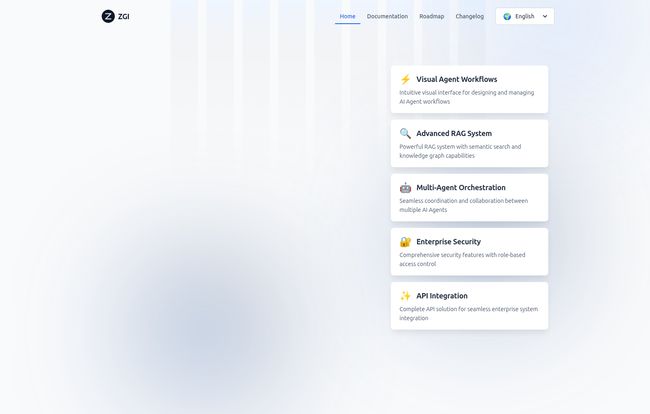
A platform is only as good as its features, right? Zgi.ai hangs its hat on a few key pillars. Let’s break them down.
Drag-and-Drop Your AI with Visual Agent Workflows
This, for me, is the main event. The idea of designing an AI agent’s logic through a visual, drag-and-drop interface is a game-changer. If you’ve ever used a tool like Zapier or Make.com to automate tasks between different web apps, you’ll immediately grasp the concept. Zgi.ai applies that same user-friendly philosophy to the much more complex world of AI agents.
This instantly lowers the barrier to entry. Your product manager, who has a brilliant idea for an AI-powered customer support flow, can actually build a functional draft of it. They don’t need to write a 20-page spec doc and hope the engineering team interprets it correctly. This kind of visual collaboration can slash development time and lead to better products. It democratizes the creation process, and I’m all for that.
Visit Zgi.ai
The Brains of the Operation: The Advanced RAG System
Okay, buzzword alert: RAG. It stands for Retrieval-Augmented Generation. In plain English, it means giving your AI a private, curated library to read from before it answers a question. This is how you stop an LLM from making stuff up (or “hallucinating”) and ensure it provides answers based on your company’s specific data—be it internal wikis, product documentation, or customer support logs.
But Zgi.ai claims to go a step further with an advanced RAG system. They specifically mention semantic search and knowledge graph capabilities. The semantic search part means the AI can understand the meaning behind a query, not just match keywords. But the knowledge graph is the really juicy bit. It allows the system to understand the relationships between pieces of information. It’s the difference between a library index card and a detective’s string board connecting clues. This could lead to far more insightful and accurate responses from your AI agent.
Herding Cats? Not with Multi-Agent Orchestration
The latest trend in practical AI isn’t about building one massive, all-knowing AI. It’s about creating teams of smaller, specialized AI agents that work together. You might have one agent that’s an expert at web research, another that excels at data analysis, and a third that’s a brilliant copywriter. The problem? Getting them to work together can feel like herding cats.
Zgi.ai’s Multi-Agent Orchestration is designed to be the project manager for your AI team. It ensures the research agent passes its findings to the analysis agent at the right time, who then hands a summary to the writing agent. It’s about creating a seamless, automated assembly line of intelligence. For any complex task, this is absolutely critical.
The Grown-Up Stuff: Enterprise Security and API Integration
This might be the least exciting part to talk about, but for any real business, it’s the most important. Zgi.ai highlights its enterprise-grade security, including role-based access control. This means you can control who on your team can see, use, or modify different parts of your AI systems. It’s a non-negotiable feature for any company handling sensitive data.
And then there’s the complete API solution. A powerful AI tool is useless if it lives in a silo. It needs to talk to your other systems—your CRM, your database, your support desk software. Zgi.ai’s focus on API integration shows they understand that their platform needs to be a team player in a larger tech stack.
My Honest Take: The Good, The Bad, and The… Missing?
Alright, so the feature list is impressive. But what’s it really like? Based on my analysis, here’s my take.
The good stuff is obvious. The visual interface is a massive win for productivity and collaboration. The advanced RAG with knowledge graph potential is a serious differentiator. And the clear focus on enterprise needs like security and multi-agent systems shows a maturity you don’t always see in new AI platforms.
As for the potential hiccups, they’re pretty standard. Any powerful tool will have a learning curve; you won’t master Zgi.ai in an afternoon. And yes, using a platform like this means you’re creating a reliance on it—the classic vendor lock-in dilemma. But that’s always the trade-off, isn’t it? You’re exchanging some control for a massive boost in speed and capability.
Which brings me to the big question mark. What does Zgi.ai cost? There’s no pricing page on their site. This is where my earlier adventure with the 404 page comes back. My guess is the link was there, but it’s either not public yet or region-locked. The Chinese text on the error page—”Sorry, the page you visited does not exist or has been removed”—suggests the platform might be in an early access phase or focusing on specific markets first. This lack of public pricing almost certainly means Zgi.ai is targeting enterprise clients with a “Contact Sales” model. I’d expect custom quotes based on usage, number of agents, and support levels.
Also Read: LangSaaS Review: Build Your AI SaaS Faster?
Who is Zgi.ai Actually For?
I don’t think this tool is for everyone. If you’re a machine learning researcher who loves building models from scratch, this isn’t for you. But if you’re one of these people, Zgi.ai could be a perfect fit:
- The Startup Founder: You need to build a powerful AI-driven MVP on a tight deadline and with a small team. The speed of visual development is your secret weapon.
- The Product Manager: You’re tired of the gap between your vision for an AI feature and the final implementation. With Zgi.ai, you can prototype and iterate on the logic yourself.
- The Enterprise Architect: You’re tasked with integrating AI into legacy systems in a secure and scalable way. The focus on security, API integration, and agent orchestration is exactly what you need.
It’s a tool for builders and integrators, not just pure researchers.
A Promising New Player in the AI Space
So, what’s the final verdict? Zgi.ai is incredibly promising. It’s addressing a very real and painful problem in the AI development cycle: the chasm between the power of LLMs and the difficulty of deploying them effectively. It’s not just another AI wrapper; it’s a thoughtful workflow, integration, and orchestration platform.
While the mystery of the pricing remains, the platform’s features speak for themselves. If you’re in the business of building serious AI applications, Zgi.ai is definitely a name you should keep on your radar. I, for one, will be watching their changelog and roadmap very closely.
Frequently Asked Questions about Zgi.ai
What is Zgi.ai?
Zgi.ai is an enterprise-grade AI development platform that simplifies building and deploying Large Language Model (LLM) applications. It features a visual interface for designing AI agent workflows, an advanced Retrieval-Augmented Generation (RAG) system, and tools for orchestrating multiple AI agents.
What is a RAG system?
A RAG (Retrieval-Augmented Generation) system enhances an AI model’s performance by providing it with access to a specific, external knowledge base. Before generating a response, the model “retrieves” relevant information from this source, leading to more accurate, detailed, and context-aware answers that are grounded in factual data.
Is Zgi.ai suitable for beginners?
While there may be a learning curve to master all its features, the core concept of a visual workflow designer makes it significantly more accessible than traditional code-based development. Product managers and those with less technical backgrounds could likely build functional prototypes, though enterprise-level deployment would benefit from technical expertise.
How much does Zgi.ai cost?
Currently, Zgi.ai does not have a public pricing page. This typically suggests an enterprise-focused sales model where pricing is customized based on the client’s needs, such as the number of users, API call volume, and required support level. You would likely need to contact their sales team for a quote.
What makes Zgi.ai different from other AI platforms?
Zgi.ai’s main differentiators are its combination of a user-friendly visual workflow builder, an advanced RAG system that includes knowledge graph capabilities, and its built-in tools for seamlessly coordinating multiple specialized AI agents. This positions it as a strong solution for building complex, integrated AI applications rather than simple, standalone bots.
Can I integrate Zgi.ai with my existing software?
Yes, Zgi.ai is designed with enterprise integration in mind. It offers a complete API solution to connect its AI agents and workflows with your existing business systems, such as CRMs, databases, and other third-party applications.
Reference and Sources
- Zgi.ai Official Website
- What is Retrieval-Augmented Generation? – An excellent explainer from Pinecone.


