
Categories: AI Art Detector, AI Beauty, AI Image Detector, Blockchain
Layly Deepfake Detection Review: A New Sheriff in Town?

The internet is getting… weird. One minute you’re scrolling through memes, the next you’re staring at a video of a world leader singing a pop song, and you can’t quite tell if it’s legit. We’ve all been there. That slight pause, the head tilt, the squint. Is this real life? Or is it just a very, very clever deepfake? For years, as someone who lives and breathes online content, I’ve seen the line between real and fake get blurrier than a Monet painting. It’s a huge problem, not just for us SEO folks who rely on credible sources, but for, well, everyone.
So, when I stumbled upon a new tool called Layly, my curiosity was definitely piqued. It claims to be an AI-powered detector for deepfakes and manipulated media. A digital truth serum for your browser. The big question is, does it work? Is it the tool we’ve all been waiting for to help us navigate this brave new digital world? Let’s take a look.
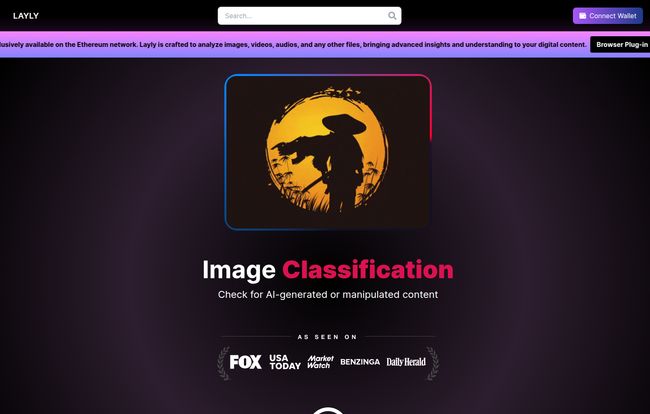
Visit LAYLY
So, What is Layly, Anyway?
At its core, Layly is like a detective’s magnifying glass for the digital age. It’s an application designed to sniff out AI-generated or manipulated content. You feed it an image, a video file, or even an audio clip, and its AI algorithms get to work, scanning for the tiny, almost invisible artifacts and inconsistencies that give fakes away. Think of it as a bouncer for your brain, checking the ID of every piece of media before you let it in.
The mission behind it is pretty noble, too. The creators want to fight misinformation, protect people from scams, and basically help restore a bit of sanity and trust online. In a world reeling from fake news and digital manipulation, that’s a goal I can get behind. It’s not just about debunking silly memes; it’s about strengthening the very foundations of how we share and consume information.
How Layly Works Its Magic
The process itself seems straightforward enough. The homepage has a simple drag-and-drop interface. You find a suspicious image, upload it, and let Layly do its thing. The tool supports images, audio, and videos, which is a solid trifecta of modern media. I haven’t had a chance to test a video yet, but the image analysis is quick.
The Standout Features I’m Watching
Beyond the basic upload-and-scan, a few things caught my eye. Layly isn’t just a one-trick pony. It offers AI-generated content detection across different formats, but the real gems might be what’s available now and what’s coming soon. The promise of a browser plug-in for on-the-fly web image analysis is, in my opinion, the biggest potential win. Imagine just right-clicking on an image on Twitter or a news site and getting an instant reality check. That would be huge for workflow.
And then there’s the stuff that’s still in the oven. They’re teasing an AI Beauty Filter Detection feature. This is fascinating. We all know how social media, with its endless filters, can mess with our perceptions of reality. A tool that could quantify or identify heavy-handed filtering could be a huge step for digital well-being. It’s a slightly different battlefield than political deepfakes, but an important one nonetheless. Voice Deep Fake Detection is also on the list, which is critical as audio manipulation becomes scarily convincing.
Let’s Talk About The Web3 Angle
Okay, here’s where things get a little… niche. The first thing you’ll notice on Layly’s site is the banner: “Available exclusively on the Ethereum network.” You even have a “Connect Wallet” button in the corner. For anyone not steeped in the world of crypto, this is an immediate hurdle. It means you can’t just sign up with an email; you need a crypto wallet like MetaMask.
The site also mentions “Tokenomics,” with details about liquidity pools and token locks. This tells me Layly is operating on a Web3 model, where a specific cryptocurrency token might be used for access, governance, or rewards. It’s an innovative approach, for sure. Maybe it’s a way to keep the platform decentralized. But I have to be honest, it’s also a barrier to mass adoption. Your average internet user doesn’t have a crypto wallet ready to go. Its a bold move, and I’m curious to see how it plays out for them.
The Good, The Kinda Annoying, and The Future
No tool is perfect, especially not a new one. Here’s my quick and dirty breakdown of what I see with Layly right now.
On the plus side, the very existence of an accessible deepfake detector is a massive win. It empowers regular people to become more critical consumers of media. The browser plug-in (when fully rolled out) and support for multiple media types are definite strengths. It’s tackling a real, growing problem head-on.
However, the reliance on the Ethereum network is a double-edged sword. It’s forward-thinking for a certain crowd but alienating for others. And like any AI, the question of accuracy will always linger. The effectiveness will vary, and it won’t be a 100% foolproof system. We also have to contend with a few key features being listed as ‘Coming Soon…’ which means we’re judging it on a mix of current performance and future promises.
| Pros | Cons |
|---|---|
| Helps identify deepfakes and manipulated content. | Currently exclusive to the Ethereum network. |
| Aims to improve media literacy. | AI detection accuracy can be variable. |
| Convenient browser plug-in planned. | Some key features are still ‘Coming Soon’. |
| Supports images, videos, and audio. | The crypto requirement might deter users. |
What About The Price Tag?
This is the million-dollar question, isn’t it? As of writing this, there’s no clear pricing page. The link on some directories leads to a 404 error. This, combined with the crypto angle, suggests it might be free to use at the moment, with costs potentially being covered by tokenomics or future premium features. For now, it seems you can experiment without pulling out your credit card, but you will need that crypto wallet.
Frequently Asked Questions About Layly
- 1. What is Layly in simple terms?
- Layly is a website and tool that uses AI to check if an image, video, or audio file is a deepfake or has been manipulated by other AI tools.
- 2. Do I need cryptocurrency or a special wallet to use Layly?
- Yes. Currently, Layly operates on the Ethereum network, so you’ll need a compatible crypto wallet (like MetaMask) to connect and use the service.
- 3. Is Layly free to use?
- There is no public pricing information available right now, which suggests it’s likely free to use, possibly supported by its own cryptocurrency token system. This could change in the future.
- 4. What kind of content can Layly check?
- Layly is built to analyze images, videos, and audio recordings for signs of AI generation or manipulation.
- 5. How accurate is Layly’s deepfake detection?
- Like any AI detection tool, its accuracy can vary. It’s a powerful assistant for spotting fakes, but it’s best used as one tool in your verification toolkit, not as an infallible final judgment.
- 6. Is there a browser extension for Layly?
- The company states that a browser plug-in is a planned feature, which would allow users to analyze images directly from the web. Keep an eye on their site for updates.
Final Thoughts: A Promising but Niche Tool
So, where do I land on Layly? I’m cautiously optimistic. I love the mission, and the core technology is something the world desperately needs more of. The thought of having a quick, reliable AI checker at my fingertips is genuinely exciting.
The Web3 integration is the big wild card. It could create a passionate, decentralized community, or it could keep Layly from reaching the mainstream audience that needs it most. Only time will tell. For now, it’s a fascinating project to watch, and for the tech-savvy and crypto-curious, it’s definitely worth checking out. It may not be the final, perfect answer to deepfakes, but it’s a damn good start. And in the fight for truth, every good start counts.


