
Categories: AI Chat Generator, AI Chatbot, No-Code&Low-Code
Powerly.ai: A Ghost in the AI Chatbot Machine?

Okay, let’s talk. Every week, it seems like a new, shiny AI tool lands on my desk (or, you know, in my inbox). The promises are always huge, the hype is real, and the potential feels limitless. A while back, a name started buzzing around: Powerly.ai. The pitch was slick, simple, and spoke directly to the heart of every marketer, entrepreneur, and small business owner out there.
The idea? Build your own custom ChatGPT, your own branded chatbot, with zero coding. In minutes. They were even calling themselves the ‘Walmart’ for building custom chatbots. It was a compelling vision—the power of a sophisticated language model, but easy, accessible and affordable. I was intrigued, to say the least. This is the kind of tech that can genuinely level the playing field.
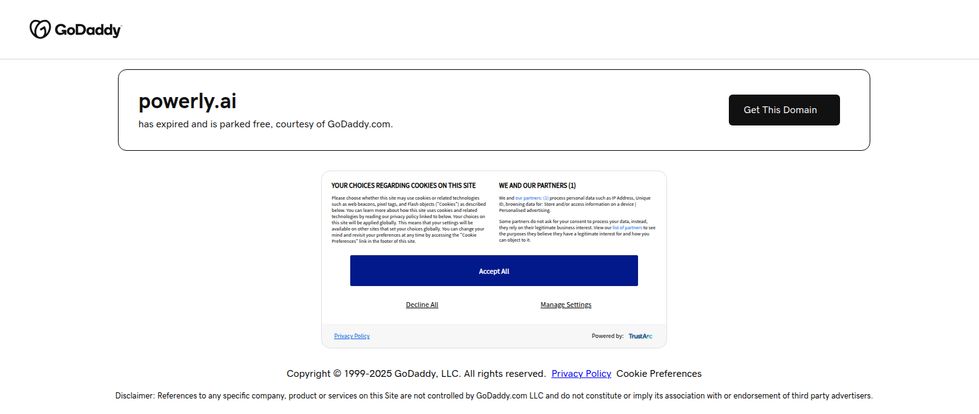
So, I did what any good SEO nerd would do. I opened a new tab, typed in the URL, and hit Enter, ready to see the magic. And what I found was… well, nothing. Just a parking page from GoDaddy.
The domain, powerly.ai, has expired. It’s a digital ghost town. A modern internet mystery. And it got me thinking. This isn’t just a story about one tool that disappeared; it’s a story about the frantic, exciting, and sometimes perilous state of the AI world right now.
What Powerly.ai Was Supposed to Be
Before we conduct the post-mortem, let’s look at the dream. Based on the digital breadcrumbs it left behind, Powerly.ai was built on a fantastic premise. It was a platform designed to let anyone—and I mean anyone—launch their own AI chatbot without having to write a single line of code. Think about that. You could have a bot on your website, trained on your own data, speaking in your brand’s voice, answering customer questions 24/7.
Key Features That Sounded Great on Paper
The platform boasted a few key selling points that are, frankly, the holy grail for a lot of us. It offered a no-code chatbot builder, which is music to the ears of non-technical folks. It promised unlimited chatbot creation, which is a big deal if you manage multiple sites or want to experiment with different bots. And it was all built around connecting your own API key, giving you a degree of control.
The whole “Walmart of chatbots” analogy is pretty telling, isn’t it? It suggests a focus on volume, accessibility, and no-frills functionality. Not a bespoke Savile Row suit, but a reliable pair of jeans you can wear every day. For 90% of businesses, that’s exactly what they need.
The Reality Check: Where Did It Go Wrong?
A parked domain is a pretty definitive sign that something’s gone awry. So, what happens to a promising AI startup to make it just… evaporate? I don’t have their internal memos, but after years in this industry, I can make some educated guesses.
- The Competition is Fierce: The barrier to entry for creating an AI ‘wrapper’ tool—a nice user interface on top of an existing API like OpenAI’s—is relatively low. This means the market is incredibly crowded. Standing out is a massive challenge.
- The Business Model is Tricky: While Powerly.ai promised ‘unlimited chatbots’, the user still had to bring their own API key. This means you, the user, would be paying for every single query your chatbot answered. It’s a common model, but maybe the platform’s own fees on top of that didn’t create a compelling value proposition.
- Founder Burnout or Pivot: It’s a classic startup story. The founders might have run out of steam, ran out of cash, or decided to pivot to a different project. The AI space moves so fast, what seems like a great idea in January can feel dated by June.
Whatever the reason, its a stark reminder: in a gold rush, not everyone finds gold. Many prospectors just end up with a lot of dirt and a tired donkey.
Visit Powerly ai
Lessons from a Digital Ghost: What to Look for in an AI Tool
The fall of Powerly.ai (or its quiet disappearance, at least) is a valuable lesson for all of us. It highlights the importance of vetting the tools we choose to integrate into our businesses. Here’s what I’ve learned to watch out for.
The API Key Conundrum
Many no-code builders operate on the ‘BYOAK’ (Bring Your Own API Key) model. It’s not inherently bad, but you have to understand the costs. The platform might be cheap or even free, but you are directly responsible for the usage costs from your API provider (like OpenAI). Those costs can add up fast if your chatbot becomes popular. Always, always do the math.
Evaluating the ‘No-Code’ Promise
No-code is liberating, but it can also be limiting. How customizable is the bot’s logic? Can you set sophisticated rules and workflows, or are you stuck with a simple Q&A format? The functionality is often limited by what the platform’s developers have decided to build. Sometimes you’re better off with a tool that has a steeper learning curve but more power under the hood.
Look for Community and Support
What’s one thing a ghost town doesn’t have? People. Before you commit to a platform, check for signs of life. Is there an active blog? A community forum or Discord server? Regular updates? A responsive support team? These are signs of a healthy, living project, not a digital relic waiting to have its domain expire.
So, Where Do You Go from Here? Some Solid Alternatives
Don’t let this story scare you away from the dream of building your own chatbot! The idea is still brilliant, and there are many stable, well-supported platforms out there that can help you achieve it. If you were intrigued by Powerly.ai, you should definitely check these out:
| Platform | What It’s Good For |
|---|---|
| Chatbase | Incredibly simple to get started. You just upload your documents or add a link to your site, and it creates a chatbot for you. Great for basic customer support and knowledge bases. |
| Botsonic | A product from the established Writesonic team. It’s a bit more advanced and focuses on creating GPT-4 powered bots that are designed for conversions and lead-gen, not just support. |
| Voiceflow | This is for when you want to get serious. It’s a collaborative, visual builder for creating complex conversation agents for both chat and voice. It has a steeper learning curve but is way more powerful. |
These are just a few, but they are all living, breathing platforms with active development and strong user bases. They are the towns that survived the gold rush and are now thriving cities.
Frequently Asked Questions (FAQ)
- What was Powerly.ai?
- Powerly.ai was a platform that aimed to provide a no-code solution for building and launching custom, branded ChatGPT-style chatbots. Its main selling point was simplicity and the ability to create unlimited bots.
- Is Powerly.ai still available?
- No. As of late 2024, the powerly.ai domain has expired and is parked by GoDaddy, indicating the service is no longer active.
- Are no-code chatbot builders really free to use?
- It’s complicated. The platform itself might have a free tier, but many operate on a ‘Bring Your Own API Key’ model. This means you still have to pay the API provider (like OpenAI) for the actual processing of your chatbot’s conversations, which can become a significant cost.
- What are some good alternatives to Powerly.ai?
- There are many great options! For simplicity, check out Chatbase. For more advanced marketing and sales bots, look at Botsonic. For building truly complex and powerful conversational agents, Voiceflow is a top choice.
- What’s the most important thing to check before choosing a chatbot builder?
- Beyond features, check for signs of life and viability. Look for an active community, recent blog posts or software updates, and transparent pricing. You don’t want to build your business processes on a tool that might disappear tomorrow.
- Why do so many new AI tools disappear so quickly?
- The AI space is currently experiencing a ‘gold rush’. Many tools are thin ‘wrappers’ built on top of larger platforms like OpenAI. This leads to intense competition, difficulty in differentiating, and business models that can be hard to sustain, causing many to shut down quickly.
Final Thoughts
The story of Powerly.ai isn’t one of failure, necessarily. It’s a snapshot of an industry in flux. It’s a tale of ambition and the harsh realities of the market. It serves as a fantastic, real-world lesson for all of us navigating this new frontier. The dream of a personal AI assistant for every website is very much alive. We just have to be smart about who we partner with to build it. Do your homework, check for a pulse, understand the real costs, and you’ll be in a great position to harness this amazing technology without getting left in a digital ghost town.


